DeepMind launches AlphaGenome 2: DNA variant predictions, cell by cell
Google DeepMind has a new DNA model, and this one looks at the genome the way biology actually works: one cell at a time. AlphaGenome 2, announced on November 11, predicts how a genetic variant changes gene activity inside a specific cell type or state — a heart muscle cell, a gut macrophage, a T cell switched on by a vaccine — instead of averaging the effect across a whole tissue. On DeepMind's headline benchmark it recovers nearly twice as many causal variants as its predecessor. The numbers are DeepMind's own, and most variants still slip through — but the shift from tissue averages to cell-level predictions is the most consequential genomics release of the year.
- Announced November 11, 2026 by Google DeepMind; available the same day for non-commercial research through the AlphaGenome API, with commercial research in private preview.
- Trained on more than 107 million individual cell profiles across 68 tissues, from human and mouse bulk and single-cell data.
- Headline benchmark (TenK10K, 28 immune cell types): 30% of causal variants recovered at 90% precision, versus 16% for AlphaGenome 1 fine-tuned on single-cell data; 43% vs. 23% on effect direction.
- New readouts: DNA methylation joins gene expression, RNA splicing, chromatin accessibility, and histone marks.
- Research use only: neither AlphaGenome model has been validated or approved for clinical or diagnostic use.
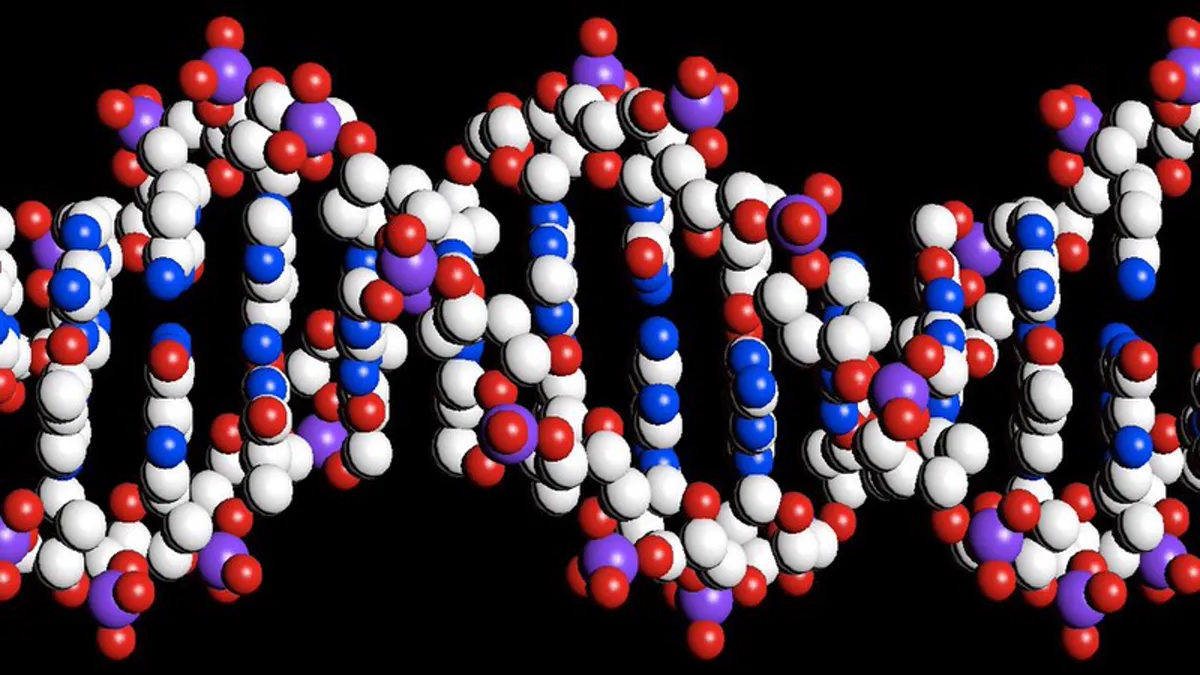
Every cell in your body carries the same DNA, yet a heart muscle cell and an immune cell do completely different jobs. The difference is not the code — it is which parts of the code each cell reads, and when. That is the problem AlphaGenome 2 is built for: predicting what a tiny change in DNA does, not in a generic tissue, but in the particular cell where it matters.
Why tissue averages miss the point#
The first AlphaGenome, previewed in June 2025 and published in Nature in January 2026, took a million-letter stretch of DNA and predicted molecular activity across broad tissues all at once. Powerful, but blurry: a variant that switches a gene on in one rare cell type can vanish in a tissue average, diluted by the thousands of other cells that never read that gene. DeepMind's own framing is blunt — the old model spread its capacity thin, and subtle differences between closely related cell types were hard to capture.
This is not an academic nicety. Genome-wide association studies routinely flag stretches of DNA linked to disease without saying which variant in the stretch is causal, which gene it acts on, or in which cell. The answer is often one specific cell in one specific state — a gut macrophage during inflammation, a T cell after vaccination — and a tissue-wide model cannot see it.
One condition at a time#
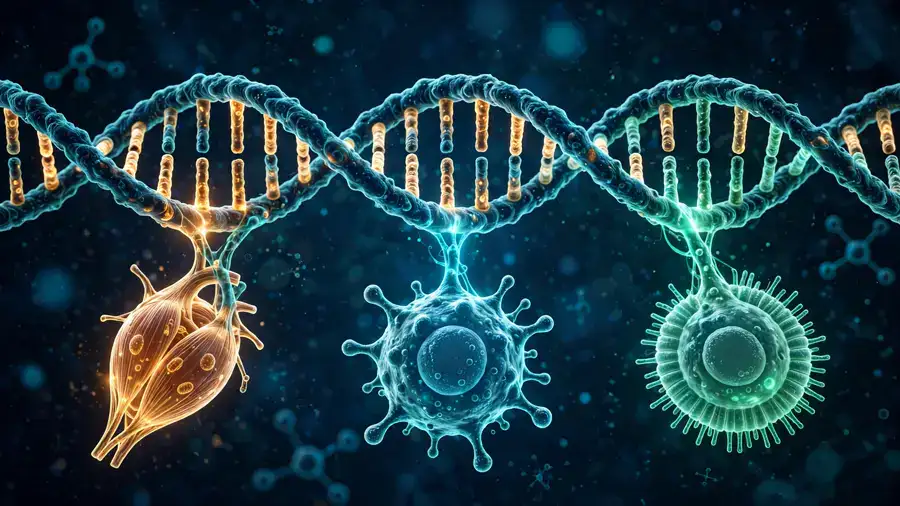
AlphaGenome 2 rebuilds the architecture around that insight. Instead of predicting everything in parallel, it is a conditional model: it takes a DNA sequence plus one biological condition — a tissue, a cell type, or a state — and predicts the effects for that condition alone, feeding the condition into every stage of the network. The same stretch of DNA, read through different conditions, produces different predictions.
Two consequences matter. First, researchers can hand the model a snapshot of gene activity from their own single-cell experiment — as few as a few dozen cells — and a cell encoder turns it into a condition the model can use, without retraining, even for states it has never seen. Second, the model can fill in missing measurements: give it gene expression alone and it can predict unmeasured properties such as chromatin accessibility, helping researchers decide which experiments to run next.
The training data grew to match: more than 107 million individual cell profiles across 68 tissues, from human and mouse bulk and single-cell data. Readouts cover gene expression, RNA splicing, chromatin accessibility, and histone marks — plus DNA methylation, a widely requested addition.
The numbers#
On TenK10K, a single-cell map of 28 primary immune cell types, DeepMind reports that AlphaGenome 2 recovered 30% of putatively causal expression-linked variants at 90% precision, against 16% for the original AlphaGenome fine-tuned on single-cell data. It got the direction of the gene effect right 43% of the time at 90% accuracy, versus 23% — and on genome regions held out of training, it explained a median 34% of within-tissue, cell-type-specific gene-expression variance, against 23%.
| TenK10K benchmark | AlphaGenome 2 | AlphaGenome 1 (fine-tuned) |
|---|---|---|
| Causal variants recovered (90% precision) | 30% | 16% |
| Effect direction correct (90% accuracy) | 43% | 23% |
| Cell-type-specific expression variance explained (held-out regions, median) | 34% | 23% |
Read those numbers straight. Nearly double the recall is a real step — and 30% still means seven in ten causal variants are missed. DeepMind's own paper says so, and independent replication has not happened yet. These are launch-day figures from the lab that built the model, and they should be treated that way until outside groups rerun them.
Two disease tests#
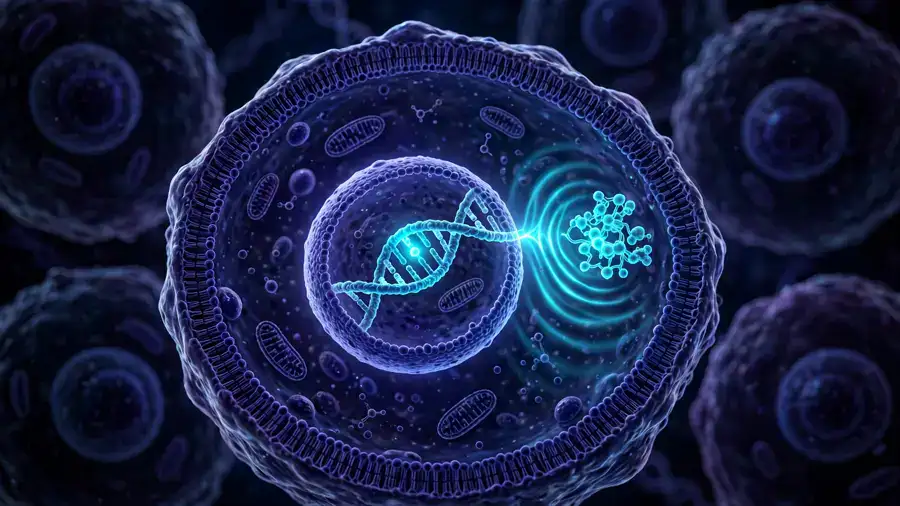
The more persuasive evidence is not the benchmark table but two worked examples. In inflammatory bowel disease, a landmark study had shown that a variant in a distant regulatory switch drives the disease by overactivating the ETS2 gene in gut immune cells. AlphaGenome 2 reproduced that finding computationally: from a seven-variant credible set it singled out rs2836882, linked it to ETS2 roughly 290 kilobases away, and localized the predicted effect to gut monocytes and macrophages, leaving other cell types and genes largely untouched.
The second test used single-cell data from a COVID-19 mRNA vaccine study that was new to the model. AlphaGenome 2 distinguished vaccine-activated T cells from resting ones, and predicted that a variant linked to severe COVID-19 disrupts gene activity more strongly in the activated state — an effect invisible in unactivated cells. The point of both examples is the same: the effect depends on the cell and its state, and a model that cannot see the state cannot see the effect.
What researchers get — and what it is not#
AlphaGenome 2 is available from today for non-commercial research through the AlphaGenome API, with commercial research in a private preview; expression-conditioning Colab tutorials ship alongside it. For researchers who do not want to run large comparisons themselves, DeepMind precomputed two resources: enhancer–gene links across 640 primary single-cell reference conditions and 39,323 genes, and scores for more than 6.8 million variants across 510 human conditions. Genomics PLC chief executive Peter Donnelly said he looked forward to incorporating the model into the company's Mystra platform, and AlphaGenome 2 Skills for Google Antigravity, the company's agentic development platform, are coming next.
The limits are stated plainly in DeepMind's own write-up. The model is computationally heavier than its predecessor — every condition needs its own prediction run — which is why a genome-wide atlas with AlphaGenome 2 is impractical and the original stays in service for broad scans. Its cell-state representations come from observational, steady-state profiles, so they capture correlations rather than causal mechanisms, and whether it can predict responses to gene knockouts or dynamic state transitions is still uncertain. The clinical line is absolute: both AlphaGenome models are for research use only, with no validation or approval for clinical or diagnostic purposes.
What to watch#
Three things will decide whether this release matters as much as its benchmarks suggest. First, independent replication — other groups rerunning the TenK10K comparisons and the disease examples on their own data. Second, uptake in the unglamorous middle of genetics: researchers using the precomputed variant scores to close out GWAS hits that have sat unresolved for years. Third, the Antigravity integration, which will show whether DeepMind sees AlphaGenome 2 as a standalone tool or one instrument inside an agentic science workflow. DeepMind is also soliciting community use cases through November 30, with selected projects eligible for extra quota and credits.
Genomics has spent years mapping which cells exist. AlphaGenome 2 bets the next useful question is narrower and harder: what does this one letter of DNA do, in this one cell, right now? On DeepMind's evidence, it answers that question about twice as well as anything before it — and still misses most of the answer. That is the honest shape of the advance.
Sources: Google DeepMind — AlphaGenome 2: Deciphering how cells read DNA to better understand disease (Nov. 11, 2026); Unite.AI — Google DeepMind's AlphaGenome 2 Predicts Cell-State Variant Effects (Nov. 11, 2026). Benchmark figures are DeepMind's own and have not been independently verified.