Amazon’s Ring launches a flying home camera and a $1,000 patrol robot
Ring’s cameras are leaving the wall. On November 10, Amazon’s security brand unveiled Ring Robotics, a line of cameras that move: a $249.99 indoor drone that flies to check on your home, and a $999.99 wheeled robot that patrols businesses after hours. Both are steered by a new system called AI Pilot — and the drone, at least, can’t be sold until US regulators clear it.
What we checked: Amazon’s November 10 announcement, cross-checked against The Register, eWeek and Silicon Report’s same-day coverage. Prices, ship dates and capabilities are the company’s own claims; no outlet has tested either device, and the drone’s ship date depends on FCC authorization that is still pending.
- What: Ring Robotics — two devices: Ring Drone Cam, an indoor flying camera for homes, and Ring Rover Cam, a wheeled patrol robot for businesses.
- Prices and dates: Drone Cam $249.99, targeted to ship in the US on January 27, 2027, with FCC authorization still pending; Rover Cam $999.99, preorders open, shipping December 16, 2026.
- AI Pilot: the devices’ cameras, specialized vision models, on-device sensors and cloud processing map the space, suggest patrol points and navigate around obstacles in real time. It needs an internet connection.
- Subscription: a compatible Ring Protect plan is required for scheduled patrols and recordings.
- Privacy: the drone powers down in its dock with its camera off; Rover Cam’s Sleep Mode retracts the periscope and switches the microphone off; both show recording indicators, and video is protected by Ring’s Throw Away the Key encryption.
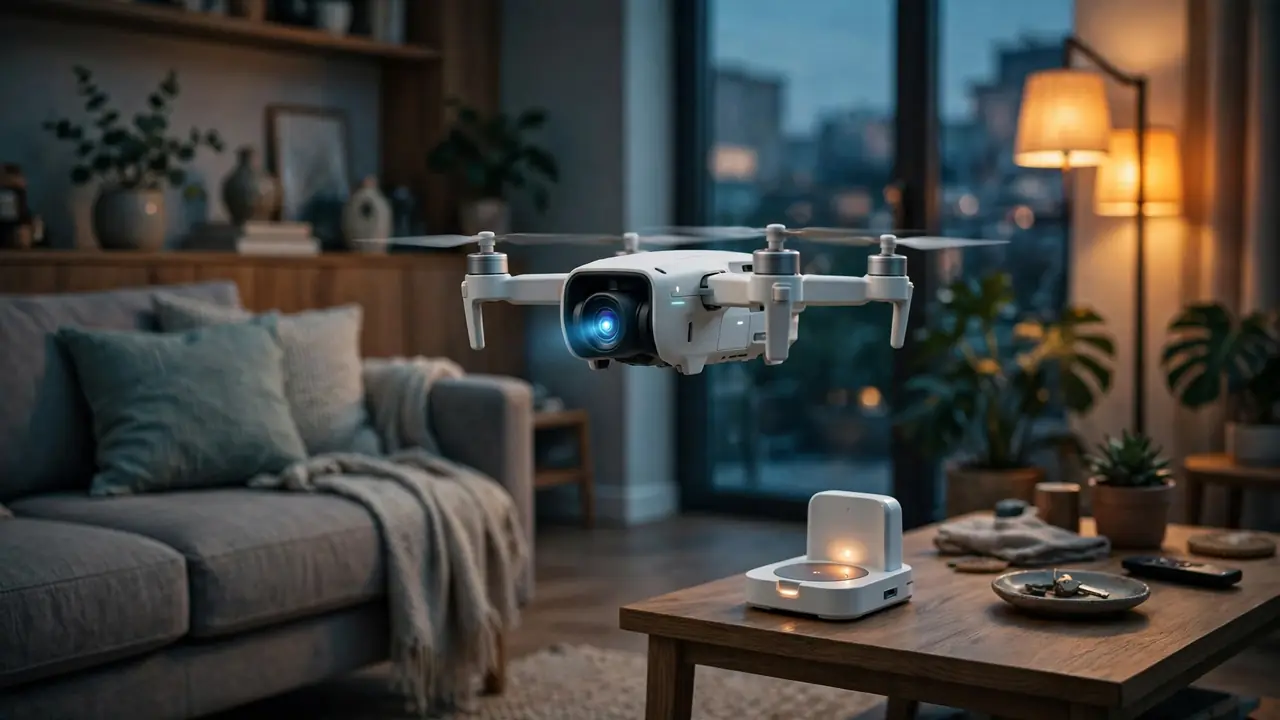
Fixed cameras have a blind spot problem: they see only what they are pointed at. Ring’s answer, more than a decade after the video doorbell, is to make the camera go to the problem instead. The Drone Cam lifts off its dock and flies a route you set — or launches itself when a Ring camera, sensor or alarm trips — while the Rover Cam rolls the floor of a shop or warehouse on a schedule, peering over shelves with a camera on a telescoping mast.
It is the most literal version yet of a trend running through home security: cameras that do not just watch, but move, investigate and respond.
What the two robots actually do#
The Drone Cam is a 165-gram indoor flyer that lives in a charging dock and stays out of sight when it is not working. Set the routes and the schedule and it flies them automatically, or send it on demand at any time. When a connected Ring device is triggered, it flies to preset patrol points to investigate. It films in 2K video with a 148-degree field of view, rotates a full 360 degrees, and switches on two built-in LED lights in the dark. Hands-on reports from The Verge and Ars Technica put a single flight at roughly five to eight minutes per charge — short check-ins, in other words, not long patrols. It can also be controlled from Alexa Home Map, the new map view inside the Alexa app.
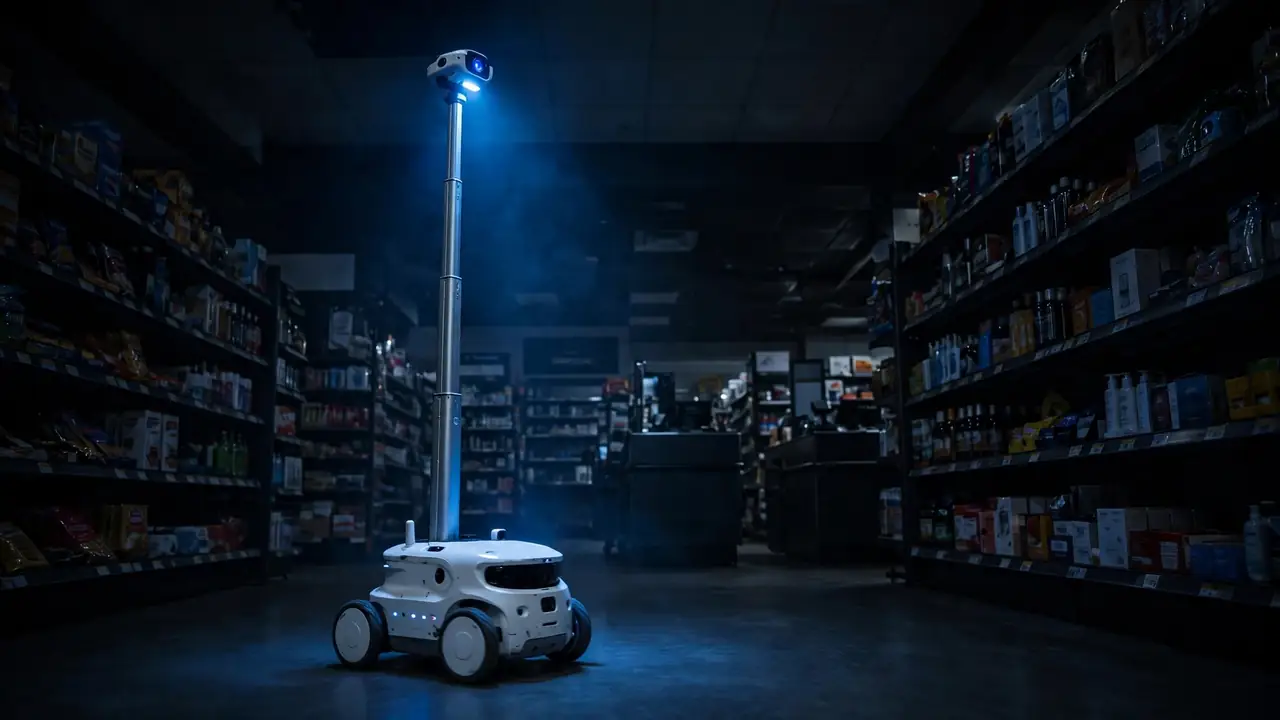
The Rover Cam is the business end of the line: a wheeled robot that streams and records in up to 4K video whenever it is moving or patrolling, performs a 360-degree scan on arrival at each stop, and raises a periscope camera to see over counters and shelving. It carries a siren, a light tower and two-way audio, and its continuous person detection can start recording the moment it spots motion — even while docked. It covers up to 5,000 square feet on a single floor, according to a summary of the announcement. Amazon says the idea grew out of feedback from Astro customers, who said the roving-security feature was the part they loved most; Rover takes the best of Astro and rebuilds it as a purpose-built security robot rather than a home robot that also does security.
AI Pilot does the navigating#
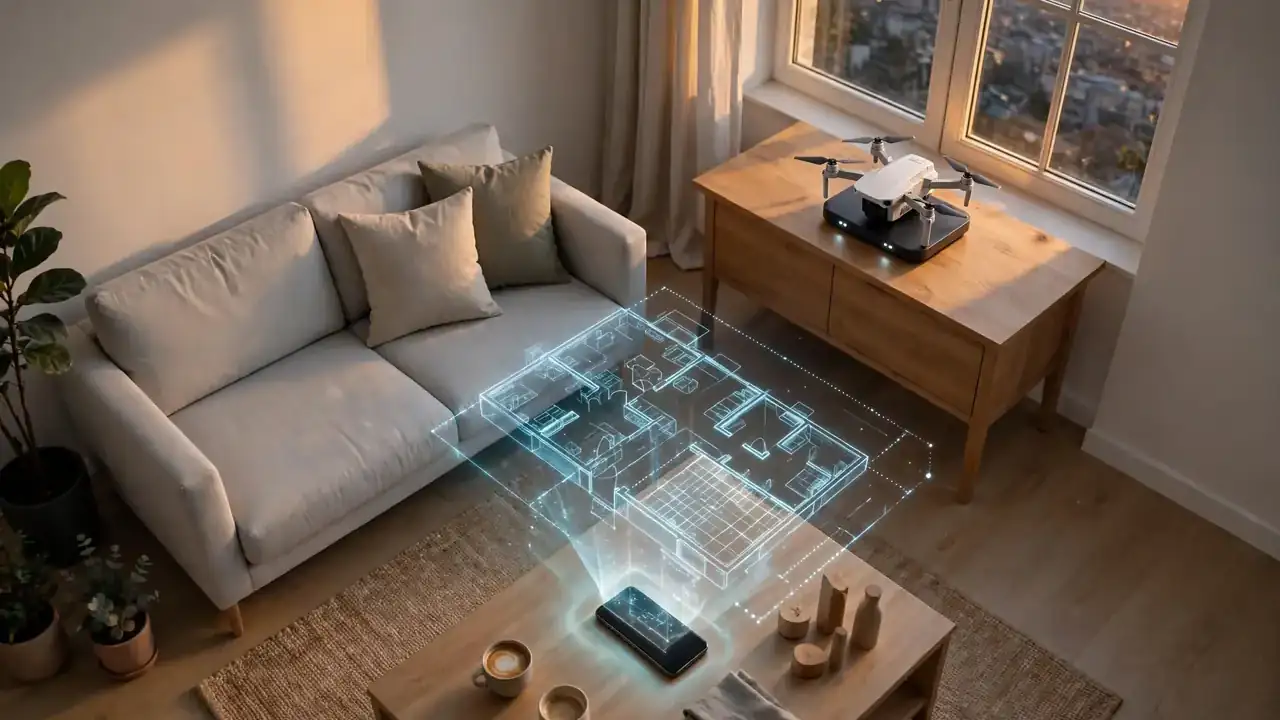
Neither device has a pilot. Both run on AI Pilot, a system Ring built to map a space, decide where to look, and get there without hitting anything. Setup starts by carrying the drone through the home or letting the Rover explore on its own; AI Pilot turns what the cameras see into a floor plan, identifies the rooms, and suggests patrol points — a side door, a window, a register, a long corridor — which you can adjust to your own layout. When a patrol starts, it plans the most efficient route to each point and steers around furniture and shelving in real time.
Under the hood, Ring describes AI Pilot as a combination of the devices’ cameras, specialized vision models, on-device sensors and cloud processing. Two practical catches: the system needs an internet connection to work, and the scheduled patrols that are the whole point of both devices require a compatible Ring Protect plan. Amazon has not said what a Protect plan costs for these devices.
The fine print: the FCC, privacy, and a promise that missed once before#
The drone’s January 27 ship date is a target, not a promise. Amazon’s own notice states that the Drone Cam has not been authorized as required by the rules of the Federal Communications Commission, and that it may not be sold or leased until authorization is obtained. Ring is taking email signups rather than orders, and if the authorization slips, the date slips with it.
Ring is also pitching privacy as a feature of the system rather than an afterthought. The drone powers down in its dock with its camera off, waiting until a flight is triggered to record. Rover Cam’s Sleep Mode retracts the periscope and switches the microphone off with a single tap. Both devices show LED indicators while recording, and the Rover says so on its screen. The propellers are audible and the light tower is bright — deliberately, Ring says, so the devices deter rather than spy. Video from both is protected by Throw Away the Key encryption, which Ring calls its strongest default encryption yet.
The flying camera is not a new idea at Ring. The company has explored indoor drones since 2016, according to Silicon Report, and its earlier Always Home Cam, announced in 2020, never reached customers. This time the pitch is a full system — drone plus robot plus mapping software — aimed at the gap fixed cameras cannot cover.
What to watch#
Three things. First, the FCC decision: authorization is the gate between the drone’s announcement and its January ship date, and there is no public timetable for it. Second, the Rover Cam’s first real-world outings after December 16, when businesses find out whether a robot on patrol is a deterrent or a novelty that gets in the way. Third, the subscription math: Ring has not disclosed what a Protect plan costs for these devices, and scheduled patrols — the feature that justifies both machines — sit behind that paywall.
If the drone works as advertised, the bigger question is cultural: whether people want a camera that can come to them, not just one they mount and forget. Ring’s bet is that they will, as long as it only records when asked and makes itself heard when it flies.
Sources
- Amazon: Ring announces Ring Robotics, ushering in a new era of security (November 10, 2026)
- The Register: Ring robots ready to patrol paranoids’ pads (November 10, 2026)
- eWeek: Amazon’s Ring Unveils a Flying Home Camera and a Business Patrol Robot (November 10, 2026)
- AI Agent Update: Amazon’s Ring launches a flying security camera for $249.99 (November 11, 2026)