Amateur astronomers used OpenAI's Codex and Astra to spot dozens of exoplanet candidates
Two amateur astronomers turned OpenAI's coding tools on public telescope archives and surfaced dozens of possible planets — including two signals a SETI astronomer independently recovered. None is confirmed yet, and that is the point.
- Bond and Codex: about 100,000 Kepler stars searched, more than 200 signals flagged — including 10 from planets astronomers had already confirmed, a useful check that the pipeline finds real things.
- Byrd and Astra: about 19 million stars across TESS and other archives, 49 candidates on the first pass; the strongest has been submitted to TESS researchers, two more are waiting.
- The two standouts: KIC 5689121, a cool star in Lyra whose brightness dips every 13.8 days — about 2.4 times Earth’s diameter if a planet is behind it; and KIC 6691030, a 4.8-day dip consistent with a planet smaller than Neptune.
- The SETI check: associate director Vishal Gajjar ran a separate search and found two matching signals in the same Kepler data. Independent recovery, not confirmation.
- The caveats: Bond is an OpenAI engineer and the account comes from OpenAI; the KIC 5689121 signal was also surfaced in October by another amateur, Kuber Mehta. No new planet has been discovered.
- The context: astronomers have confirmed more than 6,400 exoplanets since the first discoveries in 1992. A candidate only joins that list after follow-up observations rule out the alternatives.
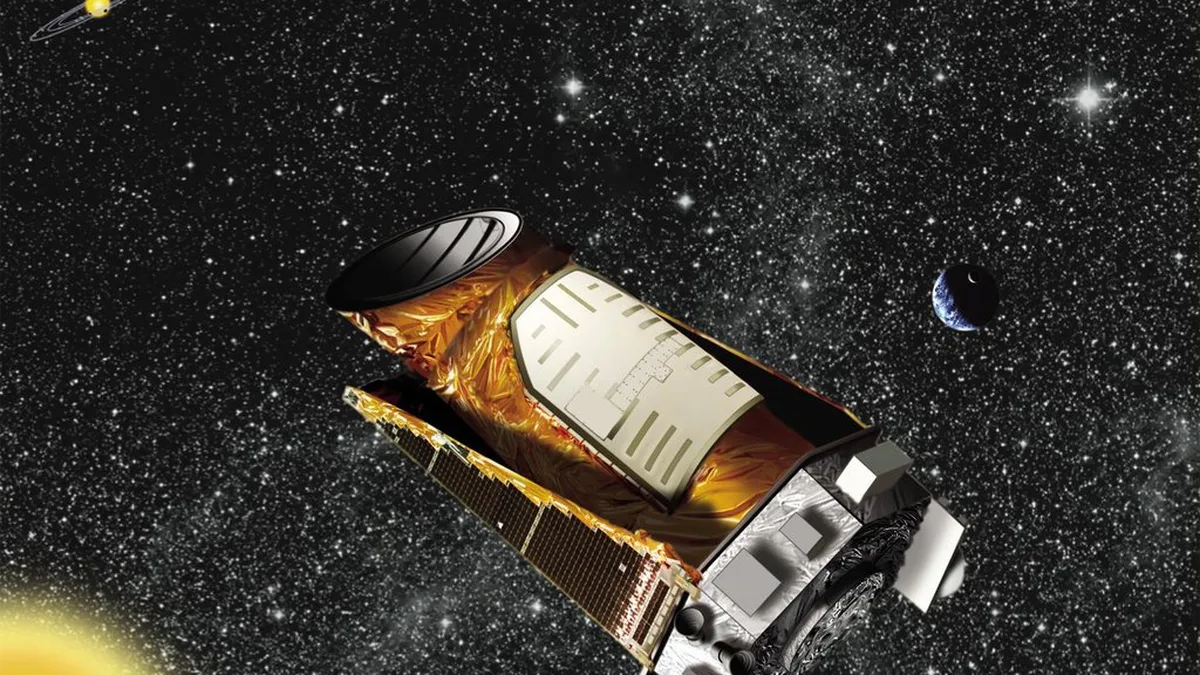
Two amateur astronomers turned OpenAI’s coding tools on the public archives of NASA’s planet-hunting telescopes — and came back with dozens of possible worlds. One search covered about 100,000 stars and flagged more than 200 signals; the other swept roughly 19 million stars and produced 49 candidates on its first pass. A SETI Institute astronomer independently recovered two of the signals. OpenAI shared the story on Tuesday.
None of the candidates is a confirmed planet. That is the honest version of the story, and it is also what makes it worth telling: the tools did the heavy work of building the search, and the humans are now doing the slow work of checking it.
Two hunts, two toolkits#
Kevin Bond, an engineer at OpenAI, used Codex to build a search program that worked through observations from NASA’s Kepler telescope, which watched stars for planet transits from 2009 to 2018. His program covered about 100,000 stars and flagged more than 200 signals, including 10 from planets astronomers had already confirmed — a useful sanity check that the pipeline was finding real things, not just noise.
Two candidates stood out. One is KIC 5689121, a relatively cool star in the constellation Lyra, about half the size of the Sun, whose brightness dips every 13.8 days. If a planet is behind the dip, it would measure roughly 2.4 times Earth’s diameter. The other is KIC 6691030, a faint star whose light dips every 4.8 days in a pattern consistent with a planet smaller than Neptune.
Ethan Byrd, founder of the email-infrastructure startup Primitive, worked separately with Astra, another OpenAI tool. He asked it to review published search methods, build two search programs — one for exoplanet candidates broadly, another focused on stars with potentially habitable zones — and run first checks on promising targets. His searches covered observations of about 19 million stars, drawn from NASA’s TESS mission and other public archives. The first pass produced 49 candidates. He has submitted the strongest to researchers working on the TESS mission; two more are waiting to go.
How the transit method works#
Both searches used the transit method, the workhorse of planet hunting. When a planet passes between its star and Earth, it blocks a small fraction of the star’s light. Measured over time, that produces a light curve — a mostly flat line with a small, regular dip. A dip that repeats at the same interval is a candidate worth chasing.
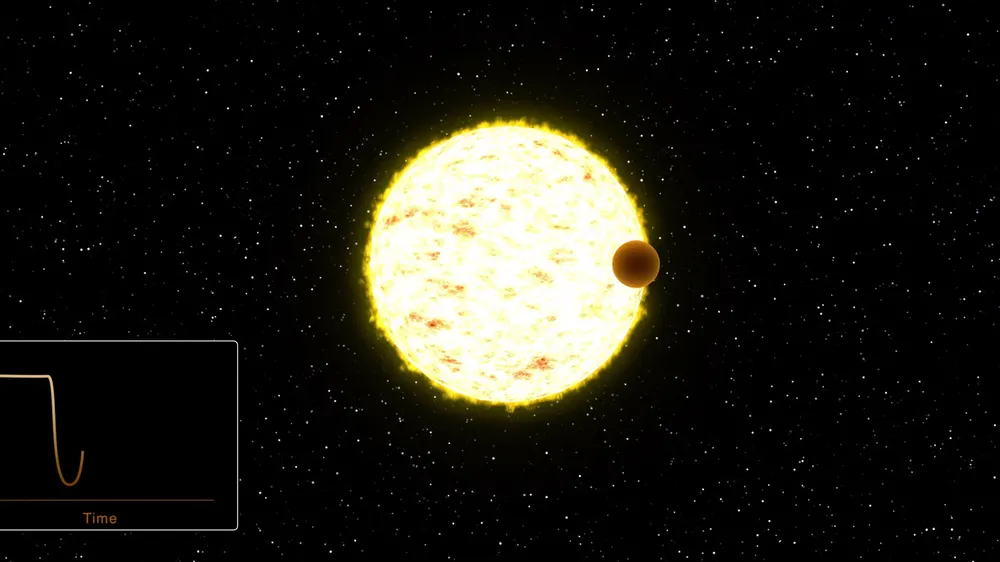
The catch is that planets are not the only thing that dims a star. Two stars passing in front of each other can produce a similar dip, and so can quirks in the telescope itself. That is why a candidate is a starting point, not a discovery: it needs follow-up observations — watching for more transits, or measuring the star’s wobble as a planet’s gravity tugs it — before anyone can call it a planet. Astronomers have confirmed more than 6,400 exoplanets since the first discoveries in 1992, and most of them went through exactly that gauntlet.
Why the SETI check matters#
The strongest external validation so far came from the SETI Institute. Bond shared his findings there, and associate director Vishal Gajjar ran a separate search and found two matching signals in the same Kepler data. An independent recovery does not prove a planet caused the dips, but it does rule out the most embarrassing failure mode: a bug in one person’s pipeline.
It also sets this story apart from the usual demo. The tools here were not asked to find planets; they were asked to help build and refine the search itself — comparing published methods, assembling the program, testing whether changes improved the hunt. The astronomy stayed with the humans.
The honest caveats#
A few things to keep straight. First, one of the two astronomers works at OpenAI, and the account comes from OpenAI itself, which has an obvious interest in showing off its tools. Second, the headline signal is not quite as fresh as it looks: another amateur, Kuber Mehta, independently surfaced the same KIC 5689121 dip in October, using Codex — his project dates the find to October 9–11 and puts the modeled false-positive probability at about 6.9%, with an unresolved stellar companion still a concern. Bond’s result is an independent re-detection of a signal already in the record, not a first sighting — and the cause of the dip is still unproven.
Third, and most important: no new planet has been discovered. What exists is a list of candidates, one submitted for professional follow-up, and a demonstration that a motivated amateur with a coding agent can now run a search that used to belong to research teams.
What to watch#
Three things from here. First, the TESS researchers’ verdict on Byrd’s submitted candidate — and whether the two waiting behind it get submitted at all. Second, whether any of Bond’s signals survive the follow-up that turns a dip into a planet, a process that can take months or years. And third, whether this becomes a pattern: public archives plus coding agents plus volunteer time is a combination that scales, and NASA’s Exoplanet Watch and similar programs already give amateurs a way in. The next candidate list may not come from a lab at all.
Sources: Interesting Engineering, “Amateur astronomers use OpenAI to spot 49 hidden planet candidates” (November 24, 2026); AIstify, “OpenAI’s Astra and Codex Help Amateurs Find Exoplanet Candidates” (November 24, 2026); ENM News, “Amateurs Use AI To Tee Up New Planet Hunts” (November 24, 2026); Zeniteq, “OpenAI Codex Credited With Unconfirmed Planet Candidate” (on the October KIC 5689121 project)