DeepMind’s agent teams found faster quantum algorithms — and proved them correct in Lean
Google DeepMind and Google Quantum AI paired teams of Gemini-based agents with the Lean 4 theorem prover to hunt for faster quantum algorithms — and came back with formally verified speedups for fusion and chemistry simulation.
- Google DeepMind and Google Quantum AI used teams of Gemini-based agents to design quantum circuits for fusion and chemistry simulation, then formally verified them in Lean 4.
- Reports cite a 290-fold reduction in quantum arithmetic cost for the discovered algorithms.
- A fusion-simulation workload’s memory requirement fell from 5,650 to 4,338 error-corrected qubits, according to reports.
- The method splits the work in two: agents search broadly for candidate algorithms, while formal verification gates what counts as correct.
- Quantum algorithm design has long relied on human intuition; this is one of the first demonstrations of AI systems searching that space with proof attached.
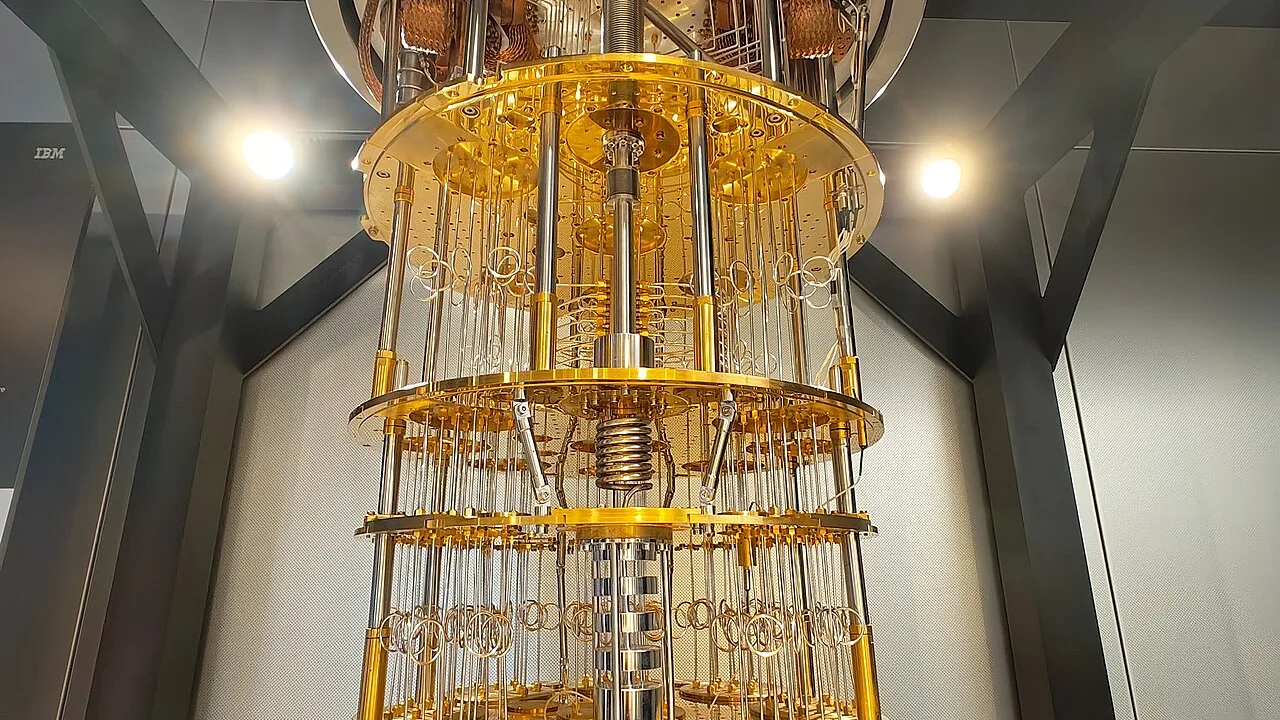
Designing a quantum algorithm has always been a craft job. The space of possible circuits is enormous, and human intuition is the main guide. Google DeepMind and Google Quantum AI have now shown a different way to work: teams of Gemini-based agents search that space for candidate algorithms, and the Lean 4 theorem prover checks whether what they found is actually correct.
The combination is the story. Agents are good at breadth — trying many approaches quickly — and bad at knowing when they have fooled themselves. Formal verification is the opposite: slow, exacting, and unable to invent anything. Put together, the agents propose and the prover disposes, and what survives is a faster algorithm with a machine-checked proof attached.
What the agent teams actually did#
Instead of a single model working alone, DeepMind used teams of agents built on Gemini to design quantum circuits, with formal verification in Lean 4 as the gate every candidate had to pass. The split separates two jobs that usually get tangled: searching for ideas, and proving they work. An agent can hallucinate a shortcut; a theorem prover cannot be talked into accepting one.
The choice of problems is deliberate. Simulating a fusion plasma or a complex molecule is exactly the kind of calculation classical computers struggle with and quantum computers are built for — but only if the algorithms are efficient enough to run on hardware that does not exist yet. A faster algorithm does not just save time; it changes which problems are reachable at all.
The numbers that matter#
Reports cite up to a 290-fold reduction in quantum arithmetic cost for the algorithms the agent teams found — that is, up to 290 times fewer elementary quantum operations needed to run them. Fewer operations means shorter runtimes and less exposure to the errors that accumulate on real hardware.
The second number is arguably more concrete. A fusion-simulation workload that previously needed 5,650 error-corrected qubits now needs 4,338, according to reports. Error-corrected qubits are the expensive currency of quantum computing: each one requires many physical qubits and constant error correction. Cutting more than 1,300 off the requirement does not make the workload easy, but it moves it measurably closer to hardware that could plausibly exist.
Both figures are reported rather than independently confirmed, and they apply to the specific algorithms the teams found, not to quantum computing in general. Treat them as the size of the prize this method can win, not as a new baseline for the field.
Why the proof is the real story#
Speedups are cheap to claim and expensive to trust, especially when they come from an AI system. A benchmark number can be an artifact of the test; a proof cannot. Lean 4 checks a mathematical argument step by step, so an algorithm it accepts is correct by construction rather than by luck on a test set. That is what makes this result different from a model merely proposing a clever-looking circuit.
It also lands in the middle of a wider shift: Lean has become the place where AI-produced mathematics gets checked — days earlier, the same proof assistant and its Mathlib library certified the claimed proof of the Riemann hypothesis. The pattern is becoming familiar — AI systems generate, formal tools verify — and quantum algorithms are a natural next domain, because a wrong circuit is not a matter of taste.
Why fusion and chemistry come first#
Fusion and chemistry are the two flagship use cases for quantum simulation for the same reason: both involve quantum systems that classical computers can only approximate. A fusion plasma is a soup of interacting particles; a molecule is electrons dancing around nuclei. In both cases the underlying physics is quantum mechanical, so simulating it on a classical machine means fighting exponential costs, while a quantum computer handles the same structure natively.
That is the promise, and it has been the promise for years. What has lagged is the algorithm layer: the recipes that turn a physical problem into a sequence of operations a quantum machine can actually execute. Agent-discovered algorithms with proofs attached attack exactly that bottleneck.
What to watch#
First, whether the gains survive contact with real hardware. A proof guarantees the mathematics; it says nothing about noise, calibration drift, or the error rates of today’s machines. The algorithms are verified, not yet run.
Second, whether the loop generalizes. Fusion and chemistry are friendly targets for this method because the problems are well-specified and the correctness criteria are crisp. The test is whether agent teams plus a prover can find speedups in messier domains, where what counts as correct is harder to formalize.
Third, what DeepMind publishes. The value of this kind of work compounds when others can inspect the circuits, replay the Lean proofs, and build on the method — and when independent researchers can check the reported 290-fold figure for themselves. Until then, the honest summary is narrower: agents searched a space humans explore slowly, and a prover certified what they found.
That is a new way to do science, not just a faster algorithm: the agents supply ideas at a scale no research group can match, and the proofs supply the trust that makes them usable.
Sources: AI Briefing, “AI News Today — Daily AI Briefing,” November 24, 2026; AI Daily Pulse, “Today’s Daily,” November 24, 2026.