Anthropic is buying its own power plant: $3.4B of gas generators to run Claude's data centers
Anthropic has reportedly agreed to pay about $3.4 billion for 1.7 gigawatts of gas-fired generators, taking over orders placed by Texas developer OnePWR — the largest power-equipment purchase by an AI lab yet, and a sign the compute race has become an energy race.
What we checked: The Financial Times' November 8 report, cross-checked against Reuters' account and investment bank Piper Sandler's transaction listing. Anthropic and OnePWR both declined to comment, and Reuters said it could not independently verify the deal — so the figures in this article are reported, not confirmed.
- What: about $3.4 billion for 1.7 gigawatts of heavy-duty gas-fired Caterpillar generators, according to the Financial Times.
- How: Anthropic takes over generator orders OnePWR placed with Caterpillar about two years ago, including the engineering and construction work to install them. No acquisition of OnePWR, no employees transfer.
- Corroboration: Piper Sandler, OnePWR's adviser, lists a $3.4 billion sale of OnePWR's power-generation platform to an unnamed “frontier AI lab” in September.
- Context: Anthropic's amended IPO filing, dated November 2, lists about $895.4 billion in aggregate commitments — mostly compute and infrastructure — and says access to electricity limits data-center expansion in several markets.
- Unknowns: where the generators will go, when they will arrive, and whether the $3.4 billion sits inside the $895.4 billion already disclosed.
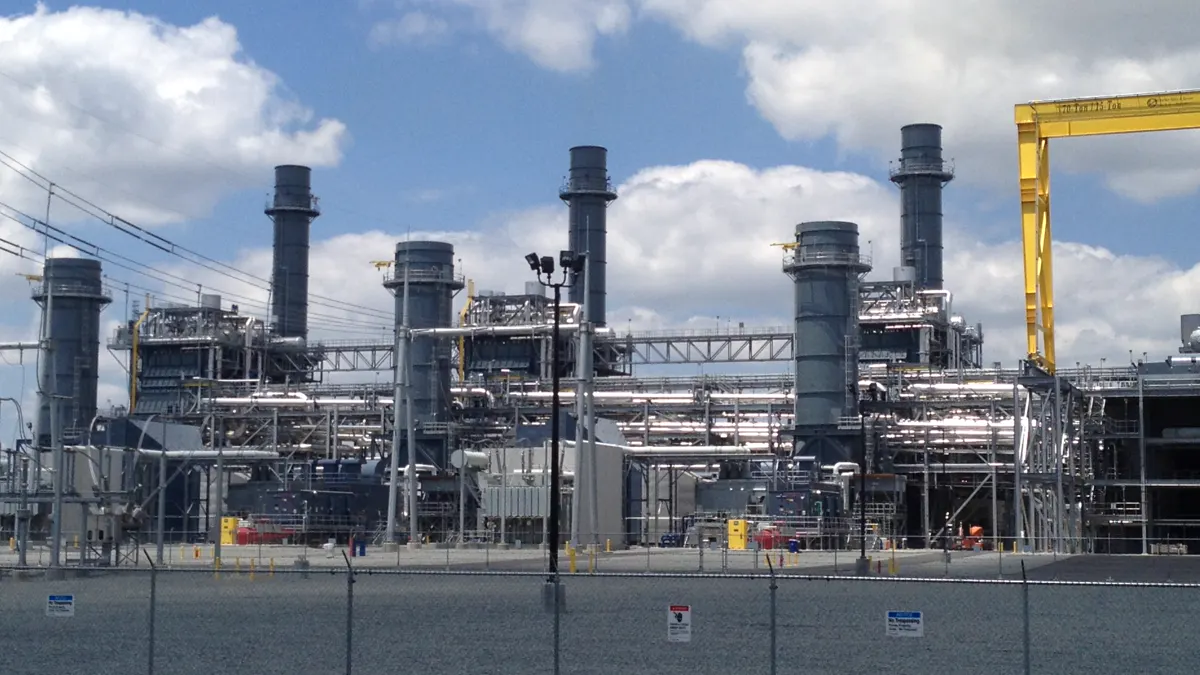
Anthropic is buying its way out of the power queue. The company behind Claude has reportedly agreed to pay about $3.4 billion for 1.7 gigawatts of heavy-duty gas-fired generators, taking over equipment orders that a Texas developer placed with Caterpillar two years ago. If the report holds, it would be the largest single purchase of power-generation equipment by an AI lab — and the clearest sign yet that the race to build bigger models has become a race to secure electricity.
The deal was reported by the Financial Times on Sunday, November 8. Anthropic made the commitments in late September, according to the paper, by stepping into orders that San Antonio-based OnePWR Solutions had placed with Caterpillar but needed financing to complete. Anthropic first planned to buy electricity from OnePWR as a customer, the report says, before deciding to take over the equipment orders itself — inheriting OnePWR's place in the production line.
What happened#
The structure of the reported deal matters as much as its size. Anthropic did not buy OnePWR, and none of OnePWR's employees moved over. What changes hands is the equipment — Caterpillar generators ordered about two years ago — plus the engineering and construction work needed to install them. At the reported figures, Anthropic is paying roughly $2 million per megawatt for generators plus installation.
The one independent corroboration so far comes from Piper Sandler, OnePWR's adviser, which lists a completed $3.4 billion sale of OnePWR's power-generation platform to a “frontier AI lab” — without naming the buyer. Anthropic and OnePWR both declined to comment, and Reuters said it could not independently verify the transaction.
Nothing has been disclosed about where the generators will be installed or when they will be delivered. That gap matters: on-site gas plants need air permits, and those permits are already contested ground. A federal judge has let a pollution case over xAI's gas turbines in Memphis proceed, and the same scrutiny is likely to follow any Anthropic site.
Why buy generators instead of electricity#
The short answer is that the grid cannot keep up. Anthropic's amended IPO filing, dated November 2, says access to electricity limits data-center expansion in several markets, and that new power sources and grid connections can take years to develop. The same filing lists about $895.4 billion of aggregate commitments, substantially all for compute and infrastructure. It also says some of its planned facilities will rely on dedicated on-site natural gas-fired generation — language that reads very differently now that the OnePWR deal has surfaced.
Owning the generators outright is the fastest route through that bottleneck. A lab that buys electricity waits in line for grid capacity; a lab that buys the machines that make electricity controls its own schedule — and takes on the job of a power company, with the permitting, construction, and local politics that come with it.
The generator rush is already underway#
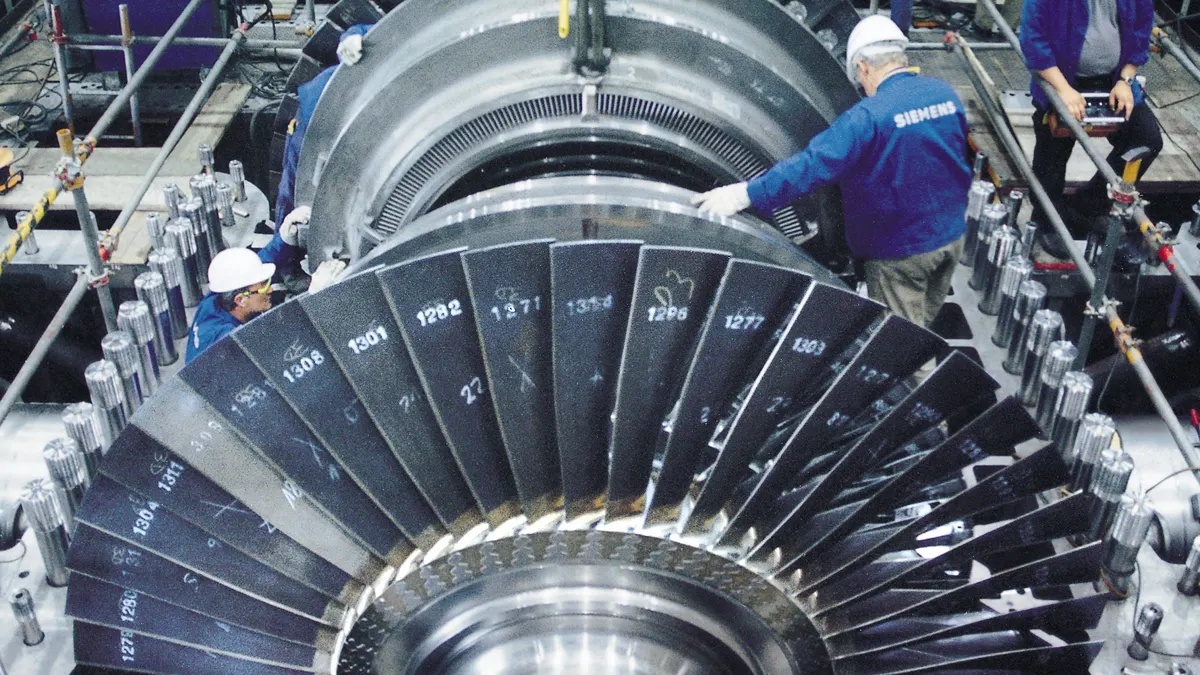
Anthropic is not the first lab to reach this conclusion. Elon Musk's xAI bought mobile gas turbines for $2 billion earlier this year, per the Financial Times, and Mississippi has permitted 41 gas turbines at the site serving its Colossus expansion. The engine makers are booking the demand: Caterpillar's power-generation sales rose 30% to $3.42 billion in the third quarter, driven mainly by turbines and large reciprocating engines for data centers.
The pattern is now unmistakable. Every frontier lab is converging on the same realization: the constraint on AI growth is no longer just chips or talent, but megawatts — and the megawatts are being bought years in advance by whoever can pay first. The International Energy Agency's 2026 assessment projects global data-center electricity consumption nearly doubling, from about 485 terawatt-hours in 2025 to roughly 950 terawatt-hours by 2030. The labs are not waiting for the grid to catch up; they are building their own power supply.
The climate tension#
The deal sits awkwardly against Anthropic's own public commitments. In February, the company pledged to pay for 100% of the grid upgrades needed to connect its data centers and to bring new generation online to match their consumption. Owning on-site gas generators is, in one sense, exactly that — new generation, brought online by Anthropic itself. In another sense, it is the most carbon-intensive way to do it, from a company whose safety-focused branding has always leaned on responsibility.
That tension is not going away. Anthropic is preparing to list on the stock market, with its IPO roadshow expected to start this week and prospective investors discussing valuations of about $1.2 trillion to $1.3 trillion — down from earlier hopes of $1.5 trillion. Public-market investors will ask harder questions than private ones about a $3.4 billion gas purchase, about the emissions it implies, and about whether the $895.4 billion in disclosed commitments already includes it. The filing does not say.
What's next#
Three things to watch. First, whether Anthropic confirms the deal at all — the IPO prospectus will eventually have to account for the money. Second, where the generators land: the first permit filing will name the site, the capacity, and the community that has to live next to it. Third, whether rivals follow. If the largest known power-equipment purchase by an AI lab becomes the template rather than the exception, the frontier labs will have quietly become some of the biggest buyers of fossil-fuel generation in the country — and the debate about AI's energy footprint will move from data-center efficiency to the power plants themselves.