OpenAI pledges to pay its own data-centre power bills in a National Community Compact
Two days after midterm voters backed curbs on data-centre expansion, OpenAI published a National Community Compact promising to cover the full cost of its campuses' electricity, publish site-level water and power figures, and stop asking local officials to sign NDAs. The catch: the promises are voluntary, and OpenAI grades its own homework.
- Published: November 5, 2026 — two days after midterm voters backed at least 40 local measures curbing data-centre construction, according to The National.
- Core promise: OpenAI will pay “the full cost of powering our compute campuses” plus the grid infrastructure needed to serve them, and has signed the White House’s Ratepayer Protection Pledge.
- Transparency: site-level water and electricity use, construction plans and independent noise studies, published before a campus opens and every year after — plus a local compact and annual progress report per campus.
- Secrecy: no NDAs for public officials as a condition of discussion, with narrow exceptions; OpenAI says it voided its NDAs in Effingham County, Georgia, in July.
- The catch: the compact is voluntary, with no penalties, dispute process or independent verification, and it covers only campuses OpenAI owns and operates — not partner-owned sites.
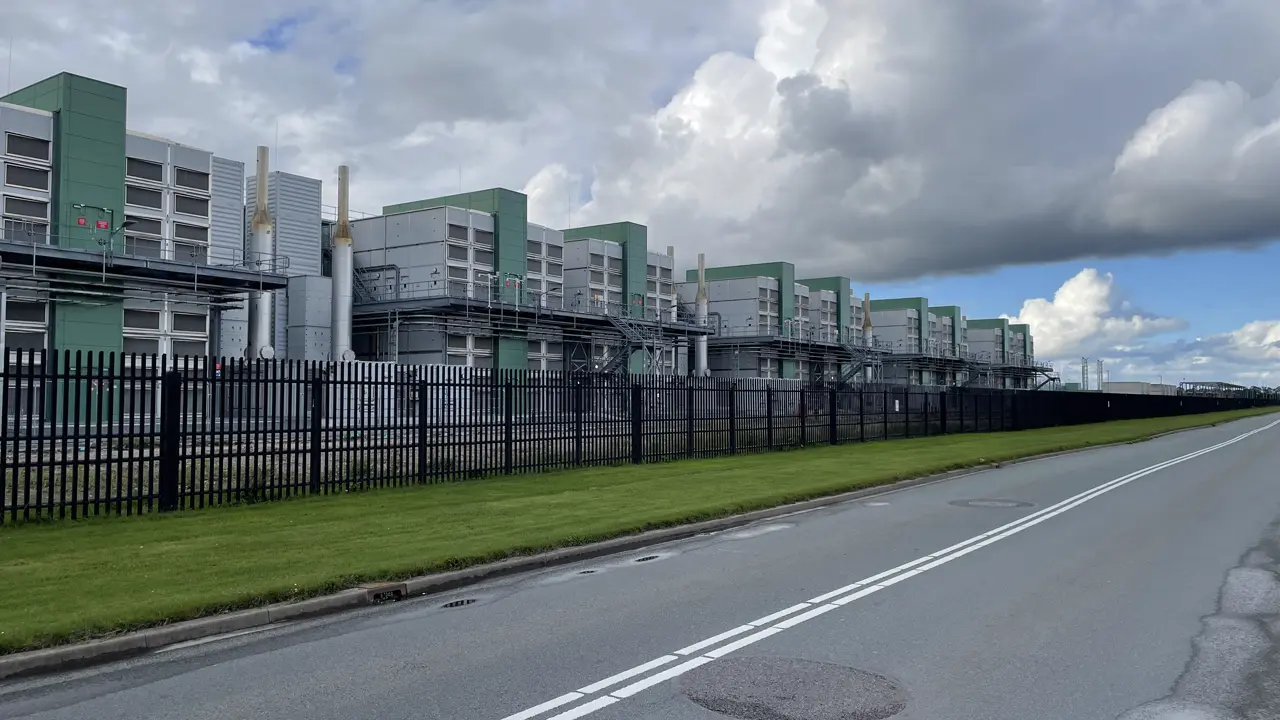
OpenAI promised on Thursday that the towns hosting its future AI campuses will not pay for the electricity those campuses consume. The pledge is the centrepiece of a National Community Compact published on November 5, alongside a policy blueprint that asks lawmakers to turn the same rules into law for the whole industry.
The timing is hard to miss. The compact landed two days after voters in the US midterms backed a wave of local measures curbing data-centre construction — at least 40 passed, according to The National — and after months in which power bills, water use and secretive negotiations have turned data-centre proposals into local political fights. OpenAI says the framework was months in the making and is not a reaction to the election results. Either way, it is the first time a frontier lab has put this specific a set of community commitments in writing.
What OpenAI is actually promising#
The compact covers future campuses that OpenAI both owns and operates, and its central commitment is financial. “We will pay the full cost of powering our compute campuses and ensure local residents do not foot the bill for our energy needs,” the document says. That extends beyond the monthly electricity bill to the grid infrastructure needed to serve the site — and OpenAI says it will put up financial guarantees before major grid spending begins, so other customers are not left paying if a project is delayed, scaled back or cancelled. The company has also signed the White House’s Ratepayer Protection Pledge.
The rest of the package is about transparency and access. Each future campus gets its own local compact, shaped by residents, with a local contact and an annual public progress report. OpenAI will publish site-level water and electricity use, construction plans and independent noise studies before a campus opens and every year after. It will cut power use at peak times, feed power back to the grid, and set local hiring targets where the workforce allows. And it will stop asking public officials to sign NDAs as a condition for discussion, with narrow exceptions such as trade secrets — it voided its NDAs in Effingham County, Georgia, in July.
The framing in OpenAI’s own policy document is blunt: “Households shouldn’t bear the costs of powering data centers. Instead, compute campus investment should help expand and modernise America’s energy grid, strengthen reliability, and deliver broader benefits to consumers.”
The Georgia and Ohio receipts#
OpenAI is pointing to two existing projects as evidence the model already works. In Effingham County, Georgia, near Savannah, it has committed $80 million to local priorities, including a $4.8 million grant for free school meals for all 14,000 students in the county and $2 million for a park. Its deal with Georgia Power lets the utility cut up to 1,000 megawatts of supply to the campus when demand peaks. In Pike County, Ohio, it has committed $40 million, including $6 million for childcare shared with SB Energy.
Why now: a bruising week at the ballot box#
The backlash OpenAI is responding to is no longer abstract. At least 45 data-centre projects faced disruption from local opposition in the second quarter of 2026 alone, according to Data Center Watch, and the midterms turned that opposition into votes: restrictions passed and oversight-minded candidates won in multiple states. The core grievance is about who pays. Data centres are the largest new load on American power grids in decades, and without rules requiring them to cover the cost of the upgrades they trigger, those costs land on household bills — the exact outcome OpenAI is now pledging to prevent at its own sites. The compact also sets a template residents’ groups can hold up in negotiations with any developer, and it puts pressure on rivals to match it.
The catch: voluntary, and self-graded#
The compact’s weaknesses are as specific as its promises. It describes no penalties for noncompliance, no dispute process, and no independent verification of the electricity and water figures — residents can read OpenAI’s disclosures, but the document does not explain how they could compel corrections. Compliance is reported in the company’s own annual progress reports.
The ownership restriction matters too. Partners, including Oracle, build and own much of the infrastructure reserved for OpenAI, and the company has not said the compact automatically covers those partner-owned facilities — leaving a large share of the capacity OpenAI actually uses outside the pledge’s scope.
The separate policy blueprint is, in a sense, the more honest document: it asks policymakers to direct state utility commissions to create large-load tariffs requiring big electricity consumers to pay the incremental costs they create, alongside mandatory reporting, narrow limits on officials’ NDAs and provisions letting governments reclaim tax breaks when developers miss agreed commitments. In other words, OpenAI is asking lawmakers to make mandatory what it is only volunteering for itself.
What to watch#
Three things decide whether this compact is a turning point or a press release. First, the first local compact and the first annual progress report — the test of whether the transparency promises survive contact with a real project. Second, whether other labs match the pledge, and whether any of them cover partner-owned sites. Third, whether the blueprint’s tariff proposals get picked up by state utility commissions, where the actual bills get decided.
Sources: Decrypt (November 5, 2026); The Hindu BusinessLine (November 6, 2026); MadRobot (November 5, 2026); The Mainstream (November 6, 2026); AI News Online (November 7, 2026) for the midterm figures. The Effingham County and Pike County figures are OpenAI’s own, as reported by MadRobot; the compact’s scope and enforcement limits are as described by Decrypt. Cover photo: Hay Kranen, via Wikimedia Commons; server-rack photos: NERSC (public domain) and NOIRLab/NSF/AURA/T. Slovinský (CC BY 4.0), via Wikimedia Commons.