Bell and Cohere put sovereign AI to work inside a security operations centre
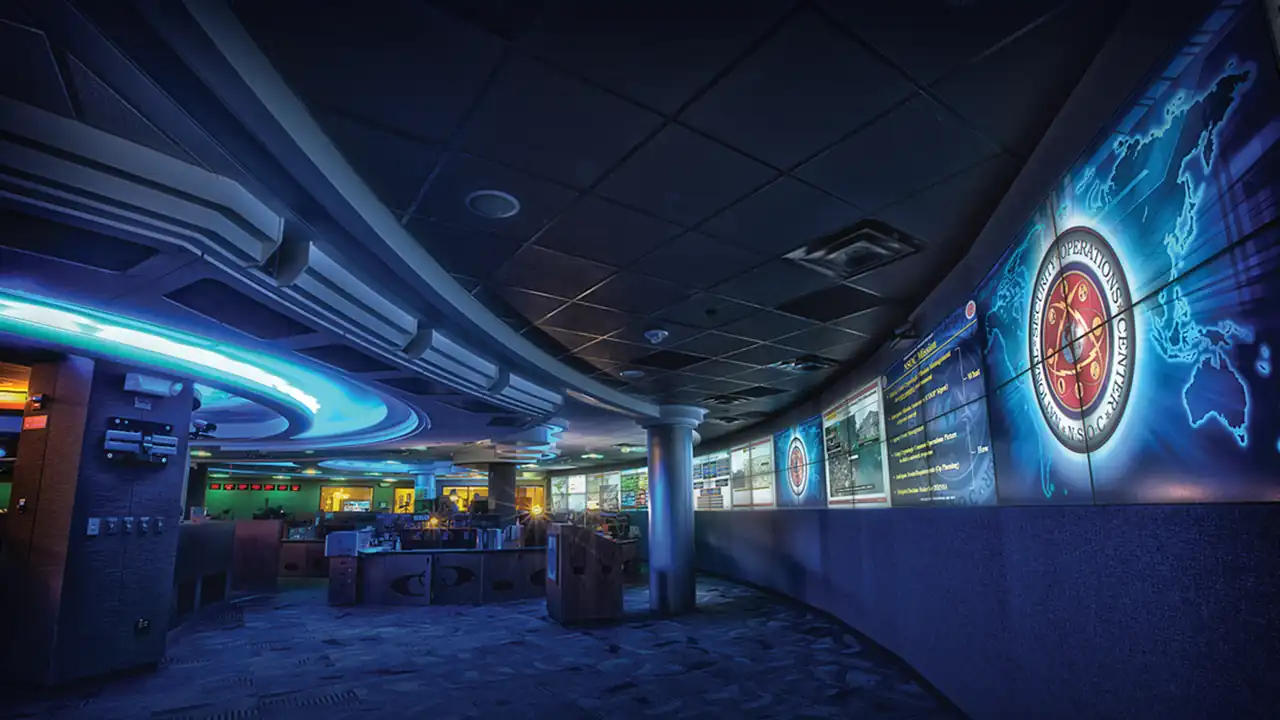
Bell Cyber has deployed a Cohere-built cybersecurity model into its Autonomous Security Operations Centre — running entirely on Canadian infrastructure. It is the first customer-facing product of the Bell–Cohere partnership.
Canada just got a concrete example of what "sovereign AI" means in practice. At the Bell Cybersecurity Summit in Toronto on September 23, Bell Canada and Cohere announced that a domain-specific cybersecurity model is now running in production inside Bell Cyber's Autonomous Security Operations Centre (ASOC) — built on Cohere's enterprise AI technology, customized with Bell Cyber's security data and operational expertise, and hosted entirely on Canadian infrastructure.
The deployment is the first customer-facing product of the two companies' strategic AI collaboration, and it puts one of the country's flagship AI labs directly inside the security operations of the country's largest telecom.
What shipped: a model built for threat investigations#
This is not a research prototype or a limited pilot being described in future tense. The model is live, integrated into Bell Cyber's ASOC, and doing the unglamorous work of investigations: analyzing and summarizing complex security information, surfacing the context most relevant to an investigation, and supporting standardized investigative workflows.
The pitch to security teams is a familiar one, but it lands harder in a security operations centre than in most places. SOC analysts drown in alerts drawn from endpoints, identities, networks, and cloud environments. Bell says the new model cuts the time analysts spend gathering and interpreting that information, so they can concentrate on what only humans can do well: validating threats, determining impact, and directing the response.
"We have developed a model purpose-built to support cybersecurity investigations," said John Menezes, President and CEO of Bell Cyber. "It can help analysts move from alert to informed action faster and more consistently."
Why sovereign is the whole point#
The headline capability — a cybersecurity LLM — is interesting but not novel; every major lab now tunes models for vulnerability hunting and incident response. The more distinctive claim is architectural: the model runs in production on Bell AI Fabric, with AI processing and sensitive security information remaining inside a Canadian-hosted environment.
That matters because security telemetry is among the most sensitive data an organization holds. A SOC's alert stream reveals which systems are vulnerable, what is under active attack, and how the organization responds. Shipping that stream to a foreign cloud for analysis is a non-starter for governments and many enterprises — and Canada's public sector is explicitly part of Bell's pitch here.
"Canadian-hosted processing gives us greater control over sensitive security information," Menezes added. It is also a clean fit for Cohere's whole business model: the Toronto-headquartered lab, founded in 2019, has positioned itself as the sovereign-AI alternative for enterprises, with deployment options spanning clouds, private on-premises environments, and even fully air-gapped settings.

The analyst keeps the keys#
One detail in the announcement deserves attention for what it doesn't promise. Bell's ASOC already uses AI and automation to detect, triage, and contain threats at machine speed; the new model extends that capability to the language, evidence, and workflows of investigations — while, per the release, "keeping analysts in control of consequential decisions."
That is the right boundary, and a harder one than it sounds. Autonomous security agents are already probing enterprise networks from the attacker side; the defender side needs the same machine-speed analysis without surrendering judgment calls on incidents to a model. Bell's framing — a model that accelerates understanding but keeps human expertise at the centre of critical decisions — is roughly where the serious security vendors are converging.
The caveat is the usual one for launch-day announcements: no performance numbers were disclosed. The announcement describes a capability, not a benchmark. Treat the speedup claims as the vendor's account until Bell publishes operational metrics from the ASOC.
What to watch#
- Operational evidence. The interesting number isn't launch-day marketing — it's how much faster real investigations close and whether analyst triage quality improves. Bell would strengthen the story enormously by publishing before-and-after figures.
- Public-sector adoption. The announcement explicitly frames this as adding sovereign AI capability for Canadian businesses and public-sector organizations. Government contracts would be the real proof of the residency argument.
- The telco AI race. Bell is the first Canadian carrier to ship a production AI security capability built on domestic infrastructure. Whether rivals answer with their own sovereign AI plays will tell you how much customers are actually asking for it.
- Cohere's enterprise flywheel. Michael Pelosi, Cohere's Country Manager for Canada, described the company's approach as tailoring secure enterprise AI "to each organization's data, workflows, and operating requirements." Bell is the flagship reference customer for that pitch; its success or failure will be watched by every other enterprise considering the same route.
As John Watson, Bell's Group President for Business Markets, AI Fabric, and Ateko, put it: "It's a practical example of how Canadian innovation, expertise and infrastructure can come together." Sovereign AI has been mostly a policy slogan. This week, in at least one security operations centre, it started being infrastructure.