A webcam ‘X-ray mirror’ built with Claude Fable 5.2 overlays your skull in real time — Reddit’s verdict: cool demo, not a medical tool
A video posted to r/ClaudeAI shows a webcam app that pins a skull, brain and facial muscles to your face in real time — built in one chat with Claude Fable 5.2 in about 48 minutes for roughly $13. The thread loves the demo, and the author himself says it is not a medical tool.
- The clip: a Reddit-hosted video, 3 minutes 21 seconds, posted to r/ClaudeAI on November 10 by u/Sourcecode12 — more than 1,600 upvotes and 140 comments by Tuesday evening.
- The build: one chat with Claude Fable 5.2, a single HTML file using MediaPipe and three.js, anatomy from the BodyParts3D dataset; about 48 minutes and roughly $13 of model time.
- The caveat: the anatomy comes from a real dataset of one adult, scaled to fit the viewer’s head — it shows where things typically sit, not a scan of the person on camera, and it is not a medical tool.
- The verdict: no debunk of the demo itself; the sharpest corrections are that it is a generic overlay, with the hand bones upside down and the eyes and teeth not quite lining up.
- Try it: free, no account — the code is on GitHub and a live demo runs in the browser, both linked from the original post.
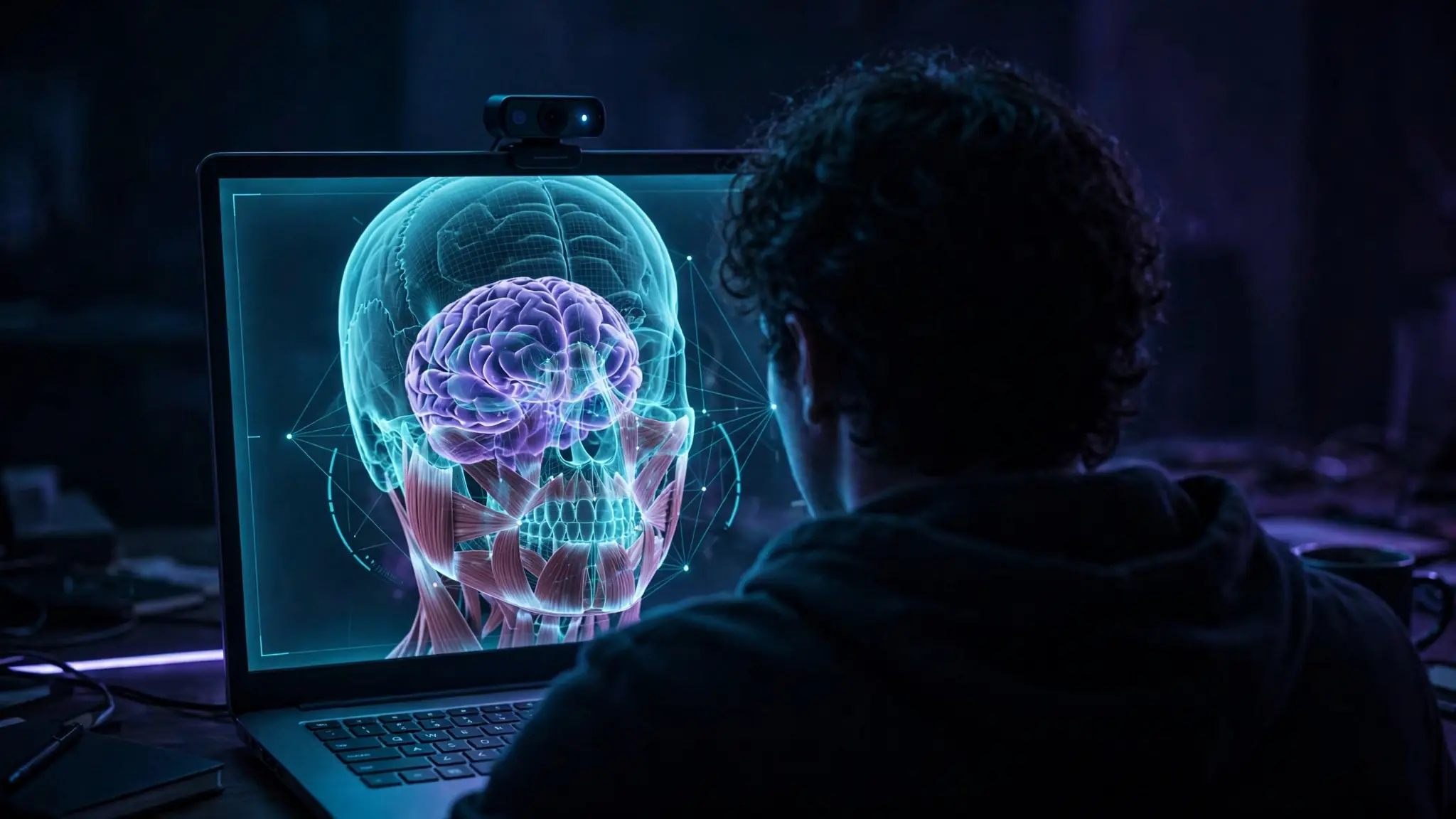
Point a webcam at your face and, a moment later, a skull stares back. A video posted to r/ClaudeAI on Tuesday shows a web page that pins a skull, brain and facial muscles to the viewer’s face in real time — the jaw opens when you open your mouth, and raising a hand brings up a skeleton of finger bones that follows every wiggle. It was built in a single chat with Claude Fable 5.2, in about 48 minutes, for roughly $13 of model time. By Tuesday evening the post had passed 1,600 upvotes and 140 comments, and the thread’s verdict was unusually warm: a genuinely fun demo, with one firm correction attached — this is not a medical device, and the author says so himself.
What the video actually shows#
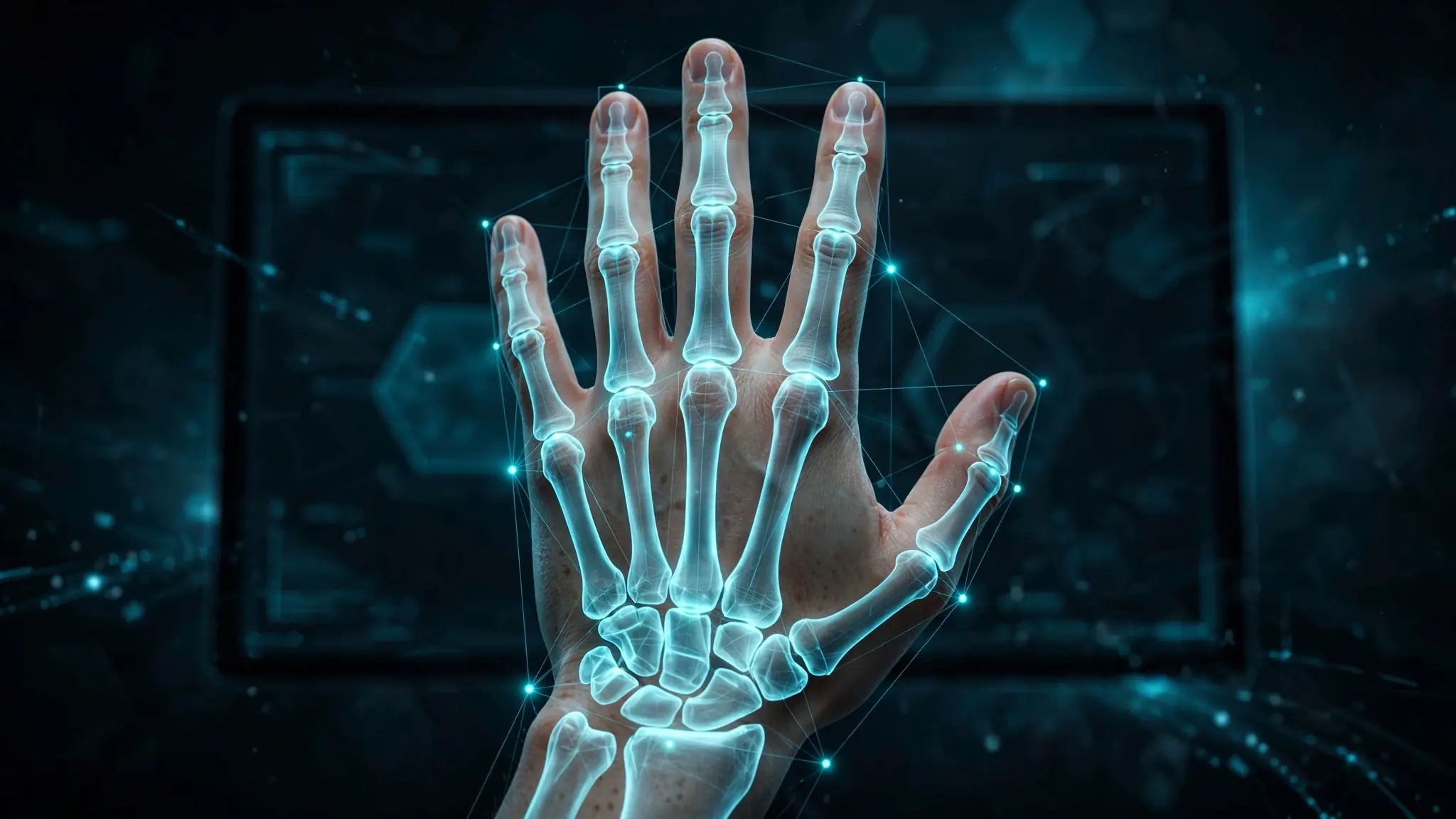
The clip runs 3 minutes 21 seconds, and it is mostly a screen recording with the author talking through it. The overlay tracks the head as it turns, the jaw moves with the mouth, and the hand bones track a raised hand finger by finger. About two and a half minutes in, the author pulls up a tracking-data panel to show the face and hand landmarks the page is following underneath the anatomy. The effect is closer to a mirror than a scan: you move, the skull moves with you, and the brain and muscle layers sit inside it, scaled to your head.
That framing matters, because the first thing the author does in the post is head off the obvious misunderstanding. The anatomy is a real dataset of one adult, scaled to fit whoever is in front of the camera. It shows where the structures typically sit. It is not a scan of the person on screen, and it is not a medical tool — the author states both plainly, before anyone in the comments has to.
How it was built#
The build is the story as much as the demo. According to the author, the whole thing came out of one chat with Claude Fable 5.2 and landed as a single HTML file: MediaPipe handles the face and hand tracking, three.js renders the anatomy, and the skull, brain and muscle models come from the BodyParts3D dataset. Total cost, by the author’s own account: about 48 minutes and roughly $13 of model time.
The code is public and free, with no account needed — the repository is on GitHub, and a live demo runs in the browser. The author has been answering questions in the thread all day, including giving permission for others to host their own copies; one commenter has already re-hosted a version with the author’s blessing.
It is the latest entry in a run of one-chat builds from the same model family this week. Fable 5.2 also produced a playable Gears of War clone from a short prompt, and Anthropic launched the model itself only the day before. The X-ray mirror is the smallest of the three builds — one file, no game engine, no training run — and arguably the most immediately tryable: open the page, allow the camera, and it works.
The thread’s verdict#
The praise came first. A neurologist in the thread suggested the obvious next step — let people upload their own MRI and commercialise it — while others called it a neat example of AI making new, fun things possible. Nobody in the top comments claimed the footage was faked or that the code was not real; the demo is what it says it is, and the author’s own caveat took the usual debunking energy out of the room.
What the thread did instead was nitpick the anatomy, accurately. One commenter called it, fairly, a Snapchat filter with no medical purpose. Another noticed the hand bones are upside down. A third pointed out that the eyes and teeth do not quite line up, and that the jaw does not move as you speak. A fourth noted the underlying point the author had already made: the overlay is a generic model, not the viewer’s own anatomy. The author has replied to much of it, including the cost question and the hosting requests, and has not disputed any of the corrections.
That is a healthy shape for a viral demo thread: enthusiasm for the trick, precision about what the trick is not. The corrections do not damage the demo, because the demo never claimed to be a diagnostic device. They do set its ceiling, though — as a teaching aid it shows where things sit; as a medical image it shows nothing about the person in front of the camera.

Why it matters#
The interesting part is not the skull. It is how little stood between the idea and a working page. MediaPipe’s face and hand tracking is free and runs in the browser; three.js is free; the BodyParts3D anatomy is a public dataset. The model’s job was the glue — wiring the tracker to the renderer, scaling the model to the face, keeping the jaw and the fingers in sync — and that glue took under an hour and the price of a lunch.
That is the same pattern behind this week’s other Fable builds, and it is worth naming: the frontier model is increasingly the last mile of a small interactive tool, not the tool itself. The tracking, the rendering and the dataset all existed already. What did not exist, until Tuesday, was a page that put them together in a way a stranger could open and play with in seconds. The 48-minute figure will invite the usual scepticism — it was one chat, but the author knew what to ask for — and the thread, to its credit, mostly asked about the result rather than the receipt.
There is also a quiet lesson in how the author framed it. Disclosing the limitation up front — generic anatomy, not a scan, not medical — did not dampen the reception; it focused it. The thread spent its energy on the fun and the fixes instead of on whether the premise was honest. Builders who bury the caveat usually spend the whole thread defending it.
What to watch#
Three things to follow. First, whether the author or a fork takes up the neurologist’s suggestion — an upload-your-own-scan version would be a genuinely different product, and a much harder one, with real questions about data handling and medical claims. Second, whether the hand-bone and alignment nits get fixed; they are small, visible and exactly the kind of thing a second chat could address, which makes this a neat test of how far the one-chat genre goes when the author keeps iterating. Third, the forks: with the code public and hosting permission already granted, copies will spread, and the interesting ones will be the ones that change the anatomy — a full skeleton, a muscle system that flexes, a version for a classroom wall.
Until then, the fair description stands: a webcam, a skull that follows your face, hand bones that follow your fingers, 48 minutes of model time — and a comment section that liked it enough to correct it properly.
Sources: the original post by u/Sourcecode12 on r/ClaudeAI; the project repository on GitHub and the live demo. Commenter claims about the demo and the build are reported as thread claims, not independently verified. The illustrations are AI-generated for AI Frontier Post.