EU leaders hold their first AI summit in Dublin — and leave without a funding deal
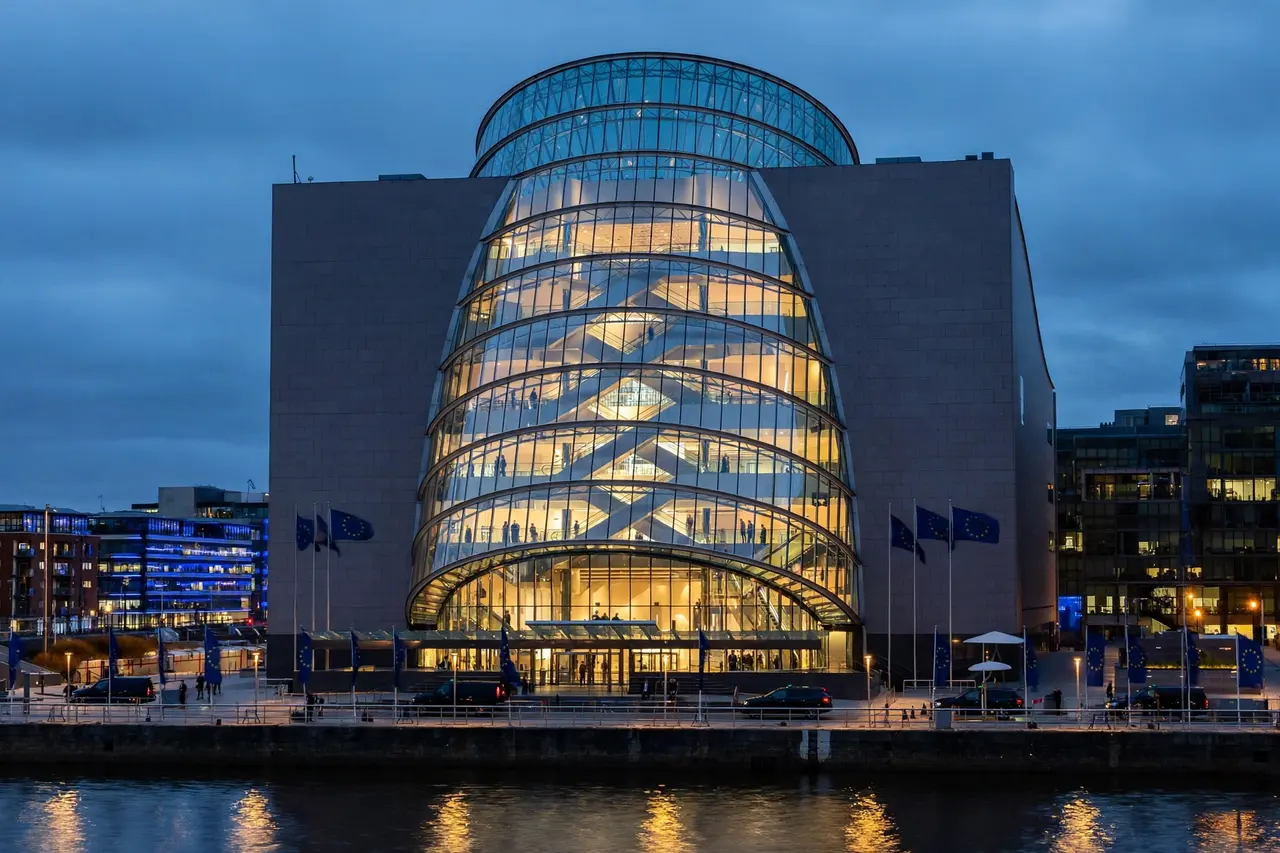
On Friday, November 13, the European Union’s heads of state and government sat down in Dublin for their first in-depth discussion devoted entirely to artificial intelligence. The informal European Council meeting, chaired by António Costa and hosted by Irish Taoiseach Micheál Martin, brought two outside voices into the room — Mistral chief executive Arthur Mensch on competitiveness, and Nobel laureate Geoffrey Hinton on the risks. Leaders left with a shared agenda and a date to return to it. What they did not leave with was money.
- First leaders-level AI discussion: informal European Council, Convention Centre Dublin, November 13, 2026; no formal conclusions adopted.
- Two briefers: Mistral CEO Arthur Mensch on competitiveness and homegrown models; Nobel laureate Geoffrey Hinton on societal risks, warning of “runaway AI”.
- Von der Leyen’s numbers: 37% of EU businesses used AI in 2025 on average (Finland 66%, nearly double the US rate); 19 AI factories and seven AI gigafactories mobilising around €30 billion in computing capacity; at least €500 billion needed overall for technological sovereignty.
- No new money: the meeting approved no funding package or binding commitments; gigafactory funding remains disputed in the 2028–2034 budget talks.
- Next steps: leaders return to AI at a retreat in Alden Biesen on February 5, 2027; AI is the central theme of the 2027 Social Summit; the formal European Council on November 26–27 takes up Ukraine financing.
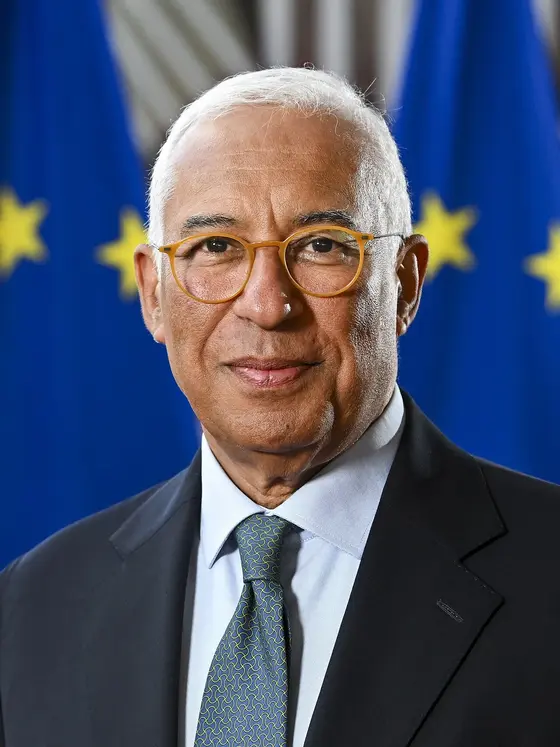
European Council President António Costa called AI “the most important technology of our time,” and said Europe must maximise its benefits for productivity and public services while managing the risks — and help set global standards for safe, human-centric AI. The discussion ran along two strands: boosting competitiveness and technological sovereignty, and addressing AI’s societal impacts, safety and trust.
The meeting followed the previous day’s European Political Community summit, also held in Dublin. Ukraine dominated much of the day anyway: leaders agreed their negotiating team for peace talks will be the EU institutions plus the E5 countries of the Coalition of the Willing — France, Germany, Italy, Poland and the United Kingdom — and Costa said “Europe’s security begins with Ukraine’s security.”
A first for the European Council#
For the first time, the EU’s heads of state or government devoted a meeting to artificial intelligence. Costa had argued in his invitation letter that the pace of AI development warranted “a first dedicated discussion, at leaders’ level,” on both the opportunities and the transformative effect on economies and societies. The Dublin session was that discussion — informal in format, which means no formal conclusions, no legislation and no budget lines came out of it.
That informality is the point and the limitation. Leaders could speak freely, with two practitioners in the room rather than only each other. But nothing decided in Dublin binds anyone: the test of the meeting is what survives into the formal machinery — the next long-term budget, the proposed European Competitiveness Fund, and the Commission’s financing proposals that von der Leyen promised to follow up with.
The sovereignty bill#
The money question dominated the competitiveness strand. Commission President Ursula von der Leyen told leaders that Europe already leads in AI adoption — 37% of EU businesses used AI in 2025 on average, with Finland at 66%, nearly double the US rate. She outlined plans for industrial AI, 19 AI factories, and seven AI gigafactories mobilising around €30 billion in computing capacity. And she put a number on the whole ambition: at least €500 billion is needed overall for technological sovereignty, covering chips, compute and frontier models.
Mensch, according to reports of the meeting, urged leaders to redirect substantial spending on foreign technology toward European infrastructure. Costa pointed to the tools already on the table — the Savings and Investments Union, the proposed “28th regime” for businesses operating across the EU — and said the decisive factor is the next EU long-term budget, particularly the European Competitiveness Fund.
The official account of the meeting identifies three linked economic obstacles: attracting investment into infrastructure, securing European supply chains, and ensuring clean, affordable power. Electricity is not a side issue for AI. Large data centres need reliable supply, and the economics of new computing installations depend on grid access, suitable sites and financing arriving together. Adoption matters too: Europe could build more models at home without gaining much if companies, especially smaller ones, cannot deploy them effectively.

Hinton’s warning#
The second strand of the discussion was the one Hinton was invited to lead. The Nobel laureate issued strong warnings about “runaway AI” and existential risks, and leaders examined the technology’s impact on fundamental rights, children, democratic processes, labour markets, the European social model, market concentration and cybersecurity.
Costa underlined that clear oversight is essential for public trust, noting that the EU is the first region with a comprehensive AI governance framework — the AI Act — and should use that experience in the G7, the G20 and the UN. The tension in the room was the one Europe has been circling for two years: faster deployment may push toward simplifying compliance, while public confidence in critical applications depends on credible safeguards. A debate with industry and scientists can name the tension. The institutions still have to turn it into workable policy.
What Dublin did not decide#
Strip away the framing and Dublin produced a political agenda, not a completed budget bargain. No new multibillion-euro funding package was approved. No binding investment commitments were adopted. A plan for seven AI gigafactories faces disagreement over competitiveness spending in the EU’s 2028–2034 budget, and the published meeting account allocates no new amount of funding.
The numbers deserve care. The €500 billion is an estimate of what sovereignty would cost, not money on the table. The roughly €30 billion attached to the gigafactories is computing capacity to be mobilised, not an approved appropriation. And mentioning a European Competitiveness Fund does not create an immediately spendable budget line — member states and EU institutions still have to settle the next multiannual budget and the design of the new investment instruments.
What to watch#
Three things. First, the Commission’s financing proposals: whether they arrive with specific figures, credible infrastructure plans and measurable programmes for adoption across businesses and government, or stay at the level of ambition. Second, the February 5, 2027 leaders’ retreat in Alden Biesen, where Dublin’s agenda gets its first formal revisit — and the 2027 Social Summit, which will take AI’s effect on jobs and the social model as its central theme. Third, the formal European Council on November 26–27, which takes up Ukraine’s financing needs for 2027 and beyond; von der Leyen also signalled a 22nd sanctions package against Russia.
For now, the summit’s real product is a sentence every leader can repeat at home: Europe’s heads of state have finally talked about AI together. Whether that conversation becomes gigafactories, models and power lines — or another round of communiqués — is a budget fight, and it has not started yet.
Sources: EUalive — EU leaders hold first high-level AI talks in Dublin, agree on European team for Ukraine peace talks; Europäische Morgenpost — EU leaders put AI investment and safety on agenda without funding deal; Reuters — EU leaders seek to tackle challenges at first ever AI summit; AI Affairs — EU leaders meet in Dublin for first AI summit as funding disputes persist.