FieldAI lands $700M at a $10B valuation: the mapless robot-brain startup 5x'd in a year
Business Insider reports that FieldAI, the startup building one software "brain" for every kind of robot, has closed a $700 million Series C at a $10 billion valuation — five times what it was worth in 2025 — and it already books more than $135 million in revenue and customer contracts to justify it.
Business Insider first reported the raise on October 2 under the headline "FieldAI Closes $700M Series C at $10B Valuation to Build Universal Robot Brain." The Irvine startup, founded in 2023, sells what it calls a universal general-purpose brain meant to run humanoids, robot dogs, drones, and industrial rovers off one software stack. The new round prices FieldAI near the top of the physical-AI heap — up from a roughly $2 billion valuation in 2025.
What makes this round different from the usual giant-valuation-hype story: actual customers. FieldAI says it has more than 30 customers across construction, data centers, and defense, with over $135 million in revenue and signed contracts — including at least $35 million added since June. "We have seen very, very fast growth in the last several months," CEO Ali Agha told Business Insider. The existing backers read like a who's who of the physical-AI bet: Jeff Bezos' family office (Bezos Expeditions), Laurene Powell Jobs' Emerson Collective, Khosla Ventures, Nvidia's NVentures fund, and Intel Capital. The report did not name a lead investor on the new round.
What the brain does#
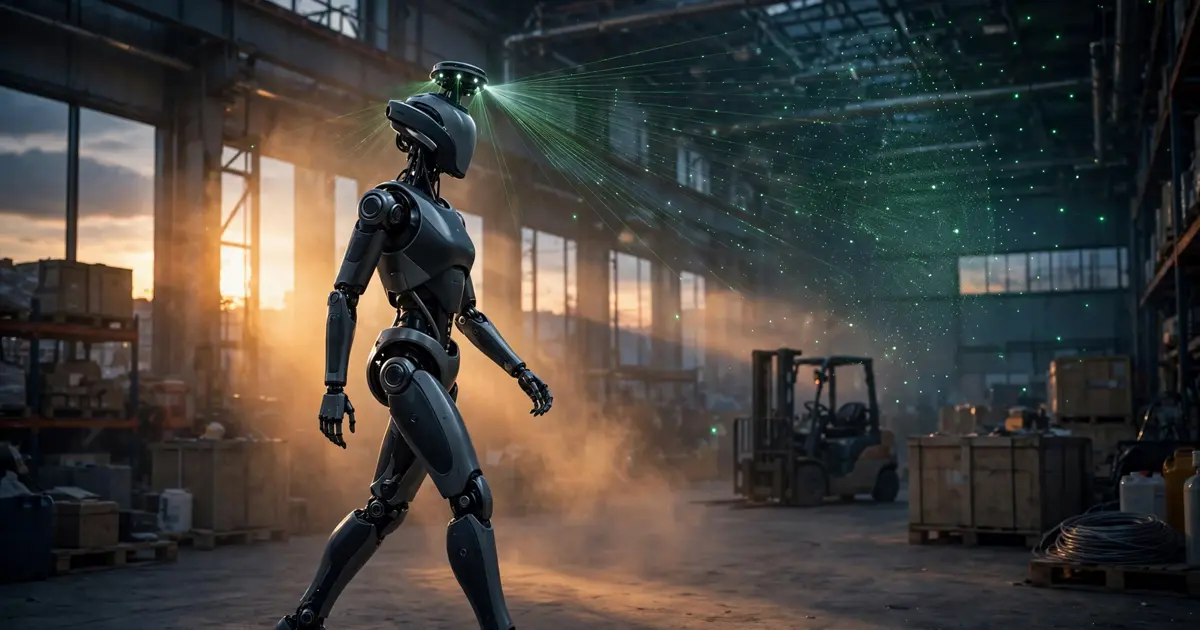
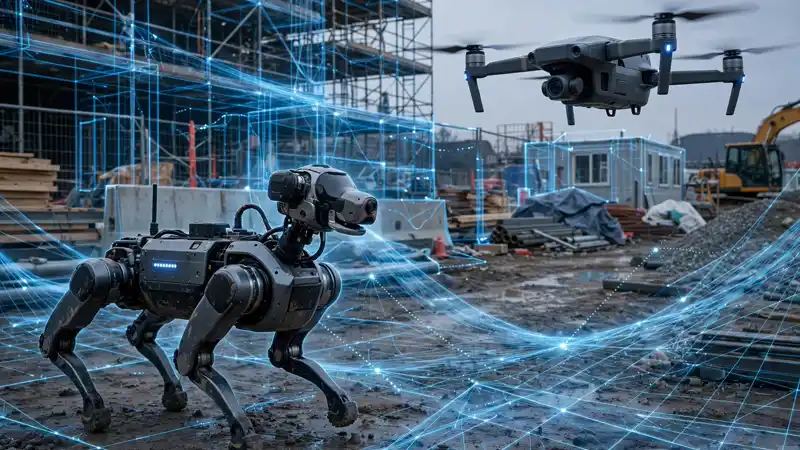
FieldAI's pitch is that robots working in unpredictable places — a construction site that changes daily, a dark warehouse, a disaster zone — can't rely on the usual navigation crutches. Its models fuse camera, lidar, and radar data into a continuously updated digital twin of the environment, letting robots operate without prior maps, GPS, or a constant internet link. The models also adjust behavior to environmental risk — slowing down in low visibility, for instance — which is exactly the kind of judgment call that traditionally required a teleoperator in the loop.
The hardware-agnostic play got a proof point in March, when FieldAI partnered with Boston Dynamics to run its stack on the quadruped Spot robot for automated industrial inspection. The targets are industrial work — construction, energy, manufacturing, and inspection — not a single robot design. Agha came to the business after seven years at NASA's Jet Propulsion Laboratory, where he led autonomy work including the DARPA Subterranean Challenge, and his CoSTAR team won the urban circuit in 2020.
The three-way race#
The $10 billion tag slots FieldAI into the heaviest fight in robotics: the race to be the operating-system layer under the humanoid era. Physical Intelligence sits near $11 billion and Skild AI above $14 billion, both chasing the same premise — one brain, many bodies. FieldAI's differentiator is traction: it is hiring engineers from Google DeepMind, Tesla, Nvidia, and Boston Dynamics, and it is doing so while pointing at a pipeline that grew $35 million in roughly three months.
Two grains of salt. First, coverage of the deal differs on the plumbing: some reports describe a signed (nonbinding) term sheet rather than money in the bank, and with no lead investor named the round's final shape is still unclear. Second, the "$135 million" figure is revenue plus signed contracts, not recognized revenue alone — the reported customer figure combines revenue with contracts rather than recurring revenue. Even discounted, it is a real business with real deployments — the rare thing a $10 billion robot valuation can point to.

Why it matters#
Physical AI is where the smart money is piling up precisely because it sells something model-makers can't: deployments. A map-free navigation stack that runs on quadrupeds, humanoids, and drones off one codebase is a cost story — less mapping work, fewer teleoperators, faster rollouts — and factories and construction sites buy cost stories. Whether one brain can genuinely serve humanoids and defense drones alike is still unproven, and $10 billion prices in a belief that FieldAI will be the one to prove it. Watch who leads the round, and whether that $135 million starts converting into recognized revenue.