Google plugs Gemini into your Wallet: spending insights, subscription audits, and a read-only promise
Google has connected Google Wallet to Gemini’s Personal Intelligence, letting the assistant answer personal-finance questions from your real spending — read-only, opt-in, and US-only for now. It lands the same day OpenAI gave its own agents a wallet, but the two products point in opposite directions.
- What: Google Wallet joins Gemini’s Personal Intelligence connected apps, announced November 13, 2026.
- Who: all Gemini app users in the US, on the web and on Android and iOS.
- What it does: spending charts, a forgotten-subscription finder, and holiday budgets built from last year’s transactions; ask by tagging @Google Wallet.
- Deeper link: bank and credit-card accounts can be linked to Wallet through Plaid — optional, for more detailed answers.
- Limits: read-only — no moving, managing, or investing money. Opt-in, and revocable at any time.
- Also: a new Memory Summary shows what Gemini remembers about your preferences and goals, and lets you edit or remove it.
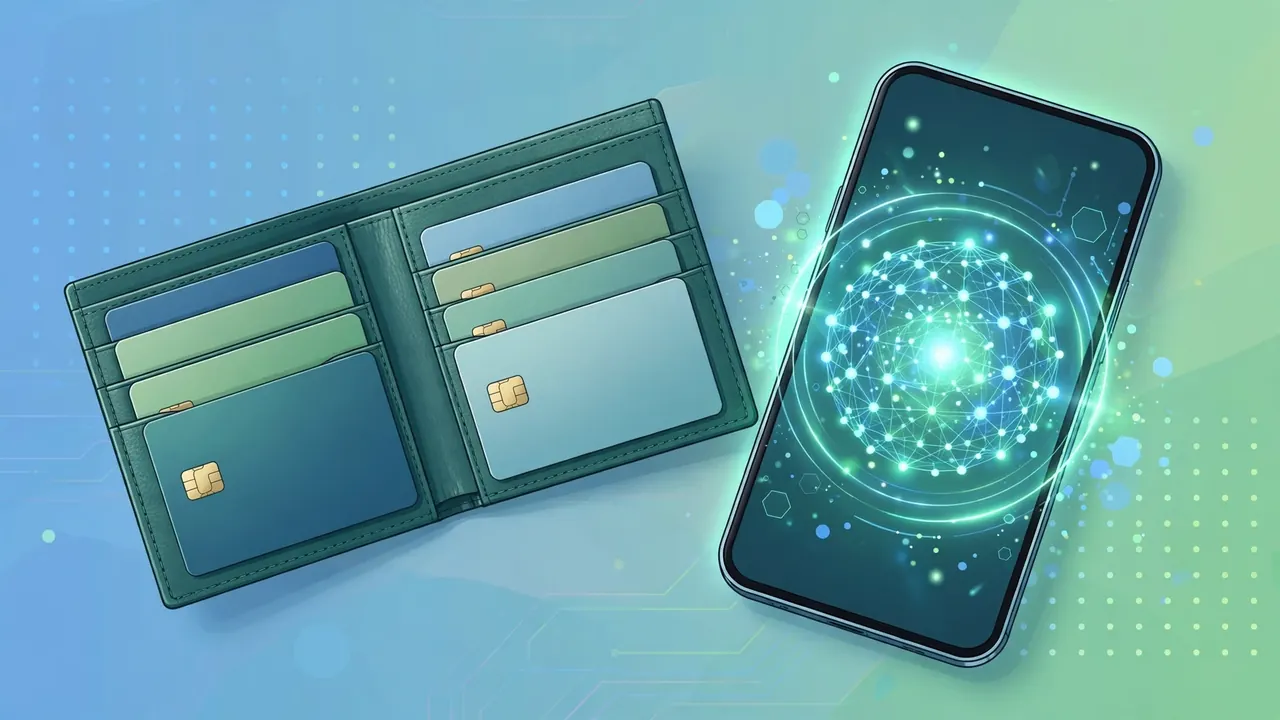
Your AI assistant has been slowly collecting context about your life — your email, your photos, your search history. On November 13, Google handed it the most sensitive context yet: your money. Gemini can now connect to Google Wallet and answer personal-finance questions grounded in what you actually spent.
The feature, announced on Google’s blog, adds Wallet to the connected apps inside Gemini’s Personal Intelligence, alongside Gmail, Photos, YouTube, and Search. It is rolling out to all Gemini app users in the United States, on the web and in the Gemini apps for Android and iOS. And it arrives on the very same day OpenAI launched ChatGPT Wallet — the other half of a sudden race to put an AI assistant next to your bank account.
What Gemini can do with your spending#
Once Wallet is connected, you tag @Google Wallet in a Gemini chat and ask about money the way you would ask a person who had read your statements. Google’s examples are practical rather than flashy: review last quarter’s spending and build a plan to save $1,000 over the next three months, with Gemini generating charts of cash flow, asset allocation, and budgets inside the chat. Ask what subscriptions you are still paying for and whether any went up in price this year, and it will hunt through recurring charges and flag the increases. Ask what you spent on gifts and travel last year, and it will use that to suggest a holiday budget.
Wallet on its own only knows what is already in it — saved payment methods, passes, and the transactions Google already sees. For a fuller picture, Google lets you link bank and credit-card accounts to Wallet through Plaid, the fintech company that pipes bank data into apps. That link is optional, and it is the step that turns the feature from a look at your Wallet into a look at your finances.

The read-only line#
The sentence Google repeats most in its announcement is the one that matters most: Gemini can only read information from your accounts; it can’t move, manage, or invest your money. The connection is opt-in — nothing happens until you switch it on under Connected Apps in Personal Intelligence settings — and you can turn it off at any time.
That boundary is also the clearest contrast with OpenAI’s wallet, launched the same day. ChatGPT Wallet exists so an agent can complete a purchase for you, paying with a single-use token after you approve it. Gemini’s connection does the opposite: it looks, it does not touch. It cannot pay a bill, transfer funds, buy anything, or change an investment, and Google says the connection carries no payment authority at all.
There is still a privacy trade-off worth reading closely. Google’s help pages note that human reviewers can examine interactions, summaries, excerpts, and inferences drawn from connected-app data, including Wallet and payment information — and Google warns users not to connect apps that hold confidential information they would not want a reviewer to see. The read-only promise covers what Gemini can do with your money, not who inside Google’s review pipeline can see that it looked.
Alongside the Wallet connection, Google also rolled out a Memory Summary — a readable snapshot of what Gemini has stored about your preferences and goals, which you can review, refine, or remove whenever you want.
Two wallets, one day#
The timing is the story as much as the feature. OpenAI and Google announced assistant-to-money connections within hours of each other, and Meta’s Muse has been moving the same way, adding shopping and the ability to phone US businesses for paying subscribers. The assistant race is no longer about who writes the best essay. It is about who gets closest to your real life — your calendar, your inbox, and now your bank statement.
Google’s entry is the cautious one. It asks for the least trust of the three: no spending authority, no purchases, just answers. That caution is also a bet — that people will let an assistant read their finances long before they let one spend them.
What to watch#
Three things. First, the rollout map: the feature is US-only for now, and Google has given no date for other countries. Second, accuracy: Google warns users not to rely on Gemini’s answers for financial advice, and chatbots still make arithmetic mistakes — a wrong total in a budget plan is worse than no plan at all. Third, the review question: how much of this financial context ends up in the data human reviewers see, and whether Google tightens that handling as the feature spreads. The connection is reversible, and for anyone uneasy about any of that, off is a perfectly good default.
For now, the practical advice is simple: connect Wallet only if you want spending answers from Gemini, check what the Memory Summary says the assistant remembers about you, and treat anything it tells you about your money as a draft to verify — not a statement of fact.
Sources: Google — Gemini finance insights with Google Wallet integration (Nov. 13, 2026); How-To Geek — Gemini can now audit your Google Wallet spending to find hidden subscriptions (Nov. 13, 2026); AndroidPure — All US Gemini Users Can Connect Google Wallet, With Data Caveats (Nov. 14, 2026). Prior coverage: OpenAI launches ChatGPT Wallet, letting its dots agents pay without ever seeing your card.