World Labs opens Atlas to everyone: build a 3D world from a photo, then export it as splats or meshes
World Labs opened its Atlas world model to everyone on November 12, with two web apps — Viewfinder and Chisel — and a public API that turn photos, generated images, or blocked-out geometry into explorable 3D worlds.
- What: World Labs opened Atlas to everyone on November 12, 2026, with two web apps — Viewfinder and Chisel — plus Splats to Mesh, Relight, and a public developer API.
- Viewfinder: One photo generates a surrounding scene; up to 64 overlapping photos reconstruct a real place. Outputs include keyframes, video clips, and 3D Gaussian splats.
- Chisel: Block out a scene from planes, shapes, and walls, then style it with text prompts or reference images while an agent revises the layout.
- Cost: Credits convert at 1,000 per US dollar and do not expire. A refined splat run costs 5,000 credits ($5); a draft run costs 500 ($0.50); failed runs are free. Runs usually take 15 to 25 minutes.
- The catch: No dedicated pricing page, no final rate limits, and no open weights. The company's claim of up to one minute of 1440p video from a few reference images has not been independently replicated.
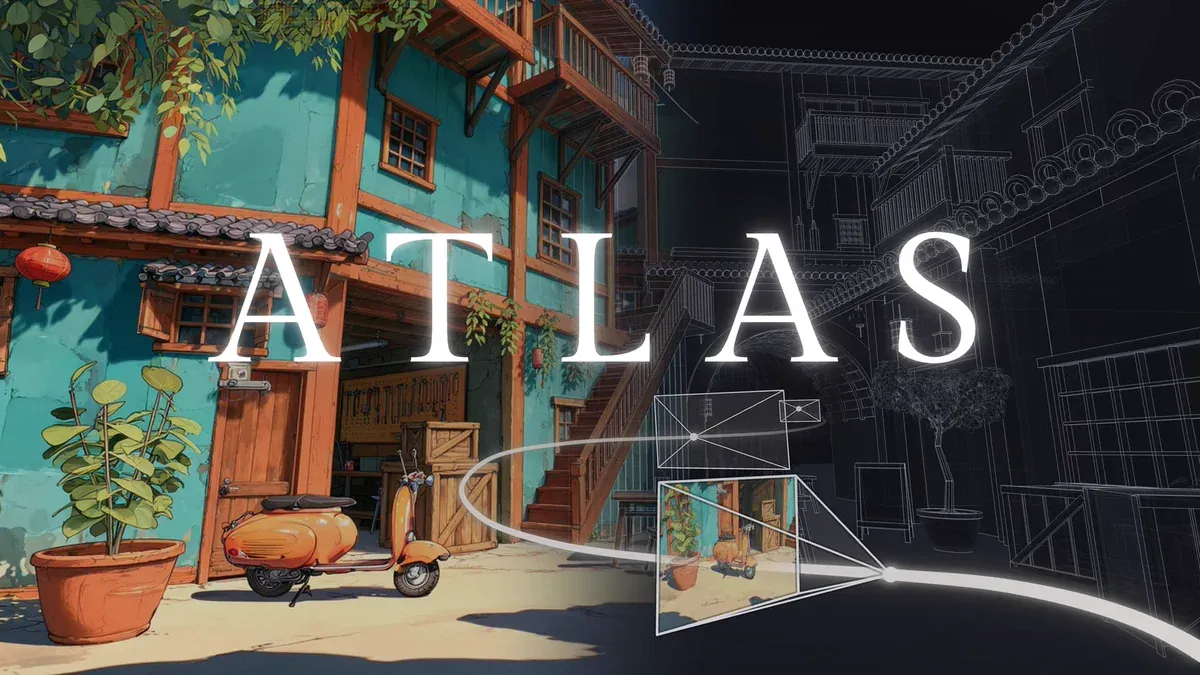
World models have spent the last two years as the most impressive demo in AI: a video that looks like a place, right up until you try to walk around in it. On November 12, Fei-Fei Li’s World Labs took a step toward making them a tool instead. Atlas, its world model, is now open to everyone, with two browser apps and a public API that turn photos — or a rough block-out of a room — into a 3D world you can move through, render, and export.
Atlas is not new. World Labs announced it on September 1 as an omni model that writes scenes out as 3D Gaussian splats, and it has been in early access with selected partners since then. What changed on November 12 is the audience: anyone can now sign up, build a world, and take the result somewhere else. That last part is the point. Until now, world models mostly produced footage you watched. Atlas produces assets you can use.
Two apps, two ways into a world#
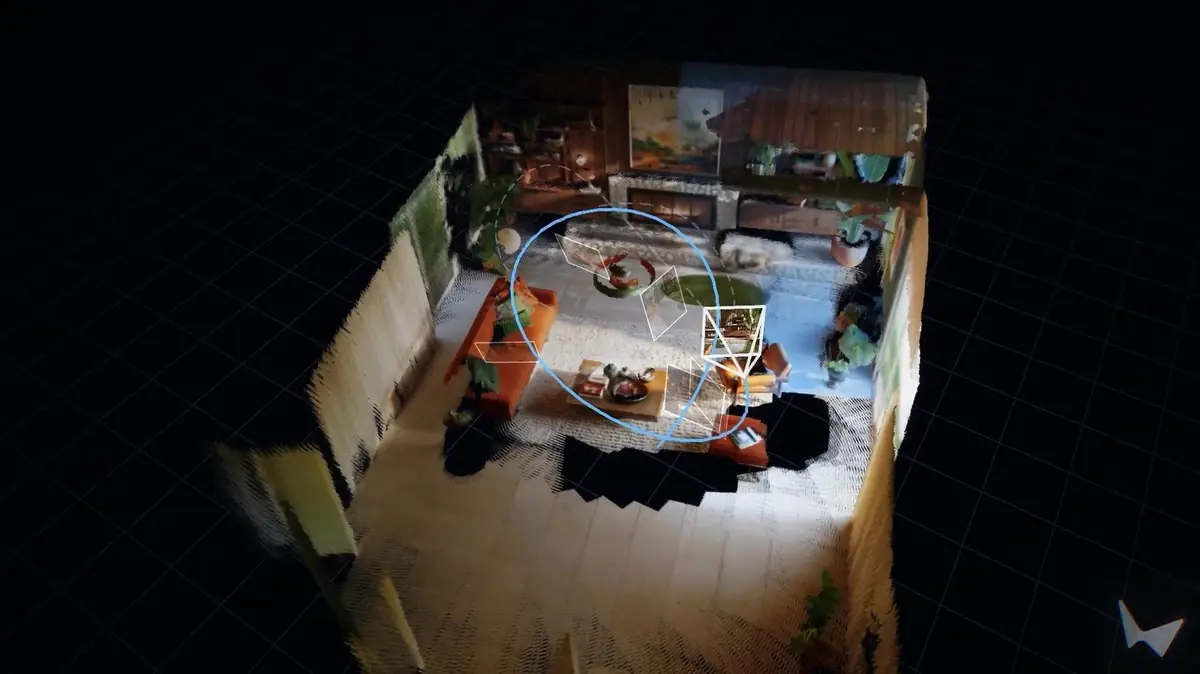
The two apps run on the same model but start from opposite ends. Viewfinder starts from images. Feed it one photo and it generates a plausible surrounding scene; feed it up to 64 overlapping photos and it reconstructs a real place, with a camera pose and depth map for each frame. From there you can move the camera, render new viewpoints along a path, and export keyframes, video clips, or splats.
Chisel starts from geometry instead. You lay out planes, blocks, and basic shapes as walls, furniture, and structure — the grayboxing stage of any 3D build — then style the scene with text prompts or reference images while an agent applies a sequence of revisions to the layout. It is the more deliberate of the two: where Viewfinder asks the model to imagine what is around a photo, Chisel asks it to fill in a structure you defined.
What comes out: splats, meshes, and video#
The outputs are what separate Atlas from a video generator. Scenes come back as keyframes, video clips, or 3D Gaussian splats in SPZ or PLY files, and two companion tools finish the job: Splats to Mesh converts a splat into a polygon mesh with real geometry for games and interactive environments, and Relight re-lights and manipulates splats after the fact. A real-time variant streams generated worlds to a browser at up to 15 frames per second while you drive the camera, and Frameboy now lets users walk through worlds they created themselves instead of only prepared scenes.
The timing is convenient for the tooling around it. Blender 5.3 shipped native Gaussian splat import on November 10, so Atlas output opens in Blender without an add-on, and World Labs ships an optional Atlas Blender extension for generation and editing inside Blender itself. World Labs says Atlas can generate up to one minute of video at 1440p from a small number of reference images; that is the company’s claim, and independent replication is still pending.
An API for agents, priced by the credit#
World Labs is releasing every endpoint behind both apps, so developers can build their own tools or point an agent straight at the models. The documented workflow is two steps: pose your images first, which returns a camera and depth map for each, then send those posed views as context along with the new camera positions you want rendered.
Pricing is credit-based rather than subscription-based: credits convert at 1,000 per US dollar and do not expire. A refined splat run — 2 to 512 ordered frames — costs 5,000 credits ($5); a draft run of up to 32 frames costs 500 ($0.50); failed runs are free. What the company has not published is a dedicated Atlas pricing page, and the rate card still lists task quotas and concurrent-task caps as to be announced.
Why this opening matters#
World models are converging on the same idea from different directions. Google DeepMind’s Genie 4 generates interactive worlds with native audio and live steering; Nvidia’s Cosmos 3 family is open-weight and aimed at robots and self-driving cars practicing in simulation. Atlas is the most tool-shaped of the bunch: its pitch is not a better video, it is a scene you can hand to Blender or a game engine.
There is also an owner to watch. AMD signed a definitive agreement to acquire World Labs on September 28 for $8.2 billion, a deal that puts a spatial-AI lab at the center of a chipmaker’s roadmap. Opening Atlas to everyone six weeks later looks like the lab building a user base and a developer ecosystem before the acquisition closes.
What to watch#
Three things will decide whether Atlas becomes infrastructure or stays a showcase. First, the pricing page: credit math is clear for splat runs, but generation, video, and API calls still have no published price, and production teams cannot budget around a blank rate card. Second, independent verification: the 1440p video claim and the quality of one-photo worlds need testing outside the company’s own demos. Third, adoption: game developers, filmmakers doing pre-visualization, and robotics teams building simulation environments are the audiences Atlas is built for. The model is open; the proof is next.
Sources: Radiance Fields — World Labs Atlas Opens to All With a Splat API and Blender (Nov. 13, 2026); VP Land — World Labs’ Atlas World Model Opens to Everyone (Nov. 13, 2026); TokenPost — World Labs Opens Atlas Tools and APIs for Public 3D World Creation (Nov. 13, 2026); AI Weekly — World Labs Opens Atlas World Model to Public With Viewfinder, Chisel and Developer APIs (Nov. 13, 2026); World Labs on X — Atlas is open to everyone today (Nov. 12, 2026). Prior coverage: AMD buys Fei-Fei Li’s World Labs for $8.2B.