Google Cloud brings Antigravity and AlphaEvolve to HPC, with TPU 8t/8i and 3 TB H4D VMs
Google Cloud announced about 75 minutes ago that it is bringing its Antigravity agentic development platform and DeepMind's AlphaEvolve code-evolving agent to scientific supercomputing — alongside new H4D virtual machines, TPU 8t and 8i systems and Managed Lustre storage, unveiled ahead of the SC26 supercomputing conference.
What we checked: Google Cloud's November 9 post “Accelerating Time to Insight” (published 5:45 a.m. ET, carried by HPCwire), cross-checked against Wisevoter's same-day summary.
- What: Google Cloud pairs Antigravity and AlphaEvolve with new HPC infrastructure: H4D VMs, TPU 8t and 8i systems, Managed Lustre storage.
- Who: Google Cloud; AlphaEvolve was developed by Google DeepMind and runs on Google Cloud.
- When: Announced November 9, 2026, at 5:45 a.m. ET. SC26 runs November 15–20; the Agentic AI Conference runs November 9–10.
- AlphaEvolve's record: Recovered roughly 0.7% of Google's global compute with a custom Borg scheduling heuristic; also optimized Gemini matrix-multiplication and FlashAttention kernels and improved Verilog arithmetic circuits for TPUs.
- Hardware: New H4D VM shapes including a 3 TB high-memory shape with Titanium offload and Cloud RDMA; TPU 8t and 8i systems; Managed Lustre storage at sub-millisecond latency, with 10 TB/s throughput in SC26 booth demos.
- Access: Antigravity spans the 2.0 Desktop App, CLI, IDE extensions and SDK; AlphaEvolve is available on Google Cloud.
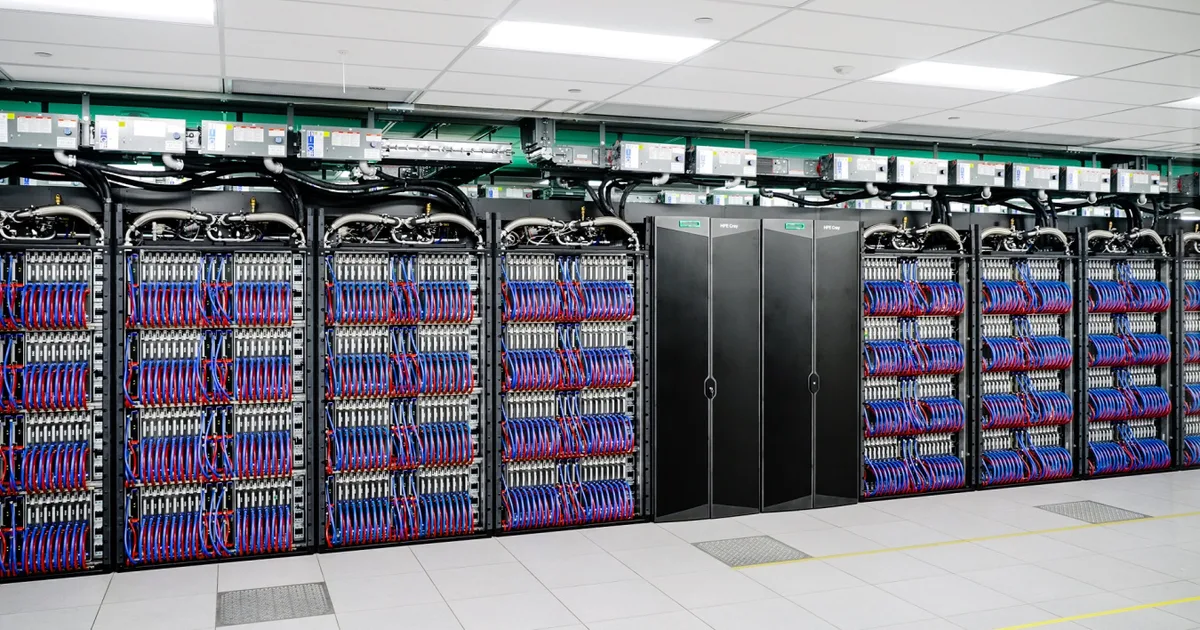
For a computational scientist, the worst part of a big simulation is rarely the science. It is the weeks spent translating a decades-old Fortran or C++ codebase for modern accelerators, assembling storage hierarchies by hand, and tuning a job scheduler every time the hardware changes. Google Cloud's own telling of that story, in its announcement this morning, is that the work around the science has become the bottleneck.
Its answer, announced about 75 minutes ago, is to point two of its AI systems at the problem: Antigravity, its agentic development platform, and AlphaEvolve, the Gemini-powered coding agent from Google DeepMind — backed by new H4D virtual machines, TPU 8t and 8i systems, and Managed Lustre storage, all unveiled ahead of the SC26 supercomputing conference.
What happened
Google Cloud is framing the package as a single stack: agents that modernize code and evolve algorithms, running on infrastructure built for tightly coupled simulations and large-scale AI. The claim at the center of it is compression — months of engineering overhead down to hours, so researchers go straight from hypothesis to insight.
| What it is | What it does for HPC | Headline number | |
|---|---|---|---|
| Antigravity | Agentic development platform | Modernizes legacy code, spins up clusters from natural language, recovers failed jobs | 4 surfaces: Desktop App 2.0, CLI, IDE extensions, SDK |
| AlphaEvolve | Gemini-powered evolutionary coding agent | Discovers and optimizes algorithms against measurable metrics | ~0.7% of Google's global compute recovered |
| HPC infrastructure | H4D VMs, TPU 8t/8i, Managed Lustre | High-density compute and parallel storage for simulations | 3 TB H4D shape; 10 TB/s Lustre in demos |
The comparison is drawn from Google Cloud's announcement: the products and figures are the company's own descriptions.
Antigravity is built around a single co-optimized agent harness, and it meets teams on every surface they already use: the 2.0 Desktop App, CLI, IDE extensions and SDK. It automates the refactoring, vectorization and accelerator offloading of serial C, C++ or Fortran kernels; translates natural-language requests into validated, production-ready HPC clusters with storage and interconnects; and diagnoses root causes when long-running jobs hit hardware faults or memory bottlenecks, then orchestrates recovery so simulations stay on track.
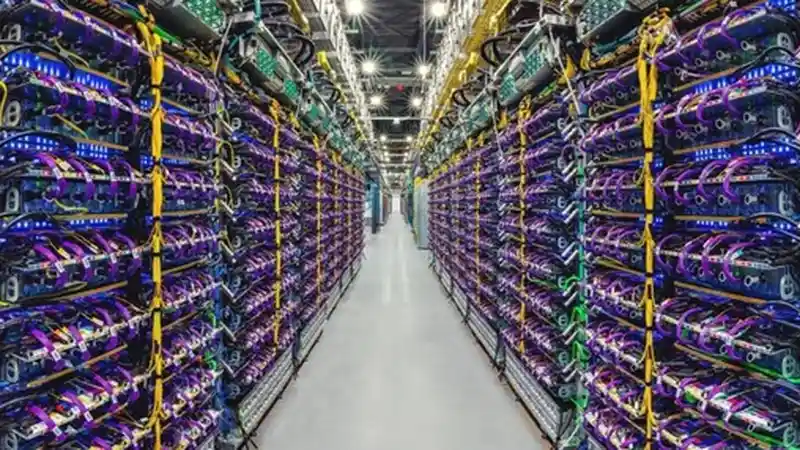
AlphaEvolve works differently: it combines large language models with evolutionary computation, iteratively writing, testing and refining code against measurable performance metrics. Paired with high-throughput accelerators and JAX integration on Google Cloud, it runs millions of evaluation cycles asynchronously over hours — optimizing speed, memory footprint and energy use across search spaces that would take human teams months to explore. Its jobs in HPC pipelines include kernel optimization, simulation and solver tuning, and evolving custom scheduling policies for heterogeneous nodes.
Why it matters
The number that carries the announcement is 0.7%: across Google, AlphaEvolve has already recovered roughly 0.7% of global compute resources with a custom Borg scheduling heuristic. It has also optimized Gemini matrix-multiplication and FlashAttention kernels, improved Verilog arithmetic circuits for TPUs, and advanced solutions to decades-old mathematical problems like the kissing number problem. That is the track record Google Cloud is selling — an agent proven on its own infrastructure, now packaged for science teams. The approach already has a track record outside Google too: Schrödinger reported a 4x speedup in molecular-dynamics model training and inference after deploying AlphaEvolve.
The hardware matters because the agents are only as good as the metal underneath. The new H4D VM shapes use Titanium offload and Cloud RDMA to attack MPI scaling bottlenecks, now in a high-memory 3 TB shape; the TPU 8t and 8i systems join GPU-accelerated VMs for hybrid AI-HPC workloads; and Managed Lustre offers sub-millisecond latency and massive parallel I/O without hand-managing a parallel file system. Google's TPUs keep drawing outside attention — OpenAI has bought TPU capacity too — and TorchTPU brought native PyTorch to the chips. This announcement is Google Cloud turning that hardware pull into a full HPC story, with Gemini at the center of the agent layer.
What's next
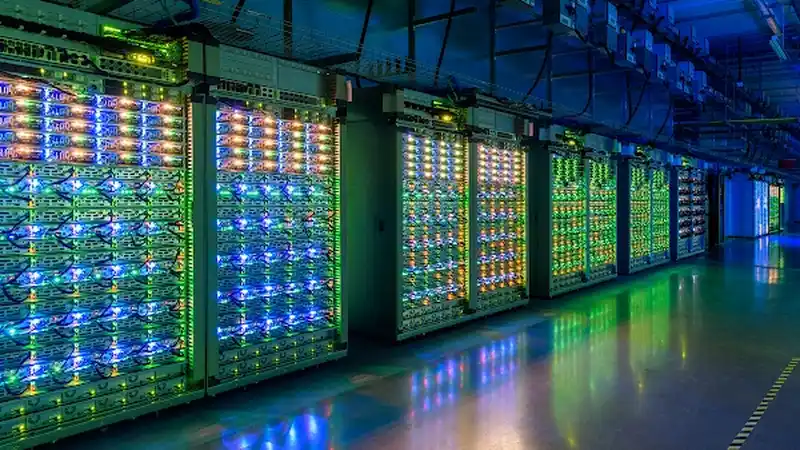
SC26 runs November 15–20, and Google Cloud's booth is the demo floor for the stack: TPU 8t and 8i hardware up close, an HPC Prompt Playground that spins up functional HPC environments from natural-language prompts, AlphaEvolve physics-optimization demos, and 10 TB/s Managed Lustre storage. The Agentic AI Conference, running November 9–10, is where the agent side gets its hearing first.
What to watch: the announcement gives no pricing or general-availability dates for the new hardware, and no customer names attached to the HPC rollout. The real test is whether research teams outside Google adopt the agent layer for production simulations — and whether the tooling stays a Google Cloud exclusive or follows AlphaEvolve's path toward wider availability.