LG Uplus partners with OptAI to quadruple GPU throughput with token optimization
South Korea's LG Uplus said today it is teaming up with AI optimization startup OptAI to develop token optimization technology for server GPUs — a direct attack on the surging GPU and power costs of running AI services. The companies say early research already quadruples the number of tokens processed on the same GPU.
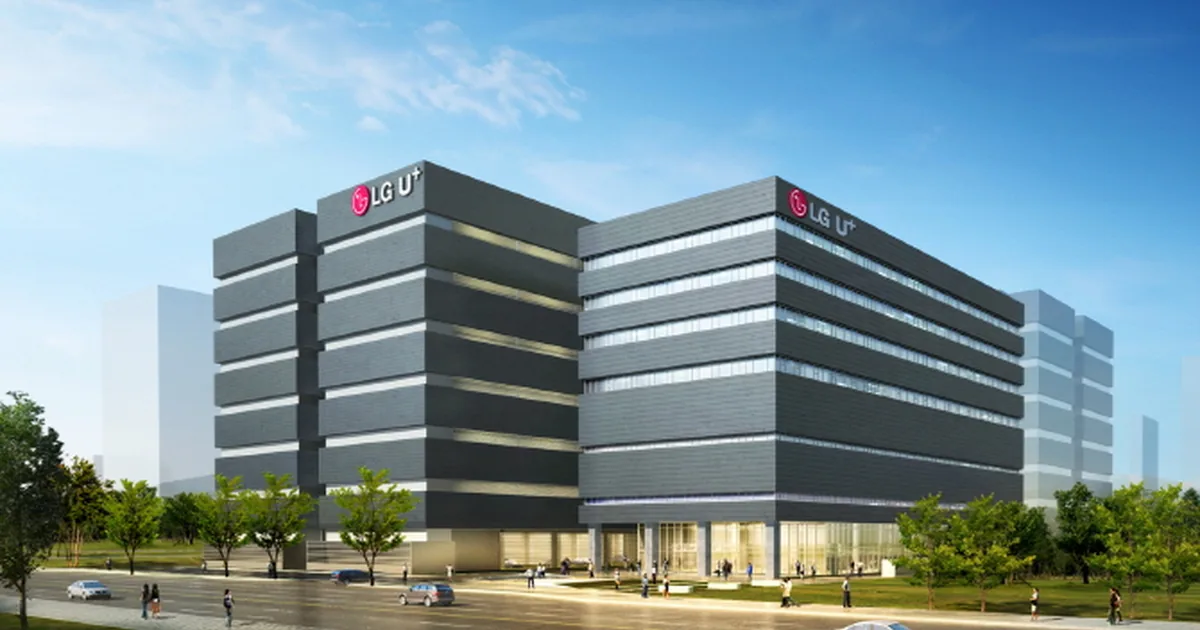
The announcement, reported today by Chosun Daily and BigGo Finance, splits the work along clear lines: LG Uplus will validate and apply the technology on top of its real-world AI service operations, while OptAI handles the research and development of making AI models run lighter and faster. The goal is to cut GPU and power usage while improving response speed and service quality — serving more requests with the same hardware.
Tokens, the basic units of data AI processes when handling queries and generating responses, are the lever. As AI services proliferate, the industry has mostly answered demand with more GPUs. LG Uplus is betting that efficiency per token is where the next wave of competitiveness comes from — a view its CTO stated plainly: "AI competitiveness depends not simply on boosting performance, but on how many tokens can be efficiently processed with the same resources."
From phones to servers#
The two companies have a track record to point to. In earlier on-device work, they applied lightweighting technology to a small language model based on LG AI Research's EXAONE family, getting it to run on a smartphone's neural processing unit. The companies say the model matched the performance of the previous CPU-based approach while cutting power consumption by 78% and model size by 82%.
The new collaboration extends that work to server GPU environments, where the economics are far bigger. LG Uplus says ongoing optimization research has achieved up to a fourfold increase in the number of tokens processable on the same GPU — by streamlining the computational process models use to generate responses for real service environments. LG Uplus plans to apply the technology to its AI services and large-scale AI infrastructure operations in phases.
Who is OptAI#
OptAI is an AI optimization startup founded in November 2021, led by CEO Lee Jae-ho, a former LG Electronics executive. The company builds technology for lightweighting and optimizing AI models across NPUs, GPUs, and CPUs, and has previously collaborated with both LG Electronics and LG Uplus. It is expanding into smartphones, automobiles, and robotics through its on-device AI optimization platform, OptHancer — which won a CES 2026 Innovation Award — and counts LG Electronics, FuturePlay, Mashup Ventures, and HL Mando among its investors.
"In the generative AI era, securing operational efficiency is just as important as high performance," Lee said. "We will advance AI optimization technology that can be validated in real service environments."
Why it matters#
The timing is notable. The day before the announcement, the two companies jointly hosted the "Efficient AI Tech Seminar," gathering AI semiconductor company FuriosaAI, AI platform company VESSL AI, the Korea Electronics Technology Institute (KETI), and Hanyang University to discuss optimization research and real service applications. That roster signals this is not a one-off partnership but a bid to build an efficiency ecosystem around Korean AI hardware and services.
Zoom out and the story is part of a broader pattern: as the cost of running AI services becomes the industry's central constraint, the frontier is shifting from raw model performance to performance per watt and per GPU. Carriers like LG Uplus — sitting on both live service traffic and large-scale AI infrastructure operations — have the operational data to validate efficiency gains at scale. The question is whether token optimization can deliver data-center-scale savings, or whether the 4× figure, like most vendor efficiency claims, survives contact with production workloads.
Sources
- BigGo Finance: LG Uplus Partners with OptAI to Cut AI Operating Costs, Quadruples GPU Throughput (Oct 2, 2026)
- Nestia (via Chosun Daily): LG Uplus, OptAI team up on AI token optimization (Oct 2, 2026)
- PR Newswire: OptAI to Showcase the Future of On-Device AI at IFA 2025 (Sep 2, 2025) — background on OptHancer and the LG Uplus/EXAONE collaboration