Listen Labs launches Listen Twins: AI models of real customers that predict what they'll do — and show the quote behind every answer
Listen Labs has launched Listen Twins, one-to-one AI models of real people in a company's target audience. Each Twin is built from an in-depth interview and can predict what that person will do and why — and when a team asks a panel of 100 or more Twins a question, it gets an answer in seconds, with the reasoning, the interview quote, and a confidence score behind it.
- Who: Listen Labs, a San Francisco-based AI platform for customer understanding.
- What: Listen Twins, one-to-one AI models of real people in a company's target audience, launched October 27, 2026.
- How built: Each Twin is built from an in-depth interview with one real person, recruited from Listen Labs' network of more than 50 million people and enriched with the company's own customer, persona, and past study data.
- Scale: Companies ask a panel of 100 or more Twins a question and see how their audience would respond in seconds; Listen Labs says it has run more than 2 million AI-powered interviews.
- Accuracy claim: In Listen Labs' testing, Twin answers matched the distribution of real people's answers with 93% accuracy.
- Guardrails: Each answer carries its reasoning, the real interview quote behind it, and a confidence score; a Twin will not guess beyond its scope, and Listen Labs still recommends a full research study for higher-stakes go/no-go decisions.
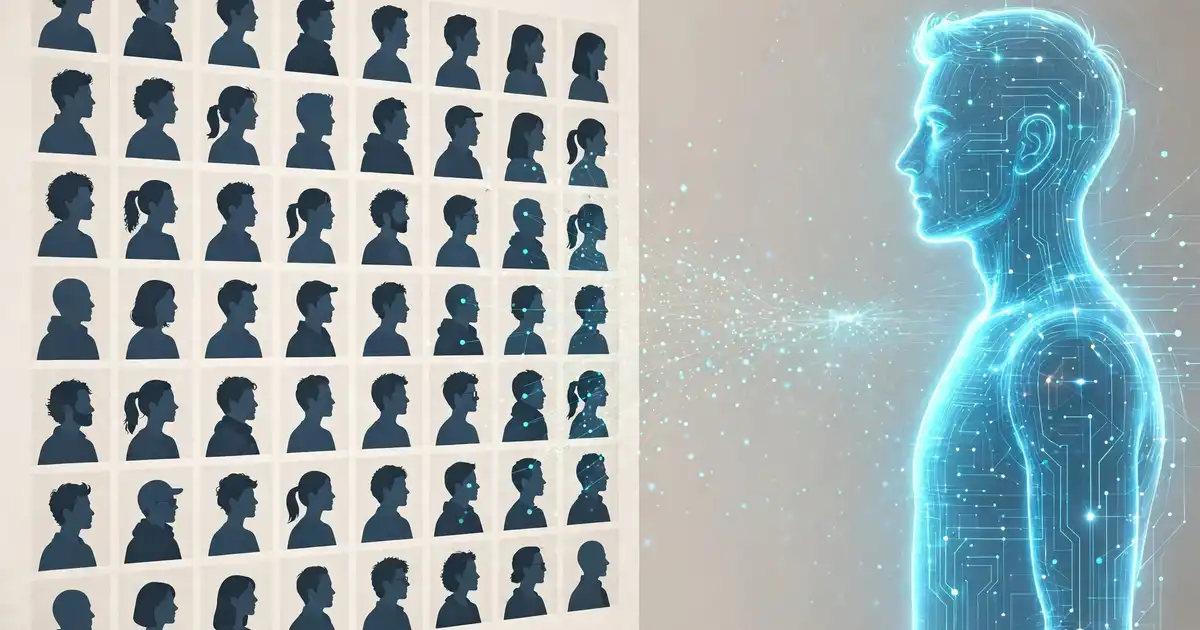
Listen Labs, the AI platform for customer understanding, launched Listen Twins on October 27, 2026: one-to-one AI models of real people in a company's target audience. Each Twin is built from an in-depth interview and can predict what that person will do and why — the company's pitch is that teams no longer have to wait weeks for a study to learn how their audience might react.
The setup is deliberately simple. A team defines its target audience and the decisions it wants to inform. Listen Labs recruits matching participants from its network of more than 50 million people, interviews each one in depth, and builds their Twin. Each model is also enriched with the company's existing customer, persona, and past study data, so the panel reflects a specific business's audience rather than a generic population.
How a Twin answers#
Ask the panel a question and the Twins answer in seconds. Each Twin answers with its reasoning, the real interview quote behind it, and a confidence score — the traceability is the point. A Twin will not guess beyond its scope: when it does not have enough signal, Listen Labs says it says “I don't know” instead of inventing an answer. On its launch page, the company describes “Keystone Questions” identified across millions of interviews as the key to unlocking how people actually behave.

What teams ask them#
Listen Labs pitches Twins for the everyday decisions that pile up between formal studies: which campaign concept to run, how people will react to an announcement before it goes out, what customers would pay more for, and whether to enter a new market. Marketing teams compare campaign directions and see which segments respond to each, and why; communications teams look for the content that lands wrong before the news goes out; product teams test which features would justify a higher price.
There is an explicit boundary, and it matters. For higher-stakes go/no-go decisions, Listen Labs continues to recommend a full research study using its AI-moderation product. Twins are for the smaller calls — the ones teams currently make on gut feel or stale data — not a replacement for research when the decision is irreversible.

Why it matters — and what to watch#
The idea lands in the middle of a live argument about synthetic respondents: AI stand-ins for customers are getting good enough to use, but nobody agrees yet on where they stop being useful. Listen Labs' answer is to keep every Twin anchored to one real, interviewed person, and to make every answer auditable back to a quote. That is a stronger claim than a persona invented from a brief — and a weaker one than a fresh survey, which is presumably why the company draws its go/no-go line where it does.
The number to interrogate is the 93%. In testing, Listen Labs says Twin answers matched the distribution of real people's answers with 93% accuracy. That is the company's own testing, not an independent audit, and the announcement does not detail the test set. The honest read: Twins look like a fast first read on audience reaction, with receipts attached — and the burden is now on Listen Labs to show the match holds up outside its own evaluations.
“Our Twins know the story behind every answer. And across millions of interviews, we have identified Keystone Questions that unlock how people actually behave. The ability to predict how people will react is a powerful tool. So we're building this responsibly,” said Alfred Wahlforss, Listen Labs' co-founder and CEO. The company has raised $100 million to date, including a Series A led by Sequoia Capital and a $69 million Series B led by Ribbit Capital, and counts Anthropic and Microsoft among its customers. If Twins work as advertised, the research cycle compresses from weeks to seconds for a whole class of decisions — and the question for every team that tries them is whether they trust an answer they can trace, even when it comes from a model.
Frequently asked questions
What is a Listen Twin?
A Listen Twin is a one-to-one AI model of a real person in a company's target audience, built from an in-depth interview with that person. It is designed to predict what that person will do and why, rather than to represent an averaged segment.
How accurate are Listen Twins' answers?
In Listen Labs' own testing, Twin answers matched the distribution of real people's answers with 93% accuracy. Each answer comes with its reasoning, the real interview quote behind it, and a confidence score, and a Twin will not guess beyond the scope of its signal.
Should teams use Listen Twins for big go/no-go decisions?
No — Listen Labs itself says no. For higher-stakes go/no-go decisions, the company continues to recommend a full research study using its AI-moderation product; Twins are positioned for the smaller business questions teams face every day.