At IROS 2026, a year-old startup says robot intelligence is a hardware problem — meet LumiBot's 10-micron fingers
LumiBot (known in China as Shiyue Technology), founded just over a year ago, took its full stack — dexterous hands, visuo-tactile sensors, and the Lumi-Mind manipulation model — to IROS 2026, arguing that embodied AI's data bottleneck can't be fixed by algorithms alone. The ceiling on data quality, it claims, is set by hardware reliability.
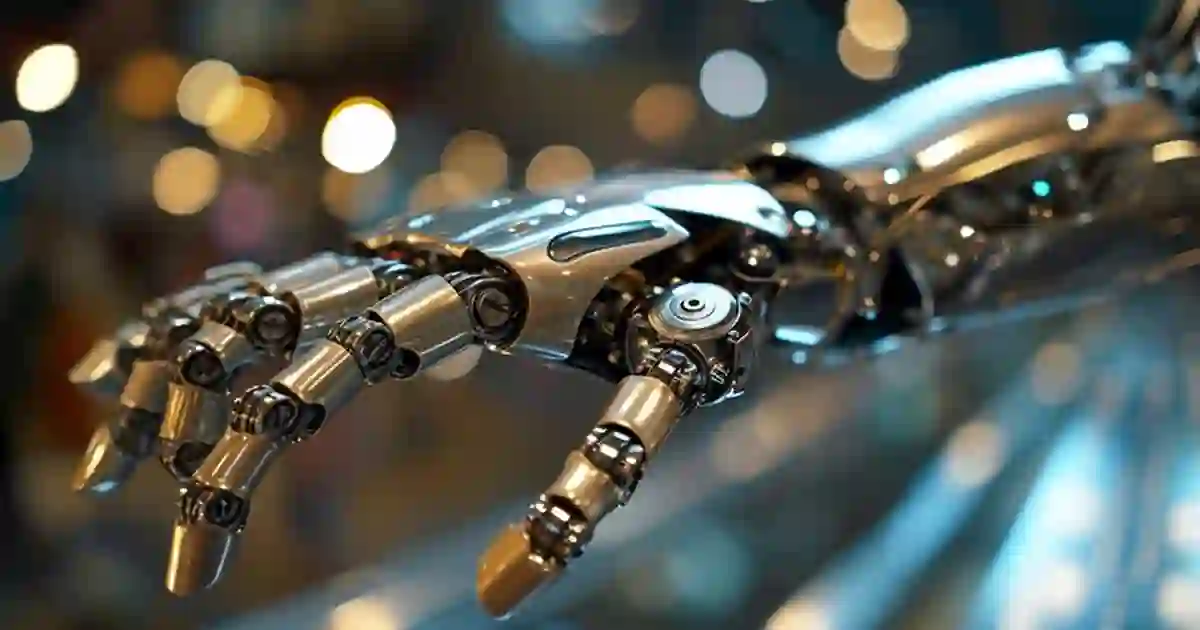
LumiBot, a Chinese robotics startup founded in 2025, is making an unusual pitch on the exhibition floor of IROS 2026: the biggest problem in embodied AI isn't the model — it's the fingers. In an announcement released Wednesday, the company — known in China as Shiyue Technology — unveiled its latest finger-shaped visuo-tactile sensors, its Lumi-Dex dexterous hand series, and a manipulation foundation model called Lumi-Mind. LumiBot was also selected to present at the official IROS Startup Session.
The core thesis: the upper bound of data quality is strictly determined by hardware reliability. Industry-wide, public multimodal datasets featuring high-degree-of-freedom dexterous hands with tactile feedback total only a few tens of thousands of samples — while training scalable manipulation models demands tens of millions of hours of real-world operational data. LumiBot's answer is to attack the bottleneck at the source: build hands and sensors reliable enough to collect standardized, clean, reusable data from day one, then train the model on it.
Hands that outlast the shift and fingertips that feel#
The Lumi-Dex hand series supports mainstream industrial communication protocols and integrates with standard robot arm platforms and simulation environments. On the IROS floor, LumiBot demonstrated the high-DOF Lumi-Dex-21, which uses an integrated drive-and-control design combining linkage and direct-drive mechanisms.
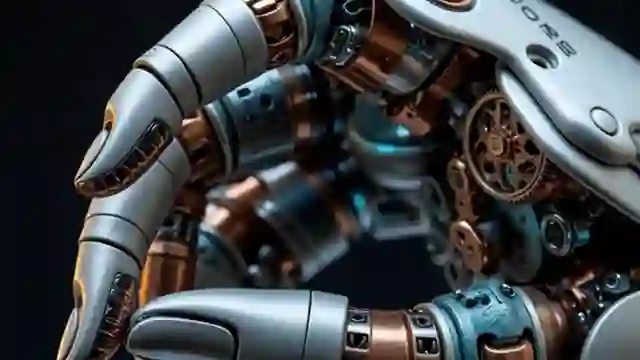
The company also previewed an upcoming flagship dexterous hand with upgraded lifespan, durability, and thermal management: a self-developed active-cooling micro joint module keeps operating temperatures around 50°C and supports over 5,000 hours of continuous no-load operation — weeks of uninterrupted data collection. That's the spec that matters for its thesis: a hand that dies after a shift can't generate a dataset.
On the perception side, the Lumi-Tac V2 visuo-tactile sensor extends coverage across the fingertip, finger side, and finger pad, with improved wear resistance and deformation reliability. The headline numbers: 10-micron spatial resolution, 0.02 N force detection accuracy, and a 120 fps frame rate, paired with proprietary curved-surface reconstruction algorithms for high-density multimodal tactile capture.
Lumi-Mind and the capture-train-deploy flywheel#
Hardware is only half the loop. LumiBot says it has fully operationalized a real-robot teleoperation collection pipeline for continuous data gathering, and its egocentric (Ego) data-to-robot mapping scheme has achieved millimeter-level precision verification. The software brain is Lumi-Mind, a manipulation foundation model built on a hierarchical MoT (Mixture of Transforms) architecture that fuses Vision, Tactile, Language, and Action (VTLA) modalities, with a memory mechanism and tactile gating for long-horizon task planning and fine-grained micro-adjustments during dense contact.
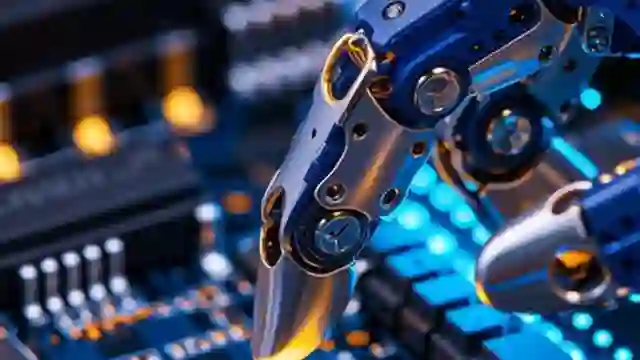
Connecting the two is Lumi-Cap, a proprietary data pipeline that stitches together Ego video capture, teleoperation data gathering, and automated data cleaning into what the company calls a "capture-train-deploy-feedback" flywheel — data aligned with model training requirements from the start rather than scraped and filtered after the fact.
The demo: stamping, trays, and human interference#
The most concrete claim in the announcement is a live demo. A lower-DOF Lumi-Dex-11 hand, driven by Lumi-Mind, executed a long-horizon sequence — picking up a stamp → precise stamping → picking up a tray → handing out a card → returning the tray → returning the stamp — and when human disturbances were introduced, the model autonomously re-evaluated and adjusted its task planning in real time. If the demo is what it claims, it's a neat proof of the closed loop: cheap-ish constrained hardware, reliable execution, re-planning on the fly.
Why it matters#
The argument is a direct response to embodied AI's least glamorous crisis: the data desert. Vision and language models trained on the internet; robots have no internet of touch. LumiBot's bet is that neither pure hardware vendors nor pure algorithm shops can fix this — only full-stack outfits that build motors, sensors, hands, models, and collection pipelines in-house, so the data comes out aligned with training by construction. The company's own site corroborates the stack: Lumi-Dex hands (up to 23 active DOF), Lumi-Tac sensors, and a VTLA-based Lumi-Mind model.
The startup says it is already running scenario validation and technical verification (POCs) with industry leaders across automotive manufacturing, 3C electronics, and life sciences. That's the honest part of the pitch: a year-old company, an unreviewed architecture, and specs that live in a press release. But the direction — hardware as the instrument of data, not just the actuator of models — is one of the few fresh framings in physical AI right now, and worth watching as the POCs either land or don't.
Sources
- "Just Over a Year Since Inception, LumiBot Challenges Embodied AI's Data Bottleneck at IROS 2026" — PRNewswire (September 30, 2026)
- LumiBot / Shiyue Technology official site — product lineup: Lumi-Dex hands, Lumi-Tac sensors, Lumi-Mind model