GPT-6 Astra pilots a Unitree G1 humanoid in an unseen room — Reddit’s verdict on the viral demo
A 52-second silent clip of a Unitree G1 humanoid tidying a room it had never seen — posted as GPT-6 Astra’s handiwork — pulled 1,400+ upvotes on r/singularity. The top comments don’t dispute the footage; they argue about what it means.
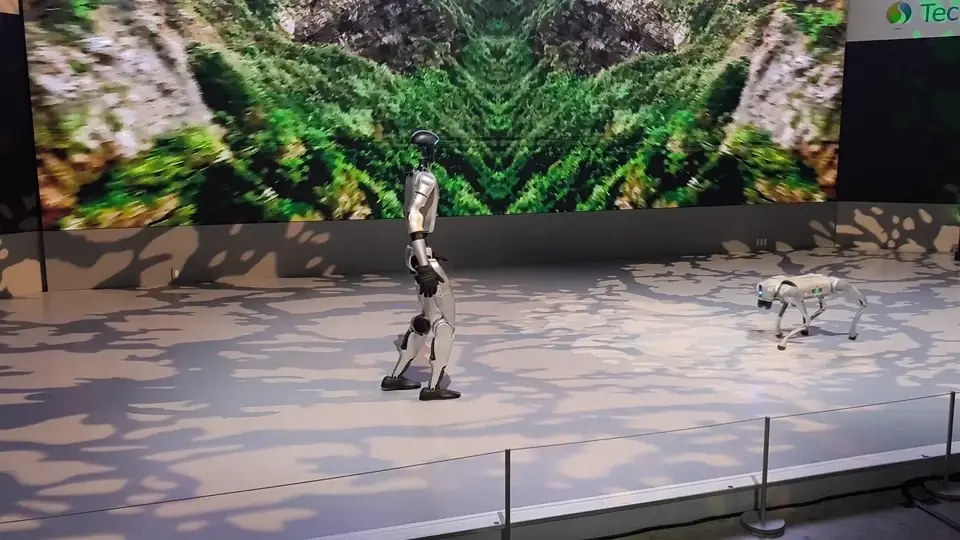
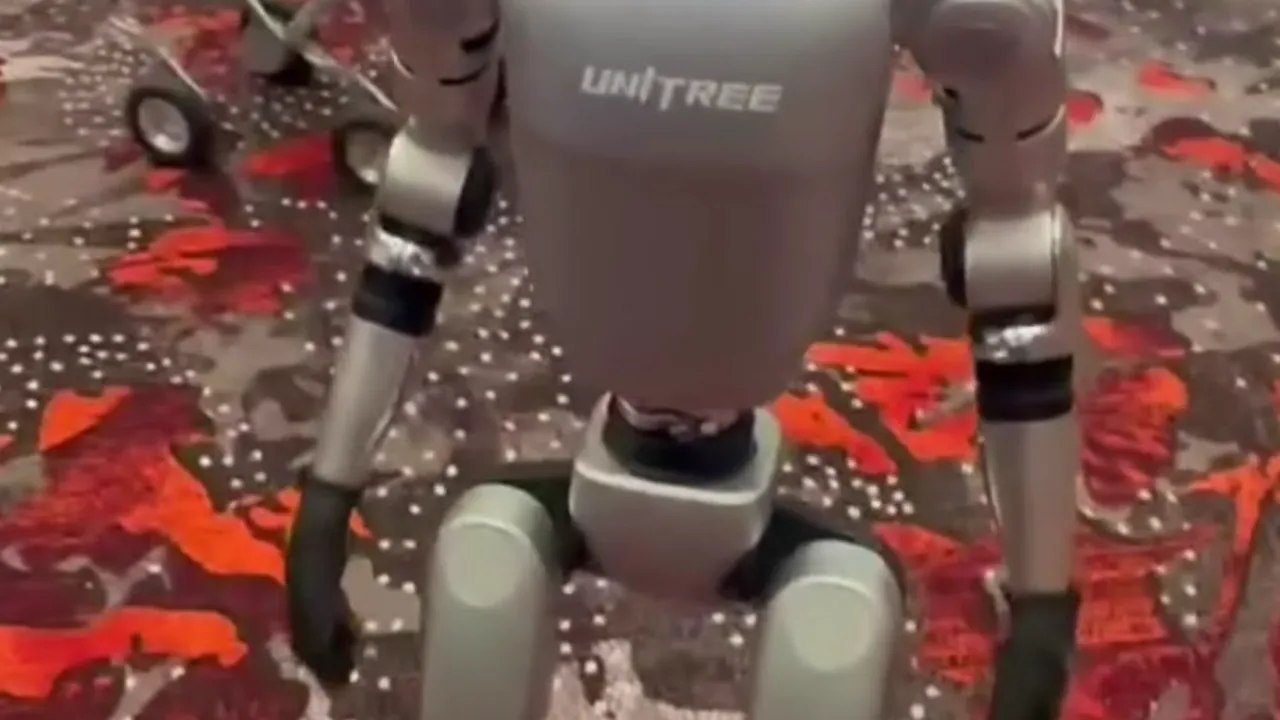
The most-watched AI video on Reddit this weekend has no soundtrack, no narration, and barely any cuts. It is 52 seconds of a Unitree G1 humanoid moving through a room — crossing the space, picking objects up, and putting them where they seem to belong. The r/singularity post carrying it makes a bigger claim than the footage alone can carry: that the choreographer is GPT-6 Astra, OpenAI’s newest model, working in a room it had never seen before, remembering where objects are, and fetching them later from vague human requests.
Posted Saturday afternoon by u/141_1337, the clip sat near 1,425 upvotes and 264 comments by Sunday morning — one of the sub's biggest robotics threads this month. The striking thing is not the enthusiasm. It is what the top comments chose to argue about: nobody seriously disputed that the footage is real. They argued about whether any of it matters yet.
The clip — and the claims riding on it#
The video itself is almost aggressively plain: a silent, unedited-looking 52 seconds of the G1 at work, hosted natively on Reddit. The post has no body text at all — the clip is the entire argument, and everything else lives in the title. According to the poster, the G1 is mapping an unfamiliar room, remembering where objects are, tidying across the space, and later retrieving items on loose, conversational instructions.
It is worth being precise about what that is not: no technical write-up, no OpenAI statement, no latency numbers, no benchmark. The title’s capabilities — unseen-room operation, persistent object memory, vague-request fulfillment — are claims from a Reddit title, not verified facts. What can be independently seen is a Unitree G1 navigating a room and manipulating objects, smoothly and without visible human guidance.
What the top comments actually argued about#
The thread’s highest-voted reply, from u/Many_Consequence_337 at 308 points, reached for a famous benchmark: this could already clear the “Wozniak test” — the old Steve Wozniak challenge of a robot making coffee in a house it has never entered. The replies underneath immediately added the asterisks. One noted that demo rooms contain no humans, and that robots still cannot safely modulate their movement around people. Another countered that a chore robot which simply freezes around humans would still be a product millions of people would buy.
Further down, the thread split into the debates that now define embodied AI. u/enilea (150 points) argued models need a “muscle” layer — a fast, subconscious-style control loop for actions too quick for deliberative reasoning — with replies citing Stanford’s HomeBody System 1/2/0 framework as the existing vocabulary for the idea. u/HarenaVermis (112) landed the thread’s most upvoted provocation: it would be funny, they wrote, if after years of specialized robotics models, the secret turns out to be just scaling language models further.
The progress-over-time frame came from u/5StarAlpha (73): “This is Will Smith eating spaghetti 3 years ago… imagine what’s to come” — a reference to how laughable early AI video looked, and how fast it stopped being laughable. u/Low-Entrepreneur2556 (52) offered the most measured take: this may be the first model capable of essentially any robotics or spatial task, but it is “ridiculously slow and expensive” today, with cheaper and faster versions the obvious next step. And u/tenchigaeshi (51) supplied the thread’s flat dismissal: “It’s just a chatbot.”
The pattern across all of them is the story: the footage itself went undisputed. The skepticism in the thread is about readiness — cost, speed, safety around humans — not about whether the demo happened. That is a meaningful shift from even a year ago, when threads like this spent half their energy litigating fakes.
Why embodiment is the story now#
This is the third GPT-6 Astra thread to blow up this week — the model previously starred in a playable Yu-Gi-Oh! AR game built on smart glasses and in C5R’s claim of an AI-run research lab — but it is the first to put Astra, as the poster frames it, inside a body. The through-line is worth naming: the frontier conversation has moved from what models can say to what they can do in the physical world, and each demo resets the argument about how much of robotics is a controls problem versus a cognition problem.
That reset is exactly what the “just scale the LLMs” camp is celebrating and what the robotics specialists are resisting. A generalist model that can be pointed at a robot and produce competent behavior — even slowly, even expensively, even in a staged room — is a direct challenge to years of purpose-built robotics stacks. The honest version of the story keeps both halves: the capability is real enough that nobody cried fake, and the caveats are real enough that nobody should confuse a 52-second clip with a product.
What to watch#
The clip will fade from the front page within days; the questions it raised will not. Three to follow:
- Whether OpenAI says anything at all. Confirmation, a technical note, or even a denial would turn a poster’s claim into something checkable.
- Independent replication with numbers. Success rates, task times, compute cost — the unseen-room and vague-request capabilities need measurements, not just footage.
- The human-safety gap the thread itself identified. A robot that can tidy an empty room is a demo; a robot that can be trusted around children and pets is a product.
The era when threads like this argued about whether the video was real appears to be ending. The arguments now are about whether the robot is useful — and that, for the robotics field, is the more demanding verdict.
Sources
- “GPT-6 Astra can now control a humanoid robot in a room it has never seen…” — u/141_1337, r/singularity (Reddit, September 26, 2026)