RUMOR: Hours after Claude's Riemann claim, a Stanford postdoc posts an all-human proof — rushed out by the AMS president
The Riemann Hypothesis had one claimed proof on Friday morning. By the afternoon it had two — and the second was posted in a hurry, by the president of the American Mathematical Society, with a pointed three-word distinction: all human, no AI.
- Ravi Vakil, a Stanford professor and president of the American Mathematical Society, posted the draft on his blog on Friday, November 20, 2026, in a post titled “Hurried Announcement: Alessandro Masullo GRH.”
- The proof is by Alessandro Masullo, a Stanford postdoc, and claims the Generalized Riemann Hypothesis — the version of the problem that extends it from the zeta function to a whole family of related functions.
- Brian Conrad, a Stanford number theorist, has been reviewing the proof closely for months and giving extensive feedback, which is being worked into the draft; Vakil says it is “so far looking good.”
- Vakil says the plan had been to bring Masullo to Stanford for a year to polish the writing, then announce it after running it by enough people — and that the plan was abandoned because it seemed best to release the draft now.
- Masullo’s own introduction to the draft says the work took twelve years, and addresses mathematicians discouraged by the pace and tone of the current climate: “we are still here. We are very much alive. We are not going anywhere.”
What Vakil actually posted#
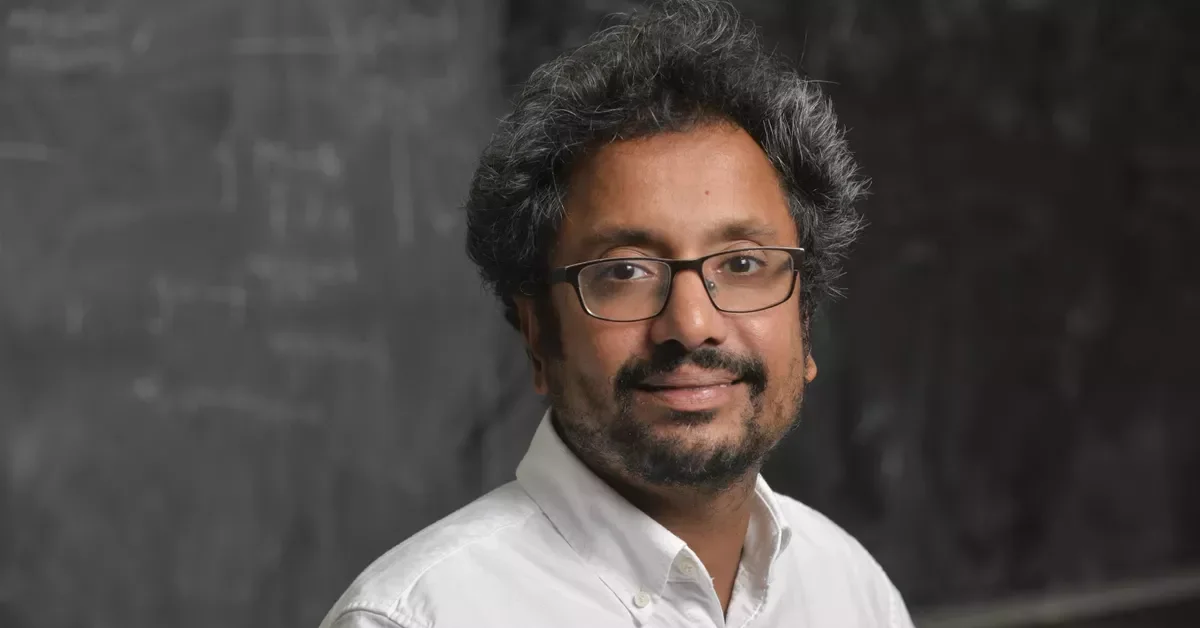
The post is short, and it reads like it was written in a hurry — because it was. Vakil says he was at a meeting of the American Mathematical Society’s Executive Committee and Board of Trustees, about to chair a session lasting several hours, when he decided the matter was too urgent to wait. “Alessandro Masullo has a proposed proof of GRH,” he wrote, “and Brian Conrad has been looking closely at it for months and gave extensive feedback which is being incorporated, and it is so far looking good. It is all human, with no AI.”
Then the ask: “I hope people quickly check it, formalize, fill any small gaps if they occur. I really hope it works. I have great faith in Brian’s judgement, and Brian has put a lot of thought into checking what Alessandro has done.” There is, he adds, “a long story to tell, but right now I want to get the file out.”
That is the whole announcement. No press release, no journal submission, no formalization — just a draft file and a senior mathematician staking his reputation on asking the community to look at it fast.
Twelve years, months of checking — and a rushed release#
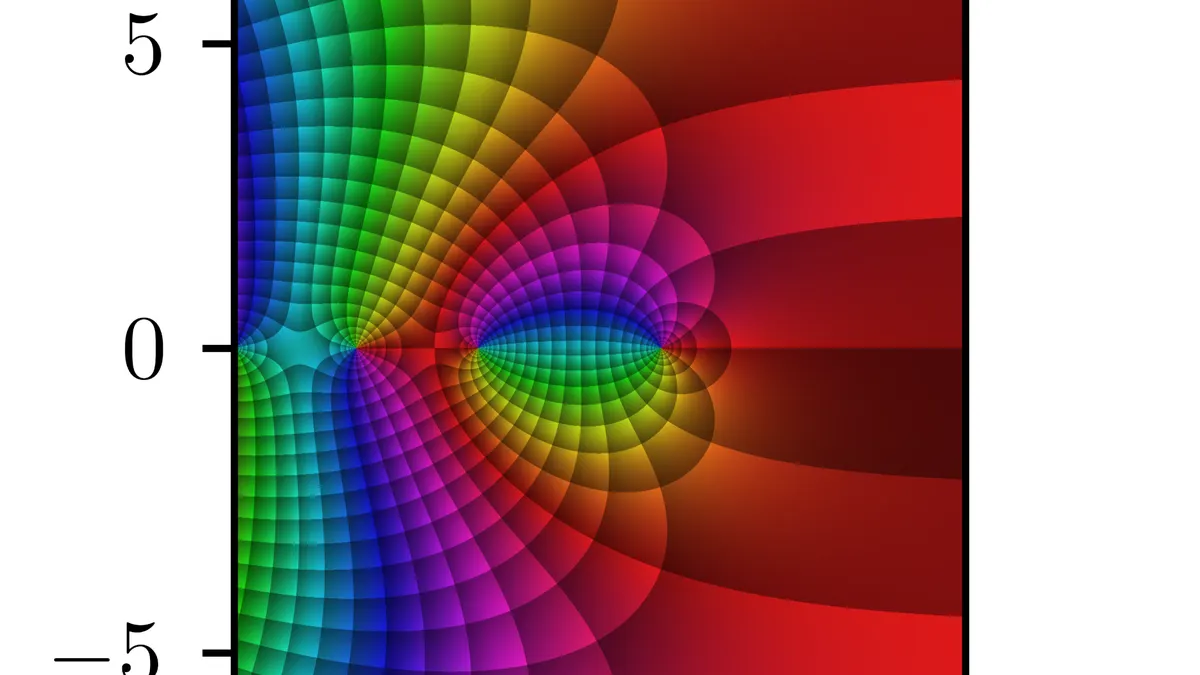
The hurry is the strange part, because everything else about this proof is slow. Masullo’s own introduction to the draft says it is the result of twelve years of work. Conrad, widely regarded as one of the most exacting checkers in number theory, has been going through it for months. The original plan, Vakil writes, was to bring Masullo to Stanford for a year to polish the writing and only then announce it, after running it by enough people.
That plan did not survive Friday morning. Hours earlier, Alpöge had posted his own claim — a proof of the Riemann Hypothesis and the Generalized version, built working with Claude, released only as Lean code. Vakil’s post does not mention Alpöge or Claude. It does not have to. The timing, and the line “it is all human, with no AI,” says what the post itself leaves unsaid: the careful, year-long rollout was abandoned the moment a rival claim went public, and the draft went out as it was.
Masullo’s introduction makes the stakes explicit. Addressing, in his words, the mathematician “who feels discouraged by the pace and tone of the current climate,” he writes: “we are still here. We are very much alive. We are not going anywhere.” It is hard to read that as anything other than a reply to the morning’s news — a human proof, twelve years in the making, announced on the day an AI-assisted one claimed the same prize.
Two proofs, one day — and what makes this one different#
The two claims could hardly be more different in form. Alpöge’s exists only as Lean code — fourteen archive files, more than 250,000 pages of formalization, with no human-readable writeup yet. A machine can check it; a human cannot read it. Masullo’s is the opposite: a traditional human argument, written to be read, that has already had months of attention from one of the most careful checkers in the field. But it has not been formalized, it is still an unpolished draft, and its main endorsement so far is Conrad’s private review, which Vakil is now asking the public to reproduce.
That difference cuts both ways. A readable proof can be argued with directly — and it already is being argued with. Early discussion online has raised questions about some of the argument’s bounds, exactly the kind of scrutiny Vakil invited when he asked readers to check the draft and fill any small gaps. Whether those gaps are small, as he hopes, or structural, is now the question the whole field will spend the coming days answering. The draft’s unpolished state is not a footnote here; it is the story. Vakil chose to release something unfinished rather than let the year-long plan run its course.
What to watch#
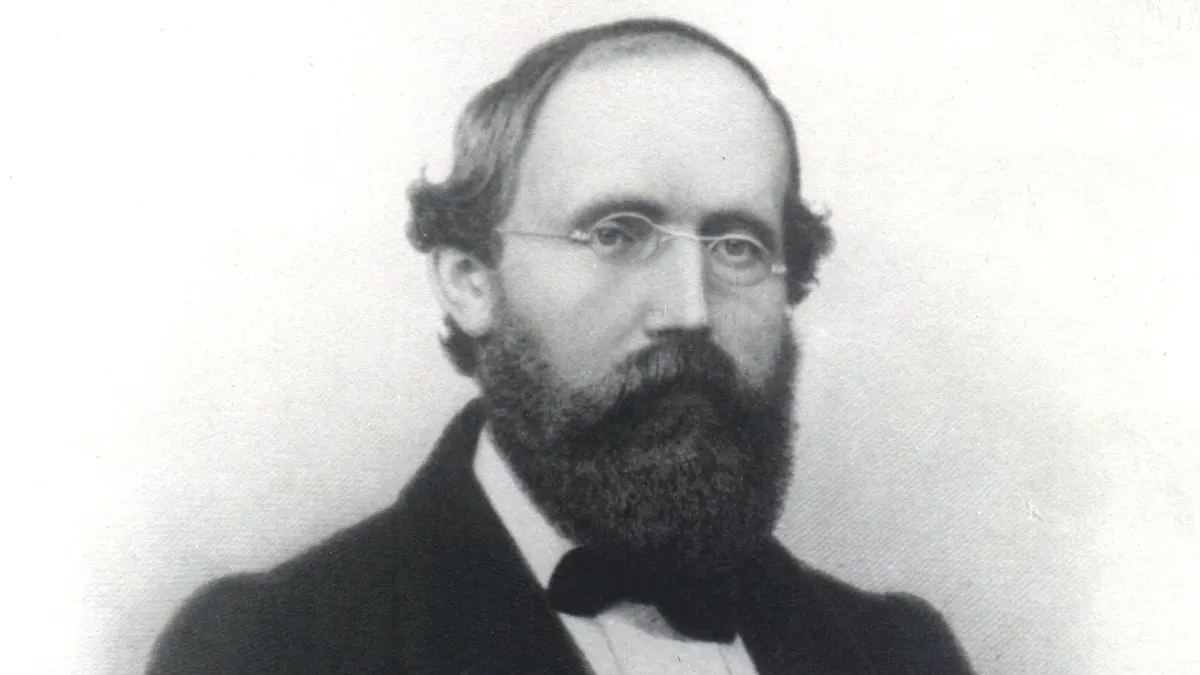
Five things decide how big this becomes. First, whether Conrad’s private confidence survives public scrutiny — the months of feedback he gave are the strongest thing this claim has, and they are about to be tested in the open. Second, whether the gaps in the draft turn out to be the small ones Vakil hopes for, or something that forces the argument back to the drawing board. Third, whether anyone starts a formalization effort: a Lean check would give this claim the same kind of mechanical backing Alpöge’s has, and the community now has two enormous claims to check at once. Fourth, whether the two proofs converge or collide — two independent routes to the same conclusion would be extraordinary corroboration; a contradiction between them would be a different kind of news. And fifth, the prize itself: the Clay Institute’s rules require a solution to be published in a refereed journal and to win general acceptance before the $1 million is awarded. Even if one of these proofs holds up, that is years away. For now, the honest position is the one Vakil himself took: the draft is out, the checking has begun, and the hypothesis — after 167 years, and now with two claims on it in a single day — is still officially open.
Sources: Ravi Vakil, “Hurried Announcement: Alessandro Masullo GRH,” November 20, 2026; TechCrunch, “AI claimed a solution to the 167 year-old Riemann Hypothesis — and a human did, too,” by Tim Fernholz, November 20, 2026; Levent Alpöge, statement, November 2026; r/singularity discussion thread, November 20, 2026.