RUMOR: Anthropic mathematician claims Claude proved the Riemann Hypothesis — Lean code posted, verification pending
A mathematician at Anthropic says he has solved the most famous open problem in mathematics — working with Claude. In a statement posted on Friday, Levent Alpöge writes that he believes he has, working with Claude, discovered a proof of the Riemann Hypothesis, and that the argument is formalized in the Lean proof assistant. The claim has not been verified by any independent expert. Until it is, it is exactly that: a claim — one with a $1 million prize and 167 years of failed attempts behind it.
- Levent Alpöge, a mathematician employed at Anthropic, posted a statement on Friday, November 20, 2026, saying he believes he and Claude have discovered a proof of the Riemann Hypothesis.
- The statement says the proof is formalized in Lean — 14 archive files posted at alpo.ge — and that the method also resolves the Generalized Riemann Hypothesis, with the Extended Riemann Hypothesis expected with more time.
- Per the statement, the breakthrough came “late Sunday night” — November 15 — and Alpöge says he messaged Anthropic CEO Dario Amodei about announcing it.
- Scientific American reported the claim on November 20, noting experts should be able to check quickly whether the Lean code is correctly written and whether the proof is right. No independent verification has been reported as of publication.
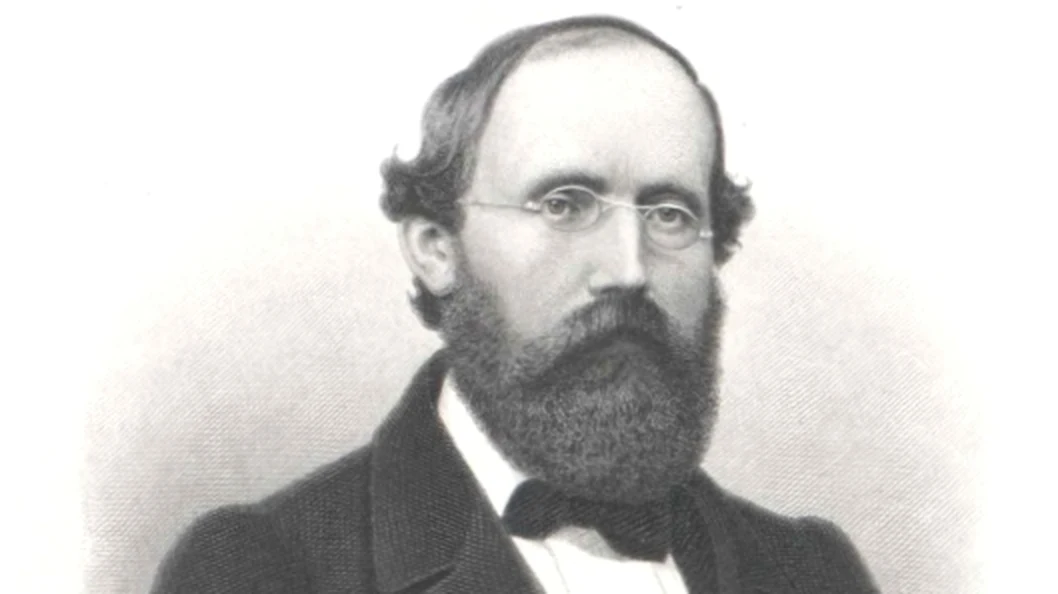
- The Riemann Hypothesis, posed by Bernhard Riemann in 1859, is one of the Clay Mathematics Institute's seven Millennium Prize Problems, carrying a $1 million prize for a proof.
What was actually claimed#
Alpöge's statement is a single page, hosted at alpo.ge. It makes three claims: a proof of the Riemann Hypothesis itself; that the method “easily extends much further,” resolving the so-called Generalized Riemann Hypothesis; and that, with more time, he expects the Extended Riemann Hypothesis too. “Claude and I have also formalized the arguments without assumptions,” the statement says.
The formalization is the substance of the announcement — and its strangeness. There is no readable writeup yet, only Lean code: fourteen archive parts, lean.tar.gz.part01 through part14, linked from a footnote on the statement's first page. A footnote mentions more than 250,000 pages of formalization. The statement sketches the method in a few lines — a Stepanov determinant and chaining theta lifts, with chain length √X for the von Mangoldt sum — but the argument itself, for now, exists only as code a machine can check.
That is why the claim is spreading fast and being believed slowly. The math community cannot read the argument yet. It can only run it.
Why the Lean formalization matters — and its limits#
Lean is a proof assistant: a program that checks mathematical arguments step by step. If the posted code compiles, and if the theorem it states is really the Riemann Hypothesis, then a computer has verified every logical step of the proof. That is far stronger evidence than a PDF preprint, and it is the reason this claim is being taken more seriously than the usual “proof” that lands in an inbox.
But the check only proves what the code states. Two things still have to be confirmed by humans. First, that the formal statement in the code is actually the Riemann Hypothesis — a subtle error in a definition could mean the machine verified something else. Second, that the argument is sound in the mathematical sense, not just the mechanical one: formalization can hide a wrong turn behind layers of definitions that no one has read. Scientific American, reporting the claim on Friday, put it plainly: it should not take long for experts to verify whether the hypothesis is properly coded, and if the proof is correct. The first half of that sentence is a fast, mechanical job. The second is the real work — and at a scale of hundreds of thousands of pages, it is not a weekend's reading.
A summer of big claims#
Alpöge is no stranger to headline claims. In July 2026 he posted a Claude-generated solution to the Jacobian conjecture, and discussion threads cataloguing his 2026 work list further claims through the autumn — on Hadamard matrices, the three-dimensional Euler blow-up, the Carathéodory conjecture, and elliptic-curve rank records. That track record cuts both ways: it shows a mathematician working at extraordinary speed with an AI collaborator, and it is also why many mathematicians will wait for independent verification rather than celebrate. Extraordinary claims about the most famous problem in mathematics have a long history of collapsing on inspection, and the people best placed to inspect this one have only just started.

What Claude already did — and didn't — in August#
There is a verified record to weigh the new claim against, and it comes from the same lab. On August 10, 2026, Anthropic published what happened when a staff member, Jarred Sumner, asked an unreleased Claude model to “take a real stab” at the Riemann Hypothesis. The model did not prove it. But in the attempt, it raised the proven lower bound for the fraction of zeta zeros known to lie on the critical line from 41.6% to 67.2% — combining Montgomery's 1973 pair-correlation techniques with more recent results and a 2000 paper by Bombieri, in a combination no human had assembled.
The scale of that run was already striking: about 60 subagents coordinated over a day and a half, 31 million output tokens, 650 ideas tried and discarded before the one that worked. The result was reviewed by Alpöge and Ralph Furman inside Anthropic, and by outside experts Brian Conrey and Dan Goldston; a Lean 4 formalization of the result is public. Anthropic itself was careful about what it meant, writing: “We don't expect that the techniques Claude used will lead to proving the Riemann hypothesis.” A genuine advance, explicitly not a proof — and a reminder that the same people now making the bigger claim know exactly how high the bar is.
What to watch#
Five things decide how big this becomes. First, whether the Lean code compiles and states the Riemann Hypothesis correctly — the fast, mechanical check, and the first real filter. Second, whether independent number theorists confirm the argument once they can read it, in code or in a writeup. Third, whether that readable writeup appears at all: a 250,000-page formalization with no human-readable proof is a strange object, and the community will want the mathematics in a form it can argue with. Fourth, whether Anthropic says anything of its own — so far the claim is Alpöge's personal statement, not a company announcement. And fifth, the prize itself: the Clay Institute's rules require a solution to be published in a refereed journal and to win general acceptance in the mathematics community before the $1 million is awarded. Even if the proof holds up, that is years away. The honest position, for now, is the one the claim itself invites: the code is posted, the checking has begun, and the hypothesis — after 167 years — is still officially open.
Sources: Levent Alpöge, statement, November 2026; Scientific American, “Anthropic mathematician claims to prove Riemann hypothesis, most famous problem in all of math,” by Joseph Howlett, November 20, 2026; Anthropic, “Claude has improved on a longstanding lower bound for the fraction of zeros of the Riemann zeta function that satisfy the Riemann hypothesis,” August 10, 2026; r/singularity discussion thread, November 20, 2026.