Google books Blue Origin to launch its AI servers into orbit in 2029
Google has booked Blue Origin's New Glenn rocket to carry its first heavy-lift load of solar-powered, TPU-carrying Project Suncatcher satellites into orbit in early 2029 — the boldest test yet of whether AI data centers belong in space.
- Launch: first quarter of 2029, aboard Blue Origin's New Glenn rocket — the first dedicated heavy-lift flight for Project Suncatcher, carrying several satellites.
- Compute: each satellite carries Google TPUs, about one data-center server rack's worth.
- Orbit: sun-synchronous, for near-continuous sunlight.
- Prototype: launched October 1, 2026 with Planet Labs aboard a SpaceX rocket; ran Gemma 4 in orbit on October 30, beaming back a short poem over Norway.
- Economics: roughly $7,000 per kilogram to launch today, versus about $200 per kilogram needed by the mid-2030s to match ground-based energy costs.
- Rivals: SpaceX and Starcloud are exploring orbital data centers; Starcloud raised $250 million at a $2.3 billion valuation in August, with Nvidia participating.
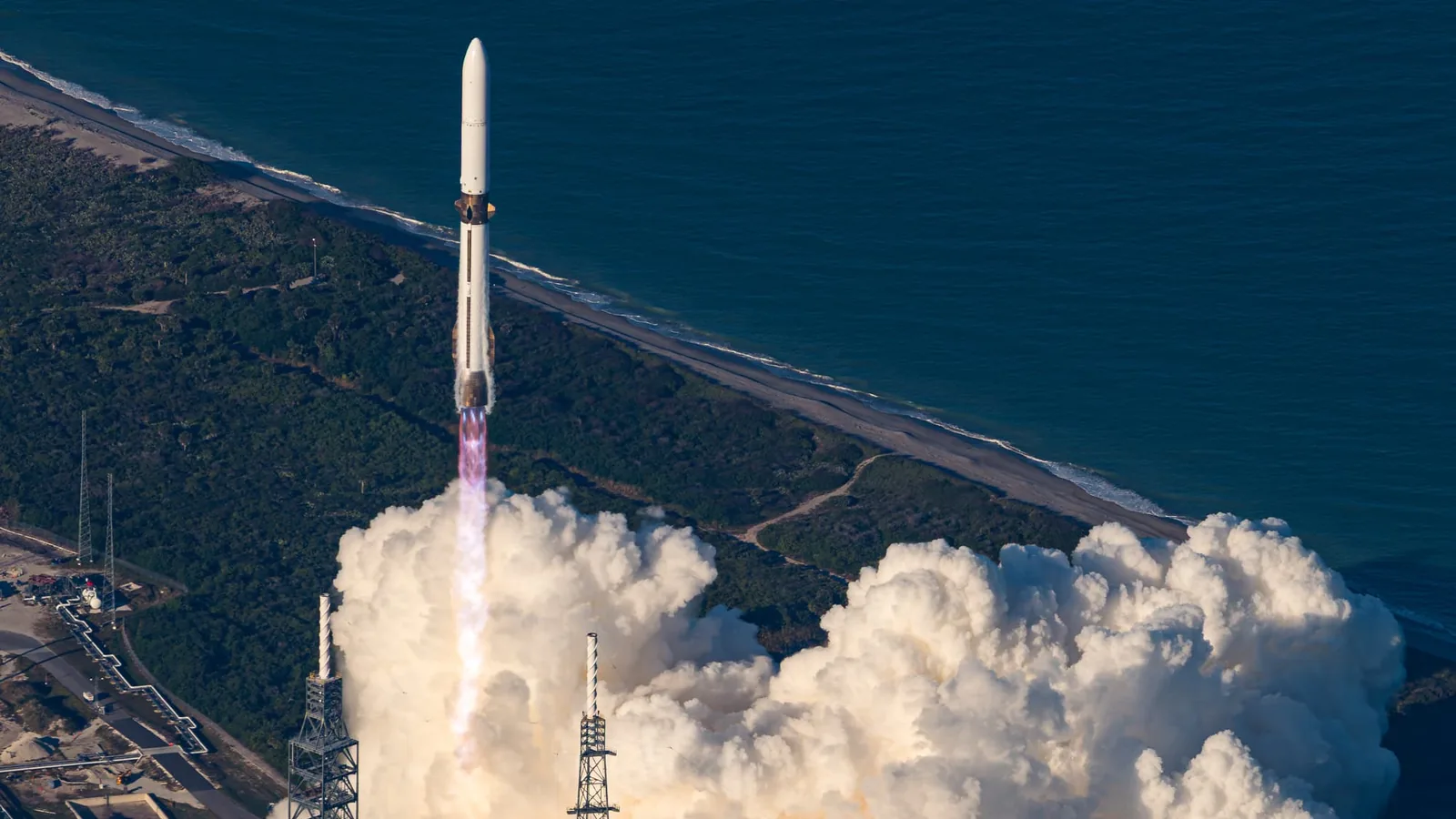
Google is taking its AI infrastructure off the planet. On Thursday, Blue Origin announced that Google has selected its New Glenn rocket to launch the first heavy-lift flight of Project Suncatcher — a set of solar-powered satellites carrying Google's own tensor processing units — with liftoff targeted for the first quarter of 2029.
The deal turns a research experiment into a scheduled mission. Each satellite is expected to carry roughly as much compute as a rack of servers in a conventional data center, and the flight will test whether that much AI hardware can run, stay cool, and keep working in orbit — powered almost entirely by sunlight.
The deal: New Glenn carries the first rack-scale test#
Blue Origin announced the launch services agreement on November 19. It is Google's first dedicated heavy-lift flight for Suncatcher: New Glenn will carry several computing satellites into a sun-synchronous orbit, a path that keeps the spacecraft in near-continuous sunlight. Neither company disclosed what the deal is worth or exactly how many satellites will fly.
Jordan Charles, Blue Origin's senior vice president for New Glenn, said in the announcement that the rocket's "heavy-lift capacity and large payload volume give customers the flexibility to bring new capabilities to orbit." For Blue Origin, the agreement is a significant future mission as it rebuilds New Glenn's flight cadence after delays and a test explosion at its Cape Canaveral site in May, which pushed the rocket's next flight to January 2027.
Why orbit: sunlight, land, and the power bill#
The case for orbit starts with the three things data centers on Earth are running short of: electricity, land, and cooling. AI demand keeps climbing, and each new ground facility adds load to power grids that are already strained. In orbit, sunlight is nearly constant, no land is needed, and nothing draws on a terrestrial power grid.
Google frames Suncatcher as "a long-term moonshot to scale AI infrastructure in space by tapping into the abundant solar power in orbit," and calls the Blue Origin flight "a crucial milestone on our roadmap as we expand the boundaries of what's possible for the future of compute." The idea is not to replace ground data centers, but to find out whether some of the work can move somewhere the power is free and the real estate is effectively infinite.

What the prototype already proved#
Google is not starting from zero. On October 1, Google and Planet Labs launched a refrigerator-sized Suncatcher prototype aboard a SpaceX rocket. On October 30, Google reported that the satellite's chip had run its Gemma 4 model in orbit and beamed back a short poem while passing over Norway — the first AI response ever generated by a data-center-class chip in space.
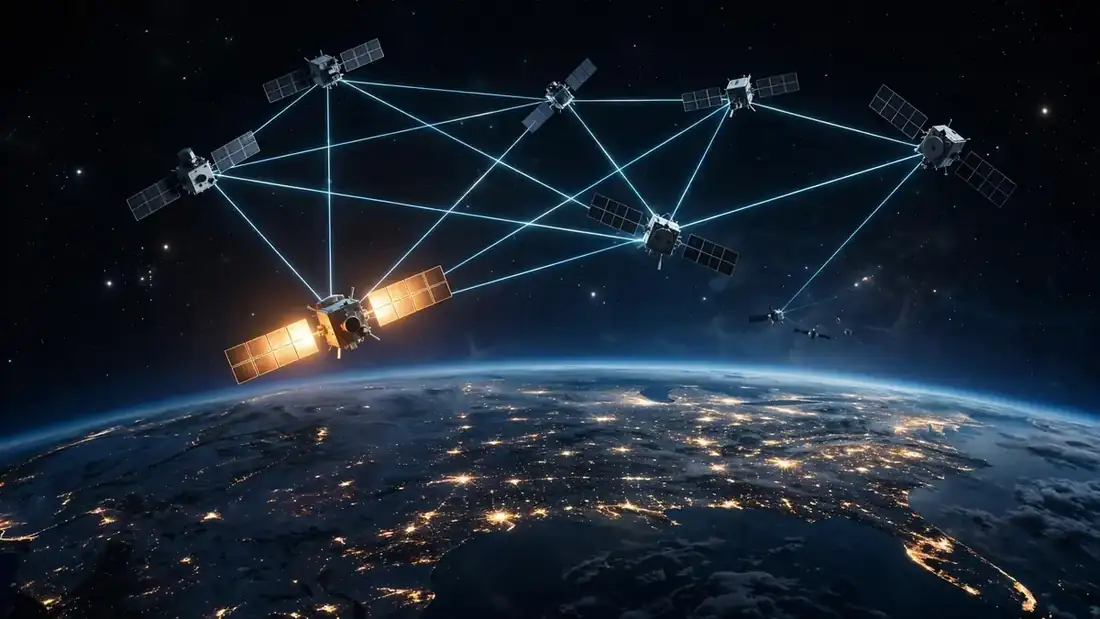
That flight is testing whether the chips can withstand launch forces, radiation, and extreme temperatures, and how to cool them without the airflow available on Earth. Google also plans two linked test satellites in 2027 and has studied clusters of 81 satellites, linked by lasers and flying 650 kilometers up, as a sketch of what a constellation could look like.
The hard parts: heat, radiation, and launch economics#
The engineering problems are unforgiving. Without air, heat from powerful chips has to leave through pipes and radiator panels instead of fans and water cooling. Radiation can damage electronics and corrupt data. And each satellite has to be built, launched, and operated in an environment where a repair visit is not an option.
Then there is the money. Google's own research estimates that launch prices must fall from roughly $7,000 per kilogram today to around $200 per kilogram by the mid-2030s for orbital compute to match the energy costs of a ground data center. Google is not alone in chasing the idea — SpaceX is exploring orbital data centers, and startup Starcloud raised $250 million at a $2.3 billion valuation in August, with Nvidia participating — but nobody has shown the economics work yet.
What to watch#
The 2027 two-satellite test comes first: whether a pair of spacecraft can link up and share work in orbit. Then the rocket itself — the 2029 date depends on New Glenn rebuilding its flight cadence after the May explosion, with its next flight now set for January 2027. And the long pole is launch cost: until the price per kilogram falls by an order of magnitude, orbital data centers stay a research program, not a business. Google has announced no timeline for an operational constellation, and this flight is designed to find out whether one is worth building at all.
Sources: Reuters, “Google picks Bezos’ Blue Origin to launch AI computing satellites in 2029” (November 19, 2026); TipRanks, “GOOGL Stock Ticks Up After Alphabet Picks Jeff Bezos’ Blue Origin to Launch AI Satellites in 2029” (November 19, 2026).