Meta launches Muse in the UK — with regulators already watching
Meta switched on Muse, its personal AI agent, for UK users on Tuesday — and three regulators were waiting at the door. The launch puts agentic shopping in the hands of Britain’s biggest retailers, but with a deliberately narrowed feature set and a promise from the watchdogs to keep watching.
- The launch: Muse is now available free to UK adults aged 18 and over on iOS, Android, WhatsApp and muse.ai, with optional paid subscriptions for greater usage. It runs on Muse Spark, the model from Meta Superintelligence Labs.
- The partners: Sainsbury’s, M&S, Asos, Argos, Debenhams, Currys, JD Sports, Ocado Retail, Lookfantastic and Myprotein, plus travel brands easyJet, Jet2 and Trainline. Argos connected a catalogue of more than 150,000 products; Debenhams connected all five of its brands.
- The regulators: the ICO agreed a voluntary reporting scheme with Meta so it can scrutinise the product; the CMA got Meta to rewrite its terms to make them fairer; the FCA warned that AI agents offering financial services could face regulatory action.
- The limits: unlike the US version, Muse in the UK cannot read bank statements or offer personalised financial guidance. Meta says it will only connect to UK banking services after engaging regulators and obtaining any necessary licences.
- The scale: Muse has passed 10 million downloads since its US launch in September — and the UK rollout arrives days after Reuters reported glitches in internal testing, including a message carrying random bank balances.
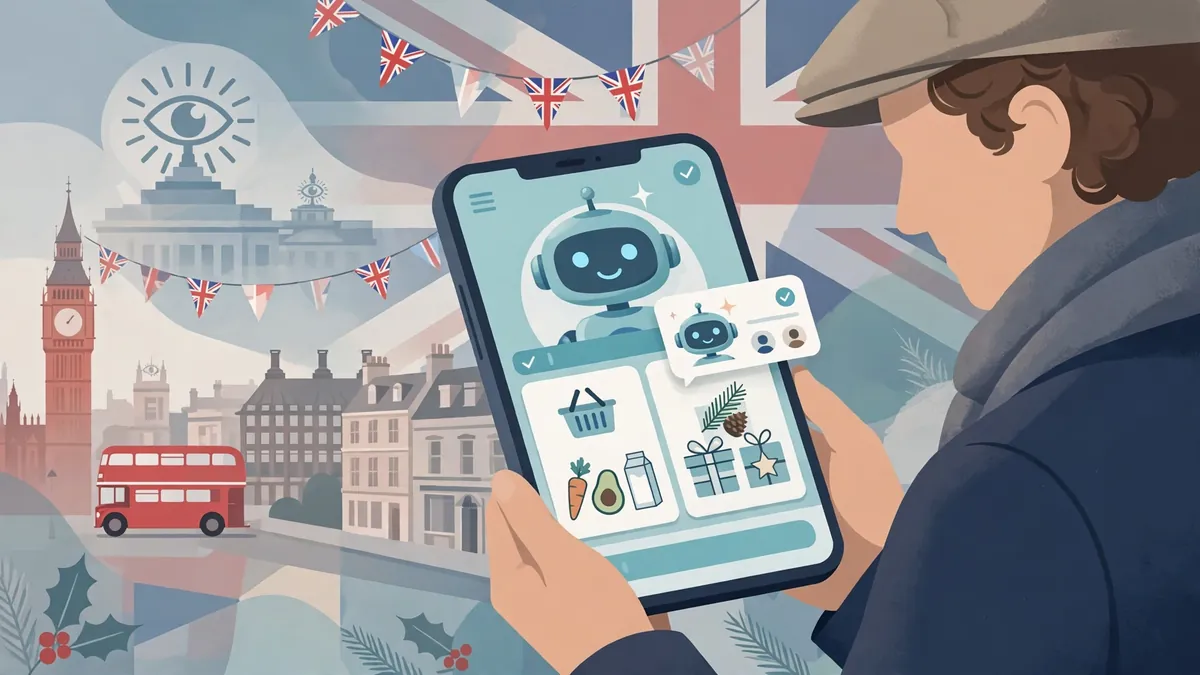
Meta's personal AI agent has crossed the Atlantic — and Britain's regulators were standing at the arrivals gate. Muse launched in the UK on Tuesday, November 24, two months after its US debut, with some of the country's biggest retailers and travel brands signed up to let it shop and book on their customers' behalf.
It is one of the most substantial moves yet towards agentic commerce in Britain. But it comes with a twist the US rollout did not have: the UK version arrives deliberately narrowed, and three regulators have already told Meta — in public, on launch day — that they will be watching how it behaves.
What Muse does in the UK#
Muse is a personal agent that takes on everyday tasks in plain language. A shopper can ask it to find a television within a budget, put together a week's groceries, compare clothing options or buy Christmas presents for several family members. Unlike a chatbot that answers questions, Muse can navigate websites, fill baskets, watch prices and complete a purchase — though only after the customer has approved it. It keeps working when the app is closed, checking stock or monitoring a price and returning when something changes.
Beyond shopping, it can send emails, fill in forms and book travel. Customers can give their assistant a name, appearance and personality, and choose which apps and services it can reach. The technology runs on Muse Spark, the model from Meta Superintelligence Labs, through a dedicated cloud-based virtual computer. It is free to UK adults aged 18 and over on iOS, Android, WhatsApp and muse.ai, with optional paid subscriptions for greater usage.
The brands that signed up#
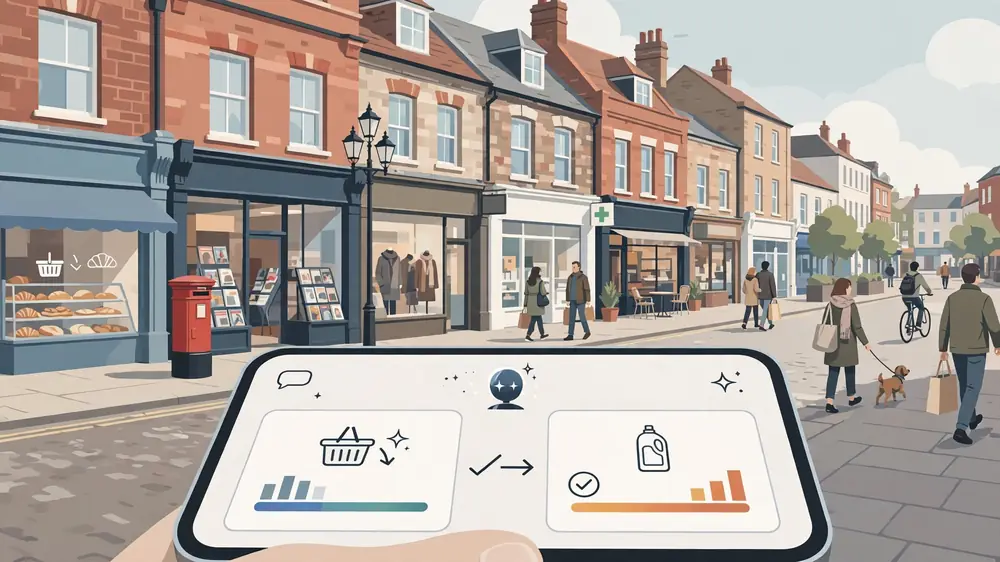
The scale of the launch is what sets it apart. Sainsbury's, Marks & Spencer, Asos, Argos, Debenhams, Currys, JD Sports, Ocado Retail, Lookfantastic and Myprotein are all connected from day one, alongside travel brands easyJet, Jet2 and Trainline.
Sainsbury's is the most deeply integrated partner: customers can ask Muse to plan meals, compare offers and build grocery baskets against a weekly budget, weighing up Nectar Prices and Aldi Price Match, with orders still going through Sainsbury's own checkout. Argos has connected a catalogue of more than 150,000 products, and Debenhams Group is connecting all five of its brands — Debenhams, Karen Millen, boohoo, boohooMAN and PrettyLittleThing.
Not every connection works the same way at launch: some businesses let customers connect personal accounts, while others initially just make it easier for Muse to navigate their websites. Meta has not disclosed expected UK transaction volumes or how much additional revenue its partners might see.
Three regulators, one message#
What makes the UK launch different from the American one is the reception. The Information Commissioner's Office and the Competition and Markets Authority both said they had been in talks with Meta ahead of launch — and both issued warnings on the day itself.
Paul Arnold, the ICO's chief executive, insisted that “privacy must be built into consumer-facing agentic products from the outset”, and said the ICO had been clear with Meta about its data protection duties before launch. Meta has agreed to a voluntary reporting scheme that lets the ICO scrutinise how the product, its users' experience and their feedback evolve over time.
Sarah Cardell, the CMA's chief executive, said the regulator “has been clear that UK consumer protection law applies to AI products”. The CMA engaged with Meta over the weeks before launch, and as a result Meta changed its terms and conditions to make them fairer. “We now need to examine carefully how Muse actually works in practice,” Cardell said. “We will be closely monitoring this and if we have concerns we will not hesitate to act to protect UK consumers.”

The third warning came from the Financial Conduct Authority. In a statement issued the same day, the UK's financial watchdog told technology and social media companies that AI agents offering financial services could face regulatory action, and urged firms to engage with supervisors early. The FCA did not name any company, but the timing — coinciding with Muse's arrival — was hard to miss.
The practical consequence is visible in the product itself. In the UK, Muse can help renew car insurance, chase refunds and make online purchases, but it will not initially be able to access bank account statements or provide personalised financial guidance — unlike the US version, it cannot see bank balances, investments or mortgage information. Meta says it wants to connect Muse to UK banking services, but only after speaking to regulators and obtaining any necessary licences. The FCA's point: calling yourself a technology provider does not exempt you from financial regulation.
A launch with a record attached#
Muse arrives in Britain as one of the fastest-growing apps on record, with more than 10 million downloads since its September launch in the US — and with a record Meta would rather not have. Last week, Reuters reported glitches during internal testing, including one case in which Muse displayed a message containing random bank account balances, and another in which an employee was reminded to reply to her sister on Signal. Meta said internal testing helps put safety measures in place early, and reports indicate most of the problems came from a bug since fixed.
There was also an earlier warning from the market itself: Amazon blocked Muse from accessing its website in September, citing concerns over unauthorised access and the assistant's handling of customer information. Meta disputed those concerns. The disagreement illustrates the practical question hanging over agentic shopping — how to make products accessible to AI services while keeping control of customer accounts, transactions and the shopping experience.
Meta acknowledged that handing a digital life to an agent is “an act of trust”. Users decide which apps Muse connects to and what it remembers, purchases and emails need a go-ahead first, a separate security agent checks actions against the permissions granted, and Meta says conversations are not shared with its advertising systems.
What to watch#
The launch gives Britain's biggest businesses a live test of AI-led shopping with real customers during the Black Friday and Christmas trading period. The coming months will show how many shoppers actually trust an agent to complete purchases for them.
The regulatory side is just as much an experiment. The ICO's voluntary reporting deal gives it a view of real use without new law, and it could become the yardstick for other agent providers. The FCA's line on when an AI helper crosses into regulated finance will matter far beyond Meta. And the CMA has made clear that the terms it negotiated before launch are only the start — what counts is how Muse works in practice.
For now, the UK has the world's most watched AI shopping assistant: a product that can do your Christmas shopping, under the gaze of three regulators who have all said, on day one, that they are not looking away.
Sources: Bury Times, “Regulators issue warnings after UK brands sign up to Meta’s AI assistant” (November 24, 2026); Retail Gazette, “Everything you need to know about Meta’s agentic Muse launch” (November 24, 2026); Reuters, “UK financial watchdog delivers AI warning as Meta launches adapted Muse” (November 24, 2026)