Elon Musk admits Grok trails Anthropic’s Opus 5.5 — in an interview with Chinese state media
On China Media Group, Musk conceded Grok 4.7 is ‘a solid workhorse’ but not as good as Anthropic’s Opus 5.5 — then pivoted to Grok Bot’s 100%-a-month growth and a ‘real world engineering’ strategy. The venue mattered as much as the words.
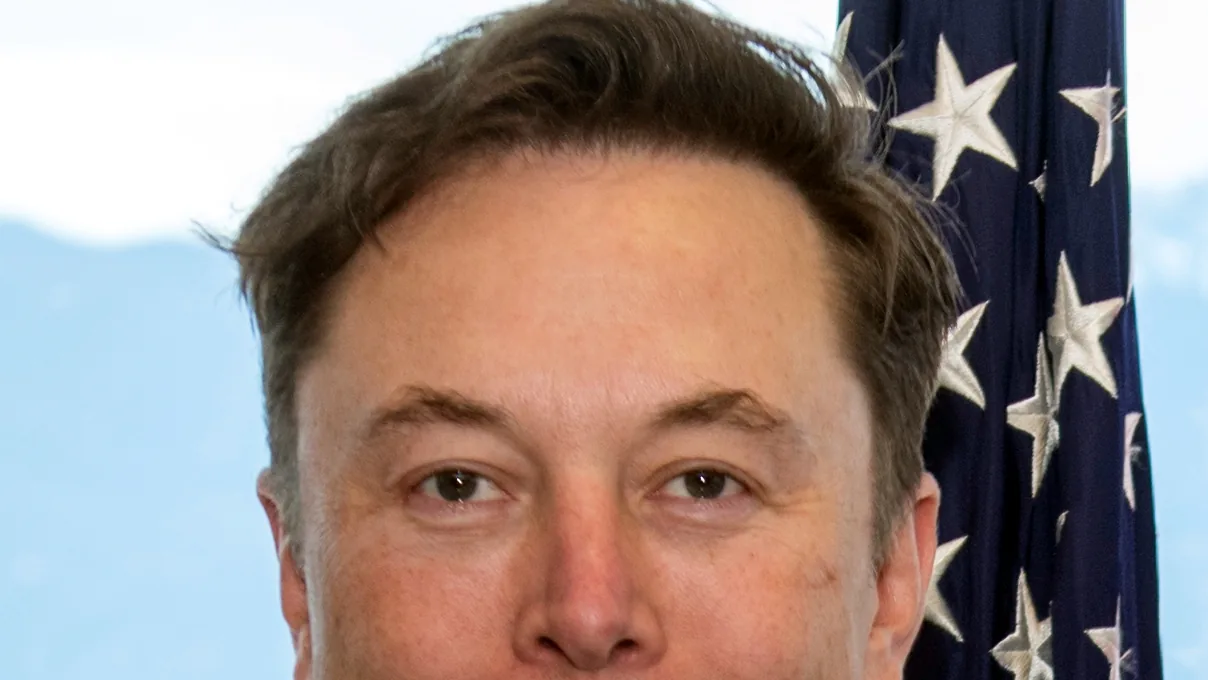
Elon Musk does not usually lose in public. So it landed hard when, in a China Media Group interview published September 25, he said his latest model isn't as good as the competition's. Grok 4.7, he told the state broadcaster's cameras, is "a solid workhorse of a model" — but not as good as Anthropic's freshly released Opus 5.5.
His explanation was arithmetic, not apology: xAI has been "around for three years during AI, whereas Anthropic's been around for six years." In other words, the gap is real, measurable in time served, and closable "sometime next year, most likely." For a CEO whose default posture is "we're already the best," this was a deliberate downshift — and it ricocheted across AI communities within the hour.
What he actually said#
The interview, aired by CGTN during Xi Jinping's US visit, ranged from Tesla's Shanghai plant to Optimus and humanoid robots. The AI segment is what mattered. Three claims stood out:
- The concession. Grok 4.7 is a workhorse, not a frontier leader, and trails Opus 5.5. Musk's own framing: a younger lab is simply behind an older one.
- The pivot to distribution. "Grok Bot is kind of like a personal digital assistant, has been very popular and is growing about a 100% a month," he said. If the model lags, the agent product is the story.
- The new battleground. Anthropic, he argued, made AI "excellent at software engineering." What doesn't exist yet is AI "excellent at real world engineering" — and he believes SpaceX and Tesla's engineering data gives Grok the path there.
That last point is the strategy in one sentence: concede the coding war, fight on robotics and physical-world reasoning instead. It reframes a loss as a lane choice.
Why the venue matters#
Musk did not make this admission on X or a podcast. He made it on Chinese state television, days before a White House state dinner where Xi Jinping and Donald Trump were expected to discuss AI safety measures — with Musk reportedly on the guest list. The venue colored everything else he said: Xi is "a great leader," Tesla's Shanghai factory (4.5 million vehicles and counting) is "a gem," and Chinese AI labs are "generally outstanding" given their compute, delivering strong results per unit of it. On the US and Dutch chip and lithography bans, he said they had genuinely constrained Chinese labs — then predicted China would overcome them in about two to three years.
The timing — benchmark defeat on one hand, courtship of Beijing on the other — makes the interview read as two messages at once: humility toward a competitor, warmth toward a regulator-class audience.
The strategy behind the concession#
- Compete where the data moat is. Software-engineering benchmarks are Anthropic's home turf. Real-world engineering — rockets, factories, fleets — is where SpaceX and Tesla data lives. If frontier AI shifts from code to the physical world, the data advantage flips.
- Sell the agent, not the model. A model that's "not as good as Opus 5.5" is a hard sell; an assistant "growing about 100% a month" is a growth story. Grok Bot ships in Teslas and on X — everywhere Musk controls distribution.
- Buy time with candor. Saying "next year" for frontier parity resets expectations on his own terms. A CEO who admits the gap owns the timeline; one who denies it gets graded on someone else's.
What to watch#
Three things will show whether this was honesty or stagecraft. First, the next model: an unreleased Grok 4.8 — reportedly 2.5 trillion parameters — is expected to finish training and enter reinforcement learning; its independent benchmark scores are the real referendum on the "next year" promise. Second, the state dinner: whether the AI safety discussion Musk positioned himself for produces anything concrete. Third, Opus 5.5's benchmarks themselves — because the concession is only as meaningful as the gap he's conceding, and the numbers are still landing.
The rare thing here isn't a model release. It's a lab head telling a foreign state broadcaster, on the record, that someone else's model is better — and treating the admission as strategy rather than failure. The AI community noticed within the hour. The industry will spend months deciding whether he was right.
Sources#
- CGTN: Full exclusive CMG interview with Elon Musk — interview aired September 25, 2026
- wccftech — “Elon Musk admits Grok trails Anthropic by years, yet claims his agentic AI is exploding 100% monthly”
- TechDefused — “Musk calls Xi ‘a great leader’ as Chinese president begins US visit” (September 23, 2026)
- r/ClaudeAI thread — discussion and community reaction (September 26, 2026)