WSJ: Huang clashed with Kress over Nvidia's circular financing as prepaid chips piled up 'like an avalanche'
The Wall Street Journal reports that before his resignation, Jensen Huang berated CFO Colette Kress over Nvidia's program of financing its own chip buyers — underwriting demand to absorb an ‘avalanche’ of prepaid silicon. Reddit’s LocalLLaMA crowd is split between ‘just business’ and ‘Enron 2.0.’
- The report: The Wall Street Journal, November 13 — “Before His Ouster, Jensen Huang Belittled the Executive Replacing Him,” by Anissa Gardizy and Robbie Whelan, based on people familiar with the matter.
- The confrontation: At an August meeting, Huang called CFO Colette Kress “a deer in the headlights” when she questioned the guarantee deals, and dismissed her as a “reporting CFO” who could not help define strategy.
- The program: Credit support and guarantees for AI startups and cloud operators that could not afford Nvidia’s chips, led by Huang’s son-in-law Nico Caprez — promoted to vice president in January — in exchange for a share of the customers’ revenue.
- The OpenAI deal: Nvidia considered a $250 billion backstop for an Ohio data-center campus where OpenAI would install about $300 billion of Nvidia chips. Kress reworked it, cut the commitment roughly in half, and a downsized deal was signed on August 17.
- The why: Major cloud customers were shifting to in-house chips while prepaid TSMC wafers and memory kept arriving. Nvidia paused some financing deals in late August and, per the Journal, had “turned off the tap” by October.
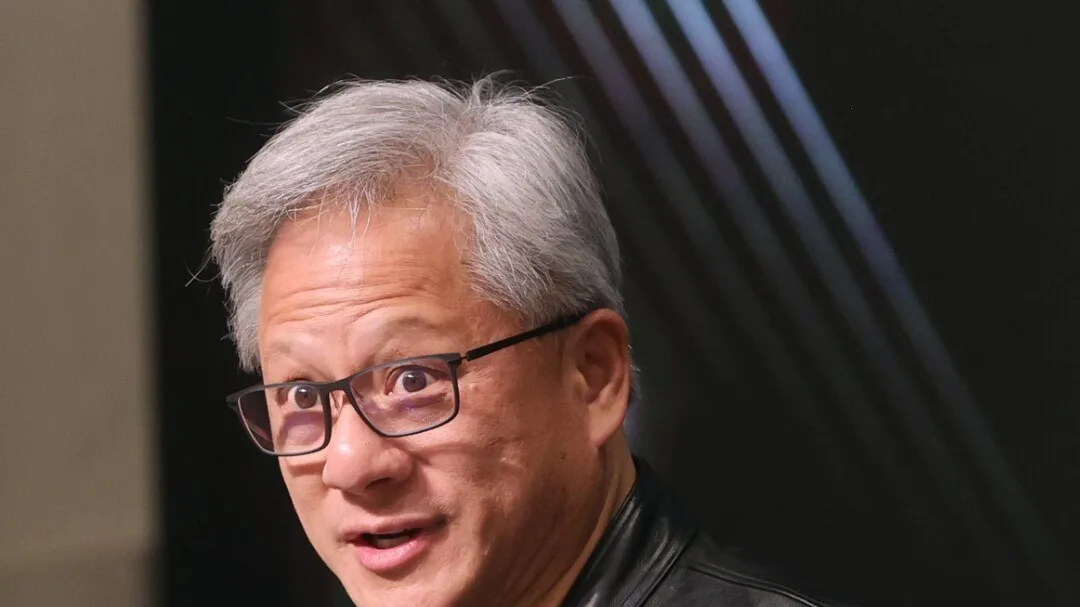
In August, with Nvidia’s chip business at the peak of its power, Jensen Huang summoned his top finance executives to his office and tore into the woman who now runs the company. The Wall Street Journal’s account of that meeting, published Friday, is the fullest picture yet of how Nvidia ended up bankrolling its own customers — and why the executive who objected is now in charge of unwinding it.
The Journal reports that Nvidia had committed to buying so many TSMC wafers and so much memory that the incoming supply was, in Huang’s own words, coming at him “like an avalanche.” The fix the company chose was to finance the buyers: guarantees and credit support for AI startups and cloud operators that could not otherwise afford its chips, in exchange for a share of their revenue. The program’s defenders call it savvy investing. Its critics — including, at the time, Nvidia’s own chief financial officer — call it circular financing.
The August confrontation#
Huang had called the meeting to diagnose a ballooning problem: Nvidia was in talks to provide billions of dollars of guarantees to companies that could not afford its chips. The deals were led by his son-in-law, Nico Caprez, who had been promoted to vice president in January, and another vice president, Raj Mirpuri. In the spring, the two had told prospective partners that Nvidia could arrange credit-support deals within a couple of weeks; dozens of companies lined up, hoping the chipmaker’s backing would lower their borrowing costs.
Kress pushed back. She raised questions about how to decide which deals to pursue, how to value the guarantees, and how to calculate the return on investment — and behind the scenes, she tried to rein in Caprez. According to a person familiar with the comments, Huang interrupted her presentation and called her “a deer in the headlights,” then described her as a “reporting CFO,” not someone who could help him define a strategy or make decisions.
Kress later defended the program in public. In late August she said: “We recognize the scale of this support, and we know some will call this circular financing. We see it differently. The equity returns on our invested capital will be excellent.” The Journal’s reporting makes clear the argument inside the company was sharper than that public line suggested.
The OpenAI deal — and the $250 billion number#
The largest of the deals was with OpenAI. Nvidia was in talks to provide a financial backstop for what would be the largest data-center project ever: an Ohio campus that OpenAI would lease in full and fill with around $300 billion worth of Nvidia chips, with Nvidia’s guarantee making banks comfortable lending for the lease payments.
On July 26, the Journal reported that Nvidia was considering a $250 billion backstop for the project. The next day, Nvidia shares fell 5%, wiping out about $250 billion in market value. Over the following weeks, Kress reworked the deal and cut Nvidia’s initial financial commitment roughly in half; the downsized deal was signed on August 17. In late August, the Journal reported that Nvidia had paused some deals in the financing initiative, and by October, the company had started to turn off the tap.
| The numbers at a glance | Detail |
|---|---|
| Backstop floated for OpenAI’s Ohio campus | $250 billion (reported July 26) |
| After Kress reworked the deal | Roughly half the initial commitment; downsized deal signed August 17 |
| Chips for the Ohio campus | About $300 billion worth of Nvidia chips |
| Nvidia’s peak valuation | $5.8 trillion in October, up from under $1 trillion five years earlier |
| Stock multiple | Fell from 23 in May to 16 in October |
The avalanche#
The pressure behind the program was structural. The Journal reports that major cloud providers were moving away from Nvidia, making plans to use their own custom chips and lessen their reliance on off-the-shelf parts — even as the vast supply of wafers and memory Nvidia had already committed to buying kept coming. Funding datacenter expansion for AI startups created demand that absorbed the surplus instead of letting it flood the market and force prices down.
That framing is what set off the online reaction: if demand was being underwritten by the seller, how real was the shortage that kept GPU and memory prices high? Industry analyst Ed Zitron has estimated that at least $200 billion worth of Nvidia AI GPUs are sitting idle in warehouses after being bought by cloud giants that lacked the power capacity or immediate demand to switch them on, according to WCCFTech’s write-up of the Journal’s reporting. That estimate is Zitron’s, not the Journal’s, and it is unverified — but it captures why the story landed the way it did.
Huang himself seemed to be making the pricing argument in public. In Berlin in October, he told a group of cloud CEOs about a soup vendor in Japan who refused a customer a second serving because he had too many customers waiting and not enough soup. “He’s a better businessperson than all of you,” Huang told them, per the Journal. “You are not establishing the value of my products.”
What Reddit made of it#
The story reached r/LocalLLaMA on Friday night as a link to WCCFTech’s write-up, headlined as a report that Huang had financed AI startups to absorb excess silicon “shattering the shortage perception.” Posted at 10:40 p.m. ET, it climbed from 46 upvotes to more than 120 within half an hour — fast for a finance story in a forum about running models locally.
The top comment pushed back on the framing: a hardware company investing in software companies to drive demand for its hardware “just sounds like business.” The reply that followed drew the line the whole thread argued over: when the software business is not profitable, that is “circular financing and/or fraud.” Another highly upvoted comment put it more bluntly: “It’s called Enron 2.0.”
Others noted the practice itself was not news — circular financing had been suspected and discussed for months. What is new is the Journal’s sourced detail: the confrontation, the numbers, the names, and Kress’s own words. The thread’s “shortage was fake” framing goes further than the Journal’s account, which is about an internal fight over risk and demand, not a verdict on GPU pricing.

What to watch#
Three things. First, Kress herself: she was named interim chief executive on Thursday, after Huang resigned over revelations of two extramarital affairs, and she now has to steer Nvidia through the very exposure she tried to limit — with federal and internal investigations underway and no clear successor lined up.
Second, the unwind: whether the guarantee and revenue-share commitments show up visibly in Nvidia’s numbers as the paused program works through, and whether any of the startups Nvidia bankrolled can stand on their own without its backing.
Third, the demand question underneath all of it: whether the big cloud customers’ shift to in-house silicon accelerates. If it does, the avalanche does not stop with one financing program — and the next chapter of this story will be written in Nvidia’s order book, not its boardroom.
Sources: The Wall Street Journal — Before His Ouster, Jensen Huang Belittled the Executive Replacing Him (Nov. 13, 2026); WCCFTech — Instead Of Lowering GPU Prices, Former NVIDIA CEO Jensen Huang Reportedly Financed AI Startups To Absorb Excess Silicon (Nov. 13, 2026); r/LocalLLaMA — Instead Of Lowering GPU Prices, Former NVIDIA CEO Jensen Huang Reportedly Financed AI Startups To Absorb Excess Silicon (Nov. 13, 2026).