OpenAI folds its robotics team into core research, betting general models can run robots
OpenAI has dissolved its stand-alone robotics team for the second time in six years, moving its researchers into the main research group and its hardware staff into Applied — a bet that general-purpose models like GPT-6 Astra can now run robots without a specialist team in between.
- OpenAI confirmed to Fortune on November 13 that its stand-alone robotics team has been dissolved; researchers join the main research organization under Mark Chen, and applied and hardware staff join the Applied organization under Greg Brockman.
- A company spokesperson said robotics “remains a core part of OpenAI’s long-term vision” and framed the move as acceleration rather than retreat; the company still plans a first public demonstration of its own humanoid robot in 2027.
- It is the second time OpenAI has broken up a robotics team: the first was wound down in 2020, when cofounder Wojciech Zaremba cited limited robot data; a new team was rebuilt in 2024 and partnered with Figure, a tie-up that ended in February 2025.
- The rationale, per Fortune: general-purpose models such as GPT-6 Astra can now control robots directly — Fortune cites an October Nvidia study in which an Astra-powered agent scored 74.8% on a simulated manipulation benchmark, against 51.0% for the best dedicated robot model.
- The change came so recently that OpenAI had already registered a booth at CoRL, the robotics conference in Austin this week; Fortune’s reporter found the booth empty.
- The news surfaced on Reddit on Friday afternoon, where the top-voted comment in r/singularity called it “the bitter lesson” and the top correction stressed the researchers were moved to other teams, not laid off.
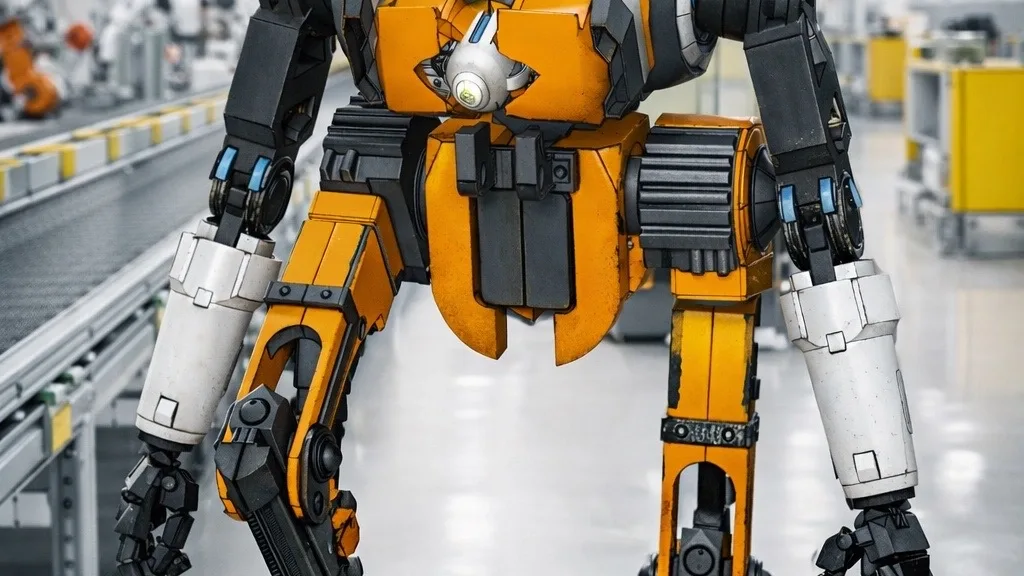
OpenAI has dissolved its stand-alone robotics team — the second time in six years it has broken up a dedicated robot group. The company confirmed the reorganization to Fortune on Friday, November 13: the robotics researchers now sit inside OpenAI’s main research organization, and the applied robotics and hardware staff have moved into its larger Applied division. Nobody was laid off. The teams were reassigned, and OpenAI insists the move will speed its robot plans up rather than wind them down.
The reason is a bet that is spreading across the industry: that the general-purpose models behind ChatGPT are now capable enough to be the brains of robots directly, with no specialist team in between. It is a striking claim, and the evidence OpenAI points to is still mostly simulation. Whether it holds up on a factory floor is the question the whole field will be watching.
What actually changed#
The reorganization splits the old team in two. The robotics research group now reports to Chief Research Officer Mark Chen, inside the main research team. The applied robotics and hardware groups report to President Greg Brockman, inside the Applied organization. OpenAI has not said how many people the move affects, and it has published no blog post or statement of its own about the change — the news came out because Fortune asked about it, and a company spokesperson confirmed it.
The timing caught even OpenAI’s own events team off guard. The company had already registered a booth at CoRL, the academic robotics conference running in Austin this week, and Fortune’s reporter found the booth empty when they visited. A spokesperson told Fortune that robotics “remains a core part of OpenAI’s long-term vision” and that the company is still committed to bringing general-purpose robots into the world — including its own humanoid, which chief executive Sam Altman has said should get a first public demonstration in 2027.
Why now: the general model ate the specialist#
The logic, as Fortune reports it, is that the models changed faster than the org chart. At the start of 2026, OpenAI’s researchers assumed the fastest route to capable robots ran through models like Sora, the video generator, which has to learn something about how the physical world works to produce realistic clips. Since then, the company’s frontier models — including GPT-6 Astra — have turned out to work directly as robot controllers, with no special robot training required.
The evidence cited is an October study from Nvidia researchers, in which an agent powered by GPT-6 Astra scored 74.8% on RoboLab-120, a simulated pick-and-place benchmark, against 51.0% for the best dedicated robot model on the same leaderboard. The same study also shows the limits of the approach: the best setup cost about $36 in tokens per attempt, and even the simplest version took more than 18 seconds per model call — far too slow for most real robots.
On Reddit, where the news spread through r/singularity, r/artificial and r/accelerate on Friday afternoon, the top-voted reaction summed up the mood in four words: “The bitter lesson strikes again.” The reference is to the old argument that general methods, fed with more compute, eventually beat hand-built specialist systems. The top correction in the same thread was more prosaic, and worth repeating: the researchers were moved to other teams, not laid off.
A familiar pattern#
This is not the first time OpenAI has walked away from a robotics team. It ran one in its early years and wound it down in 2020, when cofounder Wojciech Zaremba pointed to scarce robot data and a faster path to artificial general intelligence through other methods. A new stand-alone team was rebuilt in 2024, alongside a partnership with the humanoid startup Figure to develop AI models for humanoid robots. That partnership ended in February 2025, when Figure said it would build its own robot AI.
The through-line is not hostility to robots — it is impatience with the specialist route. Each time, OpenAI has decided the general-purpose approach will get there faster. The 2027 humanoid demonstration target, which Altman has kept unchanged through this reorganization, is the deadline the company has now set for itself to prove it.
The skeptics aren’t convinced#
Outside the company, the read is mixed. Guanya Shi, an assistant professor at Carnegie Mellon University’s Robotics Institute, told Fortune the move suggests OpenAI sees robotics as “no longer a special problem.” Russ Tedrake of MIT, who runs the robotics startup Walden Robotics, argued the advantage still sits with companies that have real-world deployment experience. Pete Florence, cofounder of the robot-model startup Generalist, said it is “unclear that any existing model would dominate robotics.”
The skeptics have a point the simulation numbers do not answer. A model that scores well on a simulated benchmark still has to run on a real machine, in real time, without burning $36 of tokens on every grasp. Until a general-purpose model does that on a factory floor, the reorganization is a statement of faith — a well-funded one, from the most watched lab in the field, but a statement of faith all the same.
What to watch#
Three things will tell us whether the bet pays off. First, the 2027 humanoid demonstration: Altman has kept the date, and a public demo is a much harder test than a simulated benchmark. Second, whether anything ships from the Applied organization — a product, a partnership, a deployment — that shows the reorganization produced robots rather than just an org chart. And third, whether other labs follow suit.
Sources#
- Fortune — “OpenAI disbands stand-alone robotics team as general AI models start running robots” (November 13, 2026)
- AI Weekly — “OpenAI folds robotics team into main research and applied orgs” (November 13, 2026)
- MadRobot — “OpenAI disbands its robotics team as GPT-6 Astra runs robots” (November 13, 2026)
- BigGo Finance — “OpenAI Disbands Standalone Robotics Unit, Folds Staff Into Core Research and Applied Teams” (November 13, 2026)
- Let’s Data Science — “OpenAI disbands standalone robotics team, folding staff into other teams” (November 13, 2026)
- r/singularity — “OpenAI disbands its stand-alone robotics team as its general-purpose AI models start running robots” (November 13, 2026)