Nvidia wants insurers to underwrite the AI buildout: early talks would cover lenders if chip-backed loans go bad
The Financial Times reports Nvidia is in early talks with insurers to cover lenders to neoclouds if borrowers default and pledged chips can't be resold for enough — the third step in a seven-week push to turn AI hardware into an investable asset class.
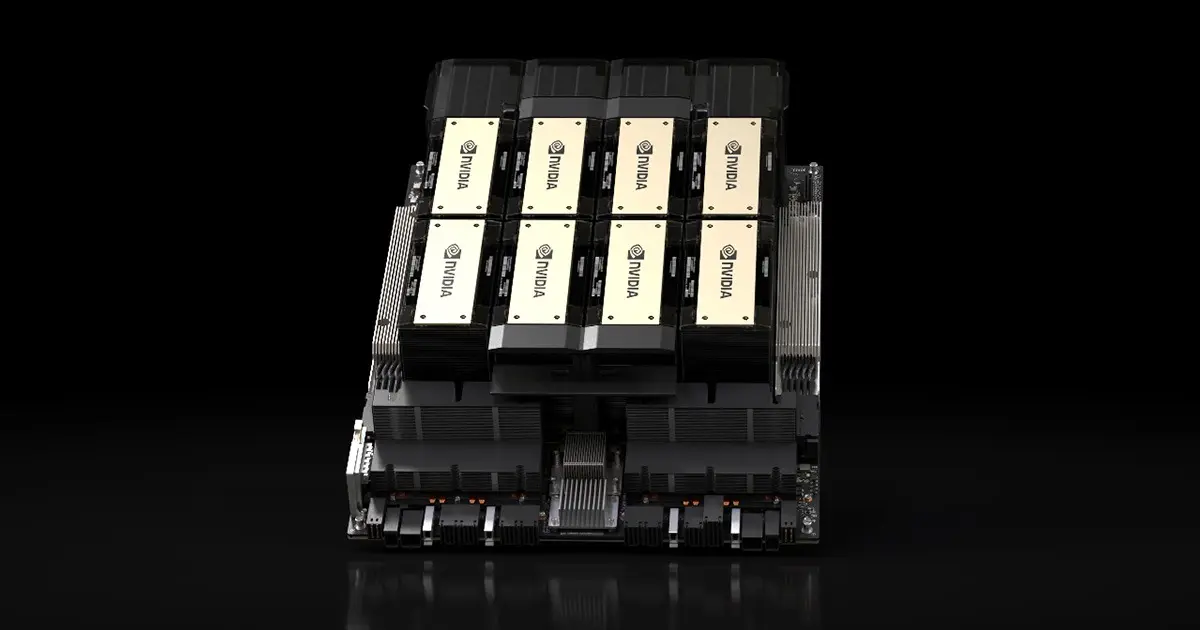
The Financial Times reported Tuesday that Nvidia has held early talks with insurance companies about taking on part of the financing risk tied to its AI chips, citing people familiar with the discussions. The coverage would protect lenders to smaller cloud companies, often called neoclouds: if one of those borrowers defaults and the Nvidia chips pledged as collateral can't be resold for enough to cover the loan, an insurer would absorb part of the shortfall. The talks are at an early stage and may not lead to any deals.
This isn't Nvidia selling more GPUs — it's Nvidia engineering the financial plumbing around them. The company has shared chip depreciation data with at least one insurer, and it's working with reinsurance broker Howden Re on the structure (Howden declined to comment). The FT reports Nvidia has also explored having insurers pass the risk on to hedge funds and other alternative investors — because the potential deals could be bigger than even large insurers' balance sheets — and has looked at joining syndicates of insurers, hedge funds, and asset managers. That's a new financial asset class being born in real time: insured AI infrastructure.
Why a used AI chip is the hard question#
The logic behind the hedging is arithmetic, not alarmism. Data centers are engineered to run for 20 to 30 years. Graphics processors, by contrast, carry an economic life of roughly seven. Older chip generations shed resale value steadily as newer architectures arrive — which is exactly what makes a GPU a nervous-making piece of loan collateral, as ad-hoc-news details in its breakdown.
Nvidia's answer is to put its own data on the table. CEO Jensen Huang wrote in an August 11 blog post that "in some cases, NVIDIA may provide a residual-value support mechanism for up to 25% of an opportunity, assessed carefully on a project-by-project basis." Residual value is what the hardware is worth at the end of the financing period — Nvidia could cover part of the gap if that value falls below a specified amount. Huang's evidence that compute holds value: the A100, introduced in 2020, "remains in active commercial use" six years later, with customers "extending A100's economic life toward a decade," and one-year H100 rental prices rose from about $1.70 per GPU-hour in October 2025 to about $2.35 in March 2026. "NVIDIA compute is an investable asset," Huang wrote.

Those rental prices show demand for the chips. They don't establish what a lender could get by selling them after a default — and that's the gap insurers would have to price. For neoclouds borrowing against their hardware, the answer could determine access to financing: whether Nvidia's guarantee-heavy model keeps credit flowing to challengers like CoreWeave, or whether the risk ends up gated behind whoever can self-finance.
The seven-week financing blitz#
The insurance talks are the third step in about seven weeks of Nvidia turning itself into a credit enabler. On August 10, the company signed memorandums of understanding with six financial firms — including Goldman Sachs, Apollo, and Blackstone — aimed at mobilizing more than $500 billion of outside capital for AI computing. A week later it agreed to residual-value guarantees capped at $105 billion on data center leases tied to OpenAI, starting with a site in Ohio. And on Monday, the board added $150 billion to its share repurchase authorization, bringing the total envelope to $235 billion, to be deployed in stages through fiscal 2028 — a top-up that dwarfs Apple's previous record buyback authorization of $110 billion.
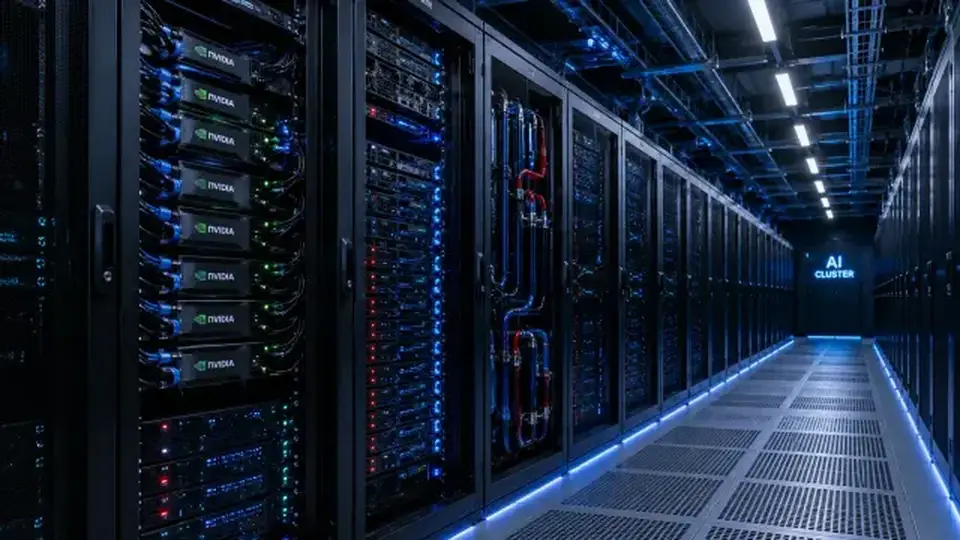
The scale explains the urgency. Bain puts global data center investment through 2030 at $5 trillion to $6.5 trillion, and by its math the sector would need to generate nearly $6 trillion in fresh AI revenue every year for that infrastructure to ever pay for itself. The market, meanwhile, is already pricing caution: Reuters data recently put Nvidia's forward price-to-earnings ratio near 16.5 — well below its 15-year average of roughly 30.
Whether a hardware supplier that must help keep its own customers financed is playing defense or demonstrating dominance, the insurance talks mark a shift. Betting on the next product generation or fat margins is no longer the decisive variable. It's whether heavily indebted data centers find enough demand — or whether the guarantees and policies Nvidia is quietly assembling in the background end up being called upon.
Sources
- "Nvidia (NVDA) talks to insurers about chip-backed AI loans" — AI Stock Wire (September 29, 2026), reporting on the Financial Times' September 29 reporting
- "Nvidia Insures the Boom It Built: Buybacks, Credit Hedges, and the $6 Trillion Question" — ad-hoc-news (September 29, 2026), also citing the Financial Times