NXP's unified robotics platform: from motor control to a flying drone in 30 minutes
NXP Semiconductors announced its unified robotics platform about 40 minutes ago — a modular hardware-and-software stack for physical AI that promises a flying drone 30 minutes after unboxing, and cuts months of subsystem integration down to days or weeks.
What we checked: NXP’s press release via GlobeNewswire, November 9, 2026, 08:00 UTC, and Unite.ai’s coverage the same day.
- Who: NXP Semiconductors (NASDAQ: NXPI); Jerome Legros, Vice President and General Manager, Robotics, announced the platform.
- What: a unified robotics platform built on NXP’s Neural Axis Architecture — a modular, open-source SDK plus prototype-ready reference designs.
- When: announced November 9, 2026; the platform, drone reference designs and SDK are available now.
- 30 minutes: initial drone functionality out of the box, using the reference designs and SDK.
- Integration: pre-integrated software and validated subsystem interoperability cut months of integration and validation work to days or weeks, according to NXP.
- Hardware: four drone reference designs — NavQ95 (i.MX 95 applications processor), Tropic VMU/FMU (i.MX RT1064 crossover MCU), 100Base-T1 Sensor Node (MCX N947 MCU) and an AM32-compliant electronic speed controller (MCX A13 MCU).
- Next: service robots, autonomous mobile robots and other autonomous systems, with additional enablement expected in the second half of 2027.
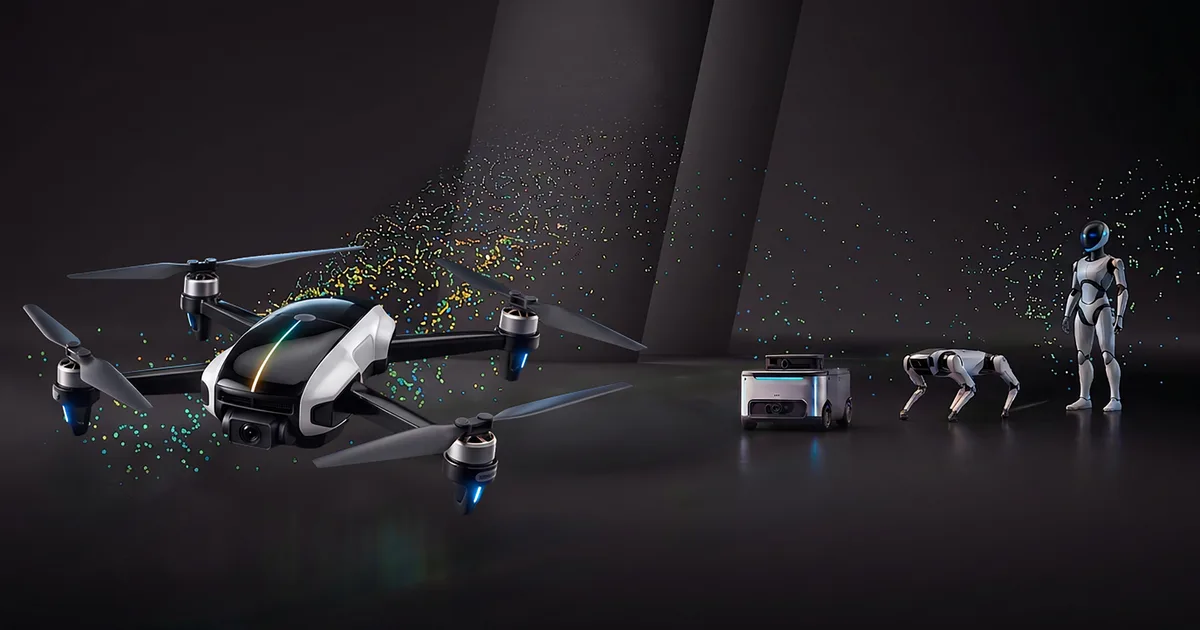
On the bench sits a single board: a motor controller, already tested against NXP’s robotics SDK. It spins a motor and does nothing else — and that is the starting point NXP has in mind. From there, the company says, a developer bolts on perception, flight control and navigation, one validated subsystem at a time, until the bench project is a drone in the air.
That is the pitch behind the unified robotics platform NXP announced this morning: stop rebuilding the plumbing of every robot from scratch, and start from parts that already work together.
What NXP announced#
The platform is built on what NXP calls its Neural Axis Architecture — a distributed foundation that connects sensing, real-time control, AI processing and communications across a robotic system. Around it sits a modular, open-source SDK with supported drivers, middleware integration, reference applications, configuration tools and reusable software components. It plugs into established open-source robotics software: PX4, Zephyr and ROS 2, with ROS 2 Jazzy, CogniPilot Cerebri, NuttX and edge-AI tooling in the mix.
The headline numbers are about time, not silicon. NXP says robotic subsystems normally take developers months to integrate and validate; pre-integrated software and validated subsystem interoperability cut that to days or weeks. And the first reference designs — all drones — deliver initial functionality within 30 minutes out of the box.
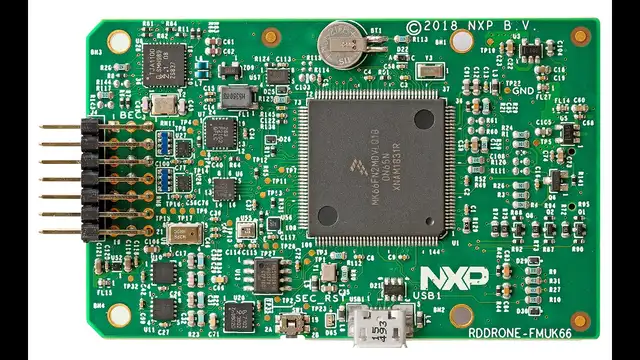
The four drone reference designs split the machine into jobs, each with its own NXP chip:
| Job | Reference design | NXP processor |
|---|---|---|
| Autonomy compute and flight control | NavQ95 | i.MX 95 applications processor |
| Flight management | Tropic VMU/FMU | i.MX RT1064 crossover MCU |
| Intelligent sensor networking | 100Base-T1 Sensor Node | MCX N947 MCU |
| Motor control | AM32-compliant electronic speed controller | MCX A13 MCU |
Each design carries the safety and security enablement of its primary processor, which can be switched on independently of the robotics-specific functions — a detail that matters when the same boards later move into machines that work around people.
Why it matters#
Physical AI is leaving the lab. Robots are moving out of controlled environments and into the spaces where people live and work, and NXP’s robotics chief, Jerome Legros, frames trust as the price of admission: developers need a foundation designed with security, functional safety, real-time control and full-lifecycle reliability in mind. That is the bet here — that the hard part of a robot is no longer the AI model, but the unglamorous work of making motors, sensors and compute behave as one system.
The drone makers NXP quotes agree on the bottleneck. James McClearen, CTO of blueflite, says speed is critical because markets and customer requirements change fast; Srdjan Kovačević, CEO and co-founder of Orqa, puts it more bluntly — processing power alone is not enough, and what high-performance drones need is efficient communication between computing elements, predictable behaviour and extremely low latency.
The timing is no accident. Physical AI is the industry’s current land grab: NVIDIA’s Cosmos 3 world models, announced today as well, let robots practice in simulation, while Serve Robotics is putting delivery robots on real streets. NXP is staking the middle ground — the hardware and software layer that turns a model into a machine that flies.
What’s next#
The platform, the drone reference designs and the SDK are available now. Drones are only the first category: NXP says future designs will address service robots, autonomous mobile robots and other autonomous systems, with additional enablement expected in the second half of 2027.
One caveat is worth stating plainly. The Modular Drone Platform and its four associated boards carry preproduction labels, and NXP notes the drone platform’s specifications and other information may change without notice. The software and the architecture are the finished part of this launch; the boards themselves are not quite final hardware yet.
That makes the next few months the real test. If developers can genuinely go from a motor-control board on the bench to a flying drone in an afternoon — and then reuse the same foundation for a service robot — NXP will have sold the industry a shortcut. If the 30-minute claim only holds in NXP’s own lab, it joins a long shelf of robotics kits that promised the same.
Frequently asked questions
What is NXP's unified robotics platform?
A modular hardware-and-software foundation for building physical AI systems, announced by NXP on November 9, 2026. It combines an open-source, modular robotics SDK with prototype-ready reference designs, all built on NXP's Neural Axis Architecture, which connects sensing, real-time control, AI processing and communications across a robotic system.
How fast can a developer get a drone flying with it?
NXP says the reference designs and SDK deliver initial drone functionality within 30 minutes out of the box. A developer can start with a single validated subsystem, such as motor control, and then add AI-based perception, flight control and navigation to build a complete autonomous drone.
When will the platform support robots beyond drones?
NXP says future reference designs will address service robots, autonomous mobile robots and other autonomous systems, with additional enablement expected in the second half of 2027. The first reference designs support drones only.