Serve Robotics Physical AI Services: the delivery-robot maker wants to be the AWS for robots
Serve Robotics is turning its delivery-robot fleet into a platform. The company on Thursday launched Physical AI Services, a new business line that sells the connectivity, data-curation and training-data tools behind its 2,000 sidewalk robots to other companies building robots — with construction-autonomy startup Bedrock Robotics as its first customer.
- Who: Serve Robotics Inc. (Nasdaq: SERV), the San Francisco company behind the googly-eyed sidewalk delivery robots. It spun out of Uber in 2021 and went public in 2024.
- What: Physical AI Services, a new business line that opens Serve's fleet technology — connectivity, data curation and real-world training data — to other companies building physical AI.
- When: Announced November 5, 2026, alongside Serve's third-quarter results.
- The three products: Serve Link, which connects robots to off-board intelligence over Wi-Fi, LTE, 5G and satellite; Serve Data Curator, which surfaces the rare moments in fleet data that improve models; and a real-world foundation-model data catalog drawn from Serve's sidewalk deployments.
- Launch customer: Bedrock Robotics, which builds autonomous systems for heavy construction equipment and uses Serve Link to connect its machines.
- The scale: Serve has deployed more than 2,000 robots in more than 40 cities and 27 hospitals, supporting delivery for more than 4,000 restaurants; third-quarter revenue was $2.8 million, up 313% year over year.
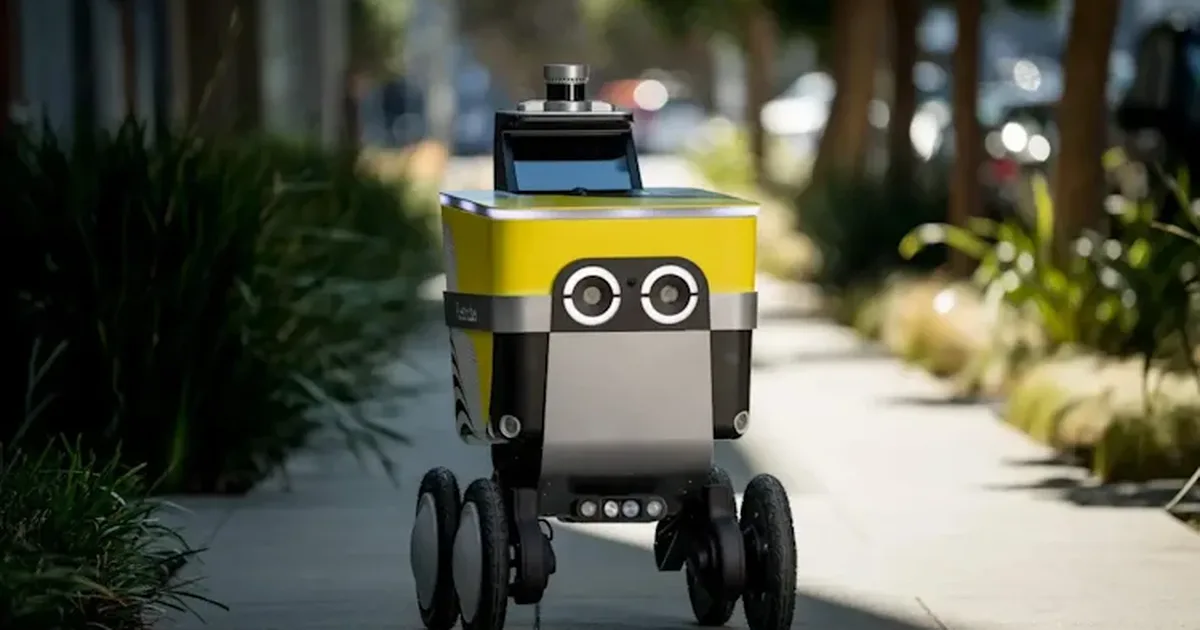
Serve Robotics is turning its delivery-robot fleet into a platform. The company on Thursday launched Physical AI Services, a new business line that sells the connectivity, data-curation and training-data tools behind its 2,000 sidewalk robots to other companies building robots — with construction-autonomy startup Bedrock Robotics as its first customer.
The launch, announced November 5 alongside Serve’s third-quarter results, is a bid to become a technology supplier to the physical AI industry rather than just an operator of delivery robots. Serve will keep running its own fleets — sidewalk delivery and, since its 2026 acquisition of Diligent Robotics, hospital robots — while selling the stack it built to run them.
Three products, one pitch
Physical AI Services launches with three products. Serve Link connects robots in the field to the models, monitoring and training systems that make them smarter in real time, bonding Wi-Fi, LTE, 5G and satellite links so a robot stays connected as it moves between networks. Serve Data Curator tackles the other end of the loop: a robot fleet produces far more real-world data than any engineering team can review, so the tool surfaces the rare moments — the edge cases — that actually improve a model. The third is a real-world, foundation-model data catalog drawn from Serve’s own sidewalk deployments: terrain and infrastructure data meant to teach models how to understand complex human environments such as city sidewalks.
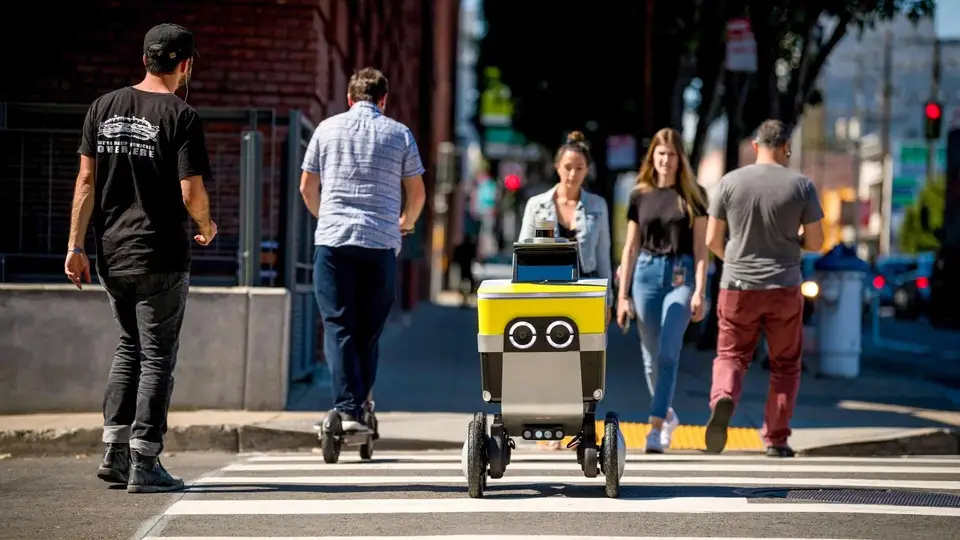
The pitch is aimed at companies building robots for farms, warehouses, construction sites and other uncontrolled environments, where the hard problems — unreliable networks, endless edge cases, messy real-world data — are the same ones Serve has spent years solving for its own fleet.
The AWS playbook
“Building a robot is only the beginning. Keeping thousands of them connected, learning and improving requires another layer of technology,” said Ali Kashani, Serve’s co-founder and CEO. “We’ve put that technology to work in our own fleet. Now we’re opening it to other companies so they can focus on what their robots do, rather than rebuilding the systems around them.”
Kashani told TechCrunch he thinks of the move as an AWS moment: “taking the technology we’ve built for us, and we’re opening it up for more people to build on.” The playbook is Amazon’s — build the end-to-end application first, because that is the only way to learn what to build, then open the underlying platform once others want to build the same thing. Serve is also working with T-Mobile to bring AI computing power closer to robots in the field. The move mirrors a wider shift toward selling the harness rather than the machine: Moonshot AI’s Kimi Hosted Agents turns the agent harness into a managed cloud service in the same way.
Bedrock Robotics, which builds autonomous systems for heavy construction equipment, is the first named customer, using Serve Link to connect its machines over Wi-Fi, LTE, 5G and satellite. Serve says the service already powers thousands of vehicles across a dozen industries, including construction, mining and autonomous trucking as well as its own delivery fleet.
Why now
The timing follows a year of expansion. Serve has deployed more than 2,000 robots in more than 40 cities and 27 hospitals, reaching a population of about 3 million and supporting delivery for more than 4,000 restaurants in the U.S. and Australia. It reported third-quarter revenue of $2.8 million, up 313% year over year, with recurring revenue at 69% of the total — and its delivery business is shifting from Uber toward partners including DoorDash and Wonder. The hardware side of physical AI is consolidating too: Skymizer and MiTAC squeezed a 2.8-trillion-parameter model onto a single air-cooled server this week.
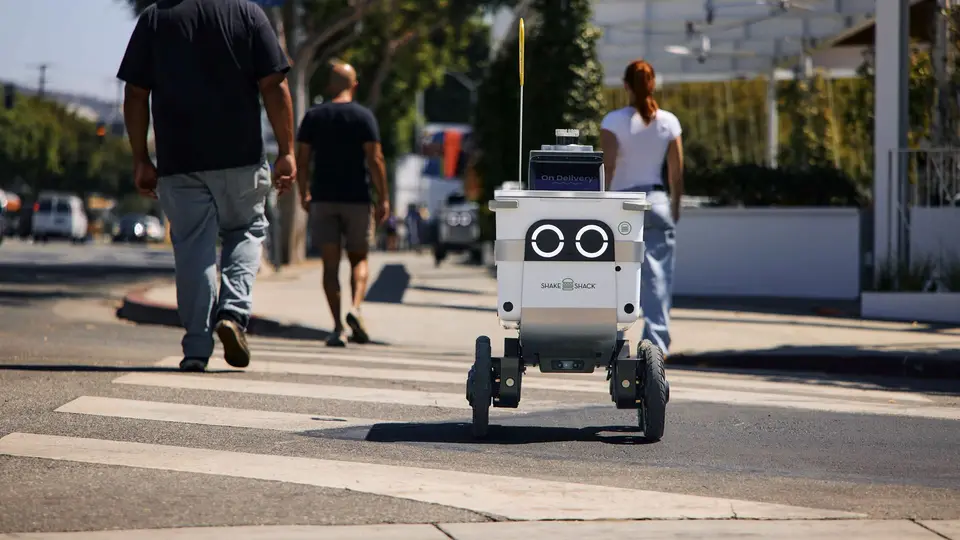
The bet is that physical AI’s bottleneck is no longer the robot. As more companies try to put machines into human spaces — sidewalks, hospitals, construction sites — the connective tissue between the machine and the model becomes the product. Serve is betting the fleet it already runs is the proof, and the platform is the business.
Serve’s full announcement is on GlobeNewswire, and TechCrunch has the interview with Kashani on the AWS analogy and the T-Mobile work.
Frequently asked questions
What is Serve Robotics Physical AI Services?
A new business line, launched November 5, 2026, that sells the connectivity, data-curation and training-data tools Serve built for its own delivery-robot fleet to other companies building physical AI — robots for construction, mining, agriculture, trucking and other fields.
What are the three products in Physical AI Services?
Serve Link connects robots in the field to off-board models, monitoring and training systems over Wi-Fi, LTE, 5G and satellite. Serve Data Curator surfaces the rare, high-value moments in fleet data so models improve from the examples that count. And a real-world foundation-model data catalog, drawn from Serve's sidewalk deployments, teaches models to understand complex human environments such as city sidewalks.
Who is already using it?
Bedrock Robotics, which builds autonomous systems for heavy construction equipment, is the first named launch customer and uses Serve Link to connect its machines. Serve says the service already powers thousands of vehicles across a dozen industries, while its own fleet — more than 2,000 robots in over 40 cities and 27 hospitals — keeps running.