ChatGPT stops being a text box: GPT-6’s Intelligent UI answers with interactive charts, buttons and mini-apps
OpenAI started rolling out GPT-6 across ChatGPT on October 7 with Intelligent UI, a capability that lets answers arrive as interactive interfaces — charts, buttons, forms and small working tools built on the spot. Paid tiers get it today; free users follow tomorrow.
OpenAI announced on October 7, 2026 that GPT-6 is rolling out across ChatGPT with a new capability called Intelligent UI: instead of a wall of text, answers can now arrive as fully interactive interfaces — graphics, tappable buttons, forms, charts and small working tools that appear right inside the conversation. The rollout started globally today for Plus, Pro, Business and Enterprise users in the Chat tab; Free and Go tiers follow on October 8.
GPT-6 for paid customers first arrived last month. Today’s move extends the next generation of intelligence to what OpenAI says are more than 1.2 billion people who use ChatGPT each week — the largest audience any of these interactive-answer ideas has ever had.
What Intelligent UI actually is
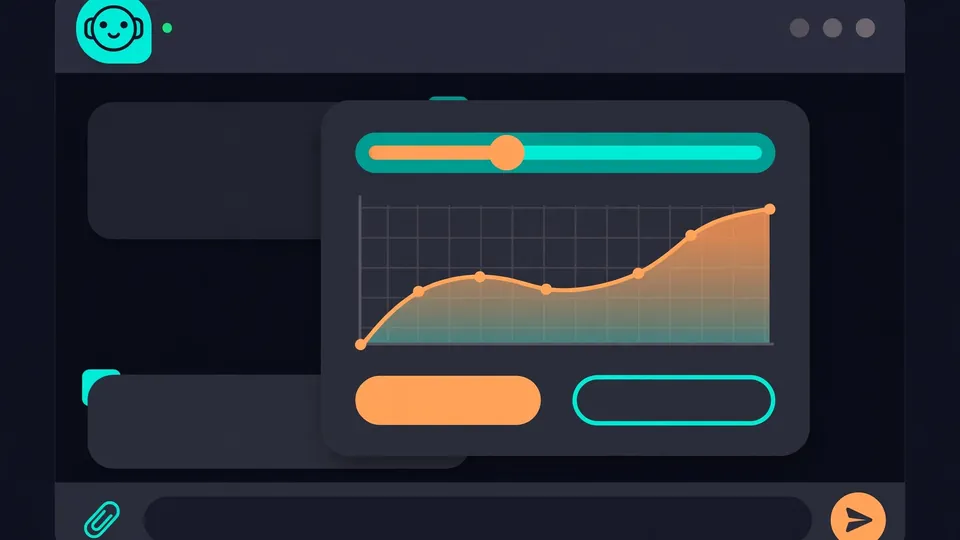
OpenAI says it trained GPT-6 to compose responses from text, visuals and interactive elements, choosing how they fit together based on the question. A comparison lands side by side. An explanation becomes an interactive diagram. And when a simple text answer is the most useful response, ChatGPT gives you that — the model is supposed to decide when interactivity earns its place.
The examples in the announcement are deliberately everyday: a road trip whose stops appear on a map with notes on what’s worth a detour; a retirement savings calculator you can poke at; a dinner bill splitter; a game you can play in the chat. You can also ask ChatGPT to create a tool for the task at hand — the answer isn’t a description of software, it becomes the software.
Under the hood: a component library and a compiler
The engineering behind it is twofold. OpenAI built a library of native, streamable components and a compiler that processes the interface as the model generates it, so the interface appears progressively instead of waiting for the whole response to finish. Training went beyond words: interfaces the model created were evaluated for clarity, usefulness and completeness, teaching it to organize information, pick the right moments for interactivity, and recognize when plain text is enough. OpenAI concedes there is still work ahead on the model’s design judgment.
It starts answering while it’s still thinking
The other half of the announcement is speed. With the arrival of reasoning models, users got help with harder problems but had to wait for the model to finish thinking before any answer appeared. GPT-6 now interleaves thinking with answering: it weighs the user’s waiting time and progressively composes the answer from what it knows so far. In internal evaluations of high-value everyday agentic tasks, GPT-6 Extra High begins answering in the same amount of time as GPT-5.6 Medium while achieving a better overall score than GPT-5.6 Extra High. For questions that need web search, GPT-6 Instant starts answering 44% sooner, on average, than GPT-5.6 Instant.
GPT-6 also improves the quality of answers that require web search, OpenAI says: it makes better decisions about when to look something up and more reliably finds information that supports its answer.

Who gets it, and what’s under the hood
ChatGPT runs on two GPT-6 variants: GPT-6 Sol powers the Plus, Pro, Business and Enterprise tiers, while GPT-6 Luna powers the Free and Go tiers — both tuned for everyday conversation. Enterprise availability depends on workplace admin settings. The update applies to the Chat experience only; the models powering Work and Codex are unchanged.
On safety, OpenAI says GPT-6 builds on several of the Astra safety advances: stronger resistance to attempts to bypass its training — particularly attacks that adapt across multiple turns — better recognition of real-world risks, and clearer communication about what it can and can’t do. Safety training was updated with lessons from real-world use to strengthen protections against high-risk misuse involving cyberattacks, biological threats and violence. Details are in the system card.
Why it matters
This is the direction the whole industry is walking. Google shipped a similar idea — a generative, interactive answer layer — to its Gemini chatbot in May. OpenAI’s version matters because of scale: a billion-plus weekly users will now meet answers that do things instead of explaining things, and developers watching the agentic-interface race get a public reference implementation of streaming UI generation.
OpenAI frames it as an inversion of the last few decades of software: for years, people learned how to use software, navigating fixed interfaces designed around particular tasks. The pitch now is that the interface gets shaped around what you’re trying to do — software adapting to people, not the other way around.
Sources: OpenAI (official announcement, Oct. 7, 2026); Unite.AI (Oct. 7, 2026); The Decoder (Oct. 7, 2026).