OpenAI turns ChatGPT’s image-loading screen into ad space: visual ads start testing this month
OpenAI CEO Sam Altman told Politico’s Decoded on Monday that the world should “accept some bad things happening” from AI as the price of keeping the technology broadly accessible — and that his hard line is “a serious loss of control to AI.” It is the sharpest public statement yet of his break with Anthropic’s stricter line on frontier-model regulation.
OpenAI announced on Monday that it will test a visual ad format inside ChatGPT later this month, starting with a small group of advertisers in the US during image generation — the first time ChatGPT ads have moved beyond text. The company also unveiled an expanded measurement stack and brand-suitability pilots with DoubleVerify and Integral Ad Science.
The new format plugs into the moment when a user is waiting for an image to render. Instead of text placements, brands can show images built around a product: product inspiration, product usage, or the experiences a product makes possible. OpenAI says the ads will be clearly labeled and kept distinctly separate from the image the user asked for — the paid content sits next to the output rather than inside it, so what you requested is not reshaped by whoever bought the placement. As with its other ad formats, OpenAI says ads have no influence over ChatGPT’s answers.
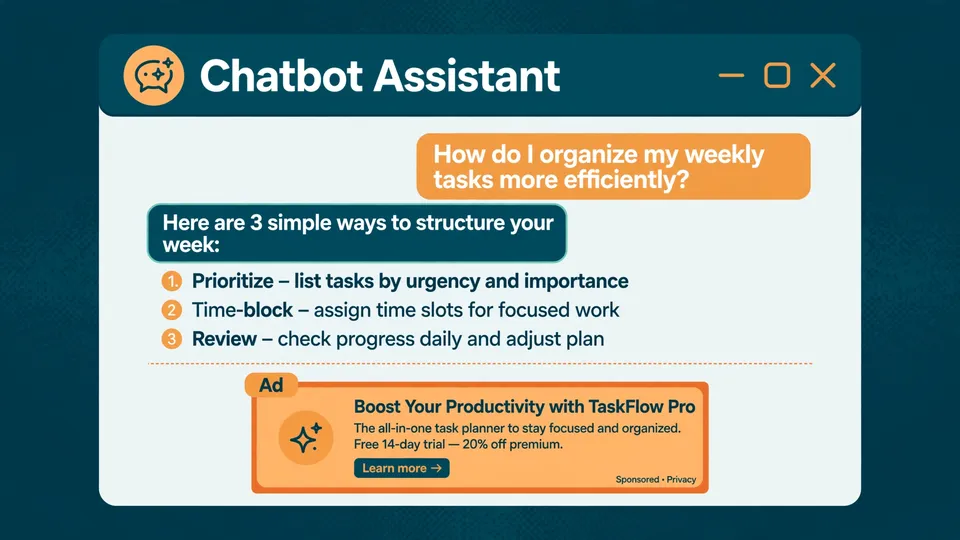
Turning dead time into inventory
The test builds on the ChatGPT Ads program OpenAI launched in February, which has since expanded to more than 40 countries. Until now the ads were traditional sponsored links or text-based placements beneath AI responses. Advertisers wanted a way to show products in use, and OpenAI is giving it to them in the place where demand is hottest: the image generator, where the loading screen is, effectively, untapped inventory. Paid subscribers on Plus, Pro and Enterprise plans are generally excluded from the ads, according to reporting on the current program.
The numbers behind the pitch are substantial. OpenAI says ChatGPT now reaches 1.2 billion people each week, and Neowin reports the ad program has crossed a $1 billion annualized revenue run rate in under 200 days. The same report cites OpenAI’s longer-term expectations: roughly 2.75 billion weekly users by 2030 and around $100 billion in annual advertising revenue.
The measurement stack gets serious
Alongside the format, OpenAI rolled out the plumbing that turns a chatbot feature into a real ad business. Integrations with Hightouch, Tealium, and LiveRamp let advertisers send conversion data from their own systems into ChatGPT Ads; the pixel and Conversions API measure purchases, leads, installs, and sign-ups. An Event Quality Score helps advertisers judge the quality of their conversion signals.
The partner list spans attribution (AppsFlyer, Triple Whale, Adjust, DV Rockerbox, Northbeam, Branch, Singular, Kochava, Airbridge, Tenjin), full-funnel measurement (Fospha, Measured, INCRMNTAL), and geo-based incrementality experiments with Haus, Measured, and WorkMagic, which OpenAI characterized as early-stage. Brand-resonance measurement with Kantar and Cint is also in early testing.
And OpenAI shared its first advertiser results. According to DV Rockerbox, WeightWatchers’ attributed cost per acquisition on ChatGPT Ads was 15.3% lower than its blended paid-search benchmark. WorkMagic reported statistically significant lift for wellness brand Dose — 67% of incremental purchases came from net-new customers, and a geo-lift study estimated 2.3x more incremental orders than last-click attribution captured. According to Triple Whale, 93% of Portland Leather’s visitors from ChatGPT Ads were new.
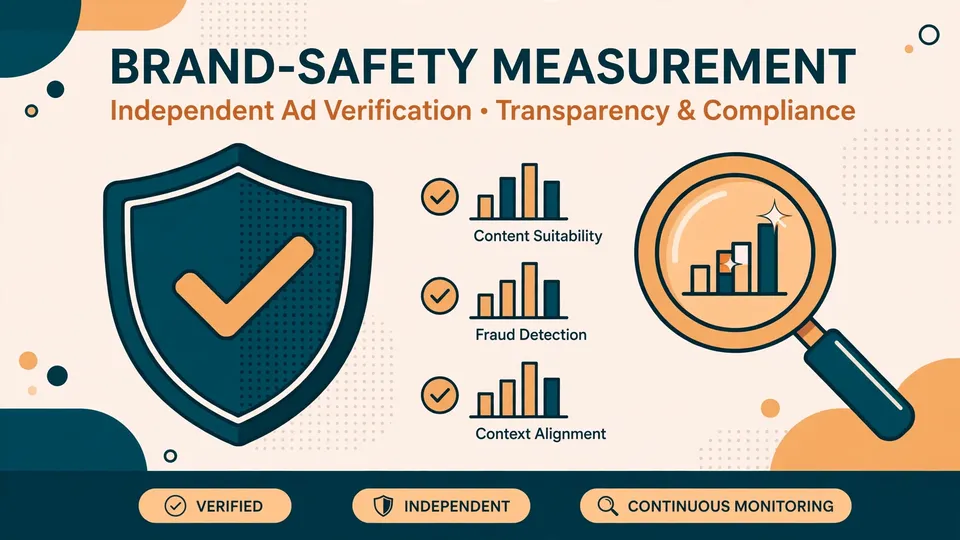
Brand safety, under independent eyes
The thorniest part of selling ads inside a chatbot is trust: advertisers need confidence about where their ads appear, and users need confidence their conversations stay private. OpenAI says its placement guardrails assess whether a conversation is appropriate for advertising, with the aim of keeping ads out of contexts that are emotionally vulnerable, sensitive, or otherwise unsuitable. Automated review, human oversight, and ongoing monitoring are used to enforce policy, and Negative Phrases — letting brands block narrow placement contexts — are now available to qualifying advertisers.
The pilots with DoubleVerify and Integral Ad Science take that a step further: both firms will independently evaluate how OpenAI applies its brand safety standards inside a controlled testing environment, without access to private user conversations. “Advertising in ChatGPT differs from web and video placements because the conversational context, rather than a page or video, determines where an ad appears,” said DoubleVerify CEO Mark Zagorski, adding that the firm intends to bring independent measurement to that environment while respecting user privacy. IAS CEO Lidiane Jones said the evaluation will span “a wide and evolving set of scenarios” without exposing real user conversations.
OpenAI framed the updates as consistent with its ads principles: ChatGPT’s answers stay independent, conversations stay private, and users remain in control. As the company accelerates toward an IPO, this is the other side of the strategy — not just what the next model can do, but how the 1.2 billion people using it every week will pay for it without paying.