Oracle invokes force majeure on its New Mexico Stargate data center — and Wall Street noticed
Oracle has sent a force majeure notice to the developer of Project Jupiter, its 2.45-gigawatt Stargate campus in New Mexico — seeking the right to defer payments if the $18 billion project misses its 2028 target. A precautionary move, the company says; investors read it as a warning.
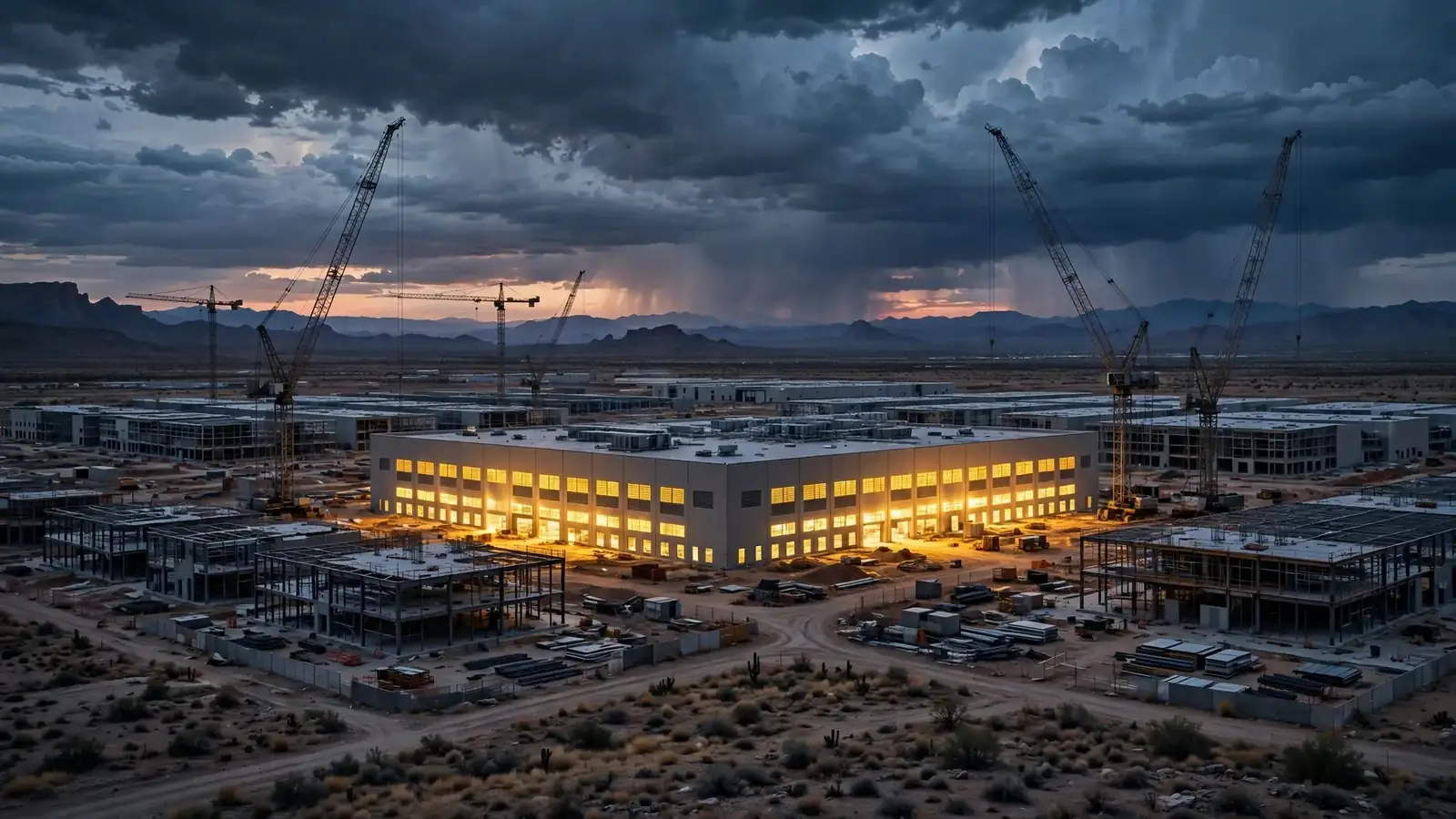
Oracle has sent a "force majeure" notice to the developer of Project Jupiter, the 2.45-gigawatt AI data center campus rising in southern New Mexico as part of the Stargate infrastructure program. The notice, first reported by Bloomberg on Thursday, would let Oracle defer payments if the campus misses its 2028 opening target. Oracle calls the move precautionary and says the project is on schedule. The market heard something else: Oracle shares fell roughly 4% on the news, and the project's $18 billion loan pile is trading at stressed levels.
Force majeure clauses are routine in energy and construction contracts — they excuse a party from contractual obligations when events beyond its control get in the way. According to the reporting, Oracle is not seeking to exit as the campus's anchor tenant; it is buying contractual insurance against delay. Reuters, summarizing Bloomberg's report, noted it could not independently verify the claim — a reminder that, for now, this still rests on anonymous sourcing.
What happened#
The notice went to Stack Infrastructure, the data center developer owned by alternative asset manager Blue Owl Capital. Roughly 20 banks have lent about $18 billion to build the campus, with Oracle lined up as the main tenant. Project Jupiter is a 1,400-acre site in Doña Ana County, New Mexico, and one of five US campuses in the roughly $400 billion Stargate arrangement Oracle signed with OpenAI and SoftBank. Stargate itself — the program announced alongside President Donald Trump by the heads of OpenAI, Oracle, and SoftBank — is a $500 billion plan to build the compute backbone of the AI era.
Oracle's response, delivered to CNBC, was emphatic: "Project Jupiter remains on our planned schedule. We are fully committed to New Mexico and confident in our path forward." Blue Owl said "this notice does not change the financial commitments to this multi-year project." Oracle also posted on X that force majeure notices are common in developments of this scale and do not, by themselves, establish a delay. The company added that it is "reimagining" the site's power plan as part of its New Mexico commitment.
Why gas is the choke point#
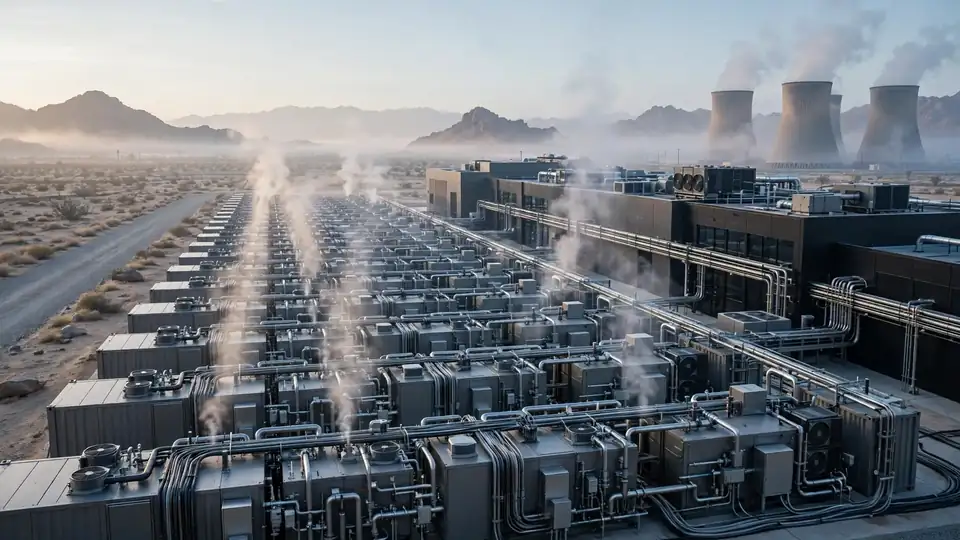
The campus is designed to run on gas-powered solid oxide fuel cells from Bloom Energy — which makes a reliable natural gas supply central to the timeline. And the gas is where the timeline is fraying. An Energy Transfer pipeline meant to feed the site has been delayed by nearly six months, to February 1, 2027, after regulators repeatedly denied its permits. New Mexico's State Land Office rejected the pipeline's rights of way twice — in March and again in July — citing emissions and strain on water and other local resources; the route was changed in August following the rejections. A separate air-quality permit for the fuel cell system itself is still pending, with the state environment department facing a November 23 deadline to decide.

The money trail#
The notice matters because of how the AI buildout is actually financed. The roughly $18 billion construction loan, spread across about 20 banks, is now quoted below 90 cents on the dollar — a stressed level that signals loan-market anxiety about the project is already priced in. Blue Owl's shares slid several percent on the news; Bloom Energy, whose fuel cells were planned for the site, fell roughly 6%.
The stakes behind this one campus are national. A Brookings Institution projection cited by Seeking Alpha estimated the AI infrastructure boom could require $10.3 trillion of US investment through 2032, averaging about 3.6% of GDP a year — a buildout larger than America's historic railroad, highway, electrification, and telecom booms. But the financial risk is migrating off Big Tech balance sheets into banks and less-transparent financing structures, making the system's exposure harder to assess. Concern about rising borrowing costs for AI capital spending has already been pushing Treasury yields upward.
Why it matters#
Oracle is probably right that a force majeure notice, on its own, proves nothing — such notices are routine legal hygiene on megaprojects. But its appearance at the flagship site of the most-watched AI infrastructure program in the world tells you where the pressure points have moved. The bottleneck for AI compute is no longer just GPUs, or even money. It is permits, pipelines, water, and community opposition — physical-world frictions that no amount of training compute can route around.
It also crystallizes a shift in who carries the risk. Stargate was unveiled as the triumphant centerpiece of the AI trade; months later, the anchor tenant is carving delay clauses into its contracts while lenders mark its debt down to ninety cents on the dollar. The AI buildout is still happening at staggering scale — but the money behind it is getting more expensive and more nervous at the same time.
What to watch#
- November 23: the air-quality permit decision on the Bloom fuel cell system — the next regulatory gate.
- The gas pipeline: whether the rerouted line holds its February 1, 2027 in-service date.
- Oracle's power plan: the company says it is "reimagining" power for the site — watch whether gas stays central or the design pivots.
- Loan pricing: if Project Jupiter's debt keeps sliding, expect lenders to tighten terms on the next wave of AI data center financing.
- The other four sites: Jupiter is one of five campuses in the Oracle–OpenAI–SoftBank deal — any spillover in schedule pressure would be the next shoe to drop.
The AI industry is learning that the hardest part of the biggest infrastructure bet in history isn't the chips. It's everything underneath them.