Percepto opens its inspection AI to any drone: Axion brings 160 models to power grids, oil rigs, and factories
Percepto has opened its inspection AI to everybody else's hardware. Axion, launched October 27, 2026, lets power, oil and gas, and industrial operators run more than 160 inspection models over data they already collect — no new drone fleet required.
- Who: Percepto, the Austin, Texas Physical AI company founded in 2014.
- What: Axion, a hardware-agnostic Physical AI platform for mission-critical infrastructure, sold as software-as-a-service.
- When: Launched October 27, 2026, and available today.
- Scale of the AI: More than 160 specialized AI models, trained on more than 100,000 hours of real-world autonomous inspection data gathered over more than a decade.
- Who it serves: Operators of power grids, oil and gas facilities, and industrial sites.
- New leadership: CEO Julien Bellanger, Chief Revenue Officer Kurt Nantkes, and Chief Marketing Officer Amir Khoshniyati.
Percepto launched Axion on October 27, 2026, a hardware-agnostic Physical AI platform designed to give mission-critical operators a continuously updated understanding of their infrastructure — and the knowledge to act before problems escalate. The Austin, Texas company calls the launch a major expansion of its business, and the foundation of a new software-first strategy.
What changed: the AI is no longer tied to the drone#
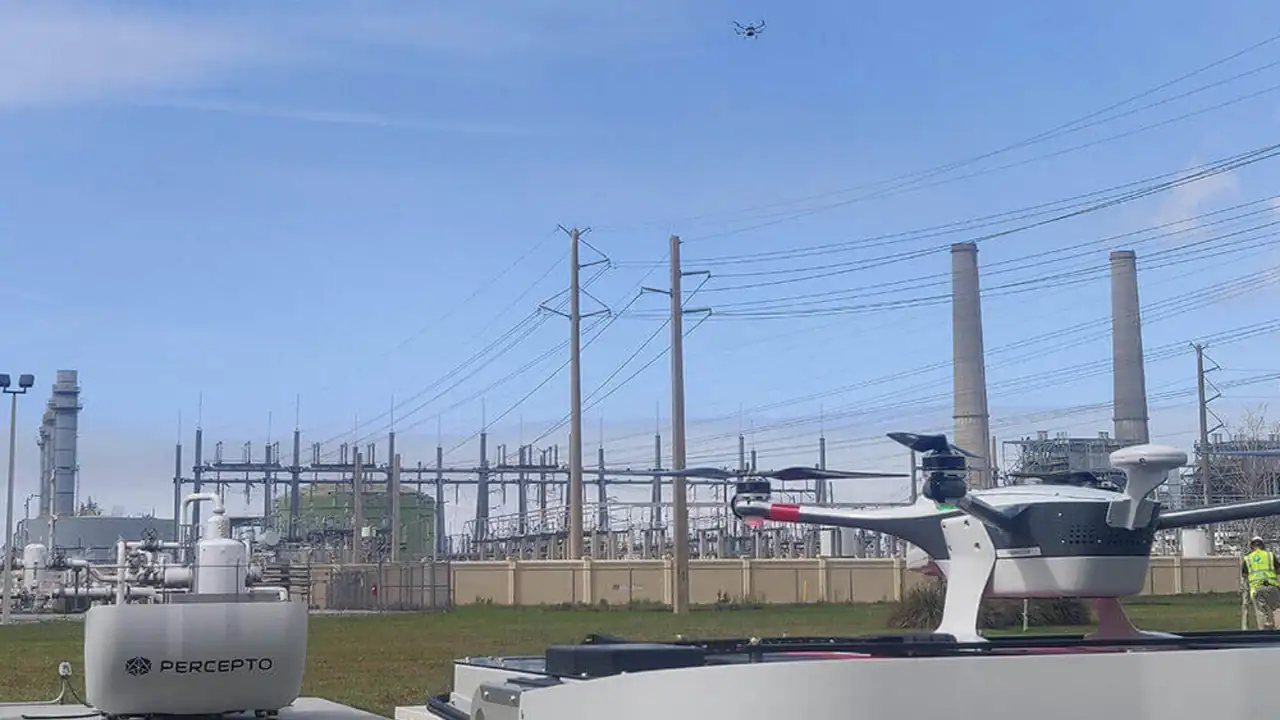
Until now, buying into Percepto's inspection AI effectively meant buying into its hardware. Axion breaks that link. The platform is available as a new software-as-a-service offering that works with a company's existing or new drone fleets, third-party sensors, or other data collection channels — not only Percepto's own machines. Operators can start with the inspection data they already hold, and add Percepto's Ranger drone portfolio and Harbor autonomous stations, plus managed remote operations, wherever they need more frequent coverage.
That matters because the bottleneck in infrastructure inspection is rarely collecting data. Drone and sensor programs already generate vast amounts of it. The hard part, Percepto says, is reviewing it all and deciding what requires action — while aging infrastructure and workforce shortages pile pressure on the teams responsible for preventing outages, production losses, and safety incidents. Axion is aimed squarely at that gap: surfacing the findings that matter so teams can cover more infrastructure with less manual review.
How Axion works#
Axion puts more than 160 specialized AI models to work, trained on more than 100,000 hours of real-world autonomous inspection data gathered over more than a decade. It combines those models with asset context, historical trends, and expert-backed workflows in one platform, turning raw inspection data into actionable intelligence.
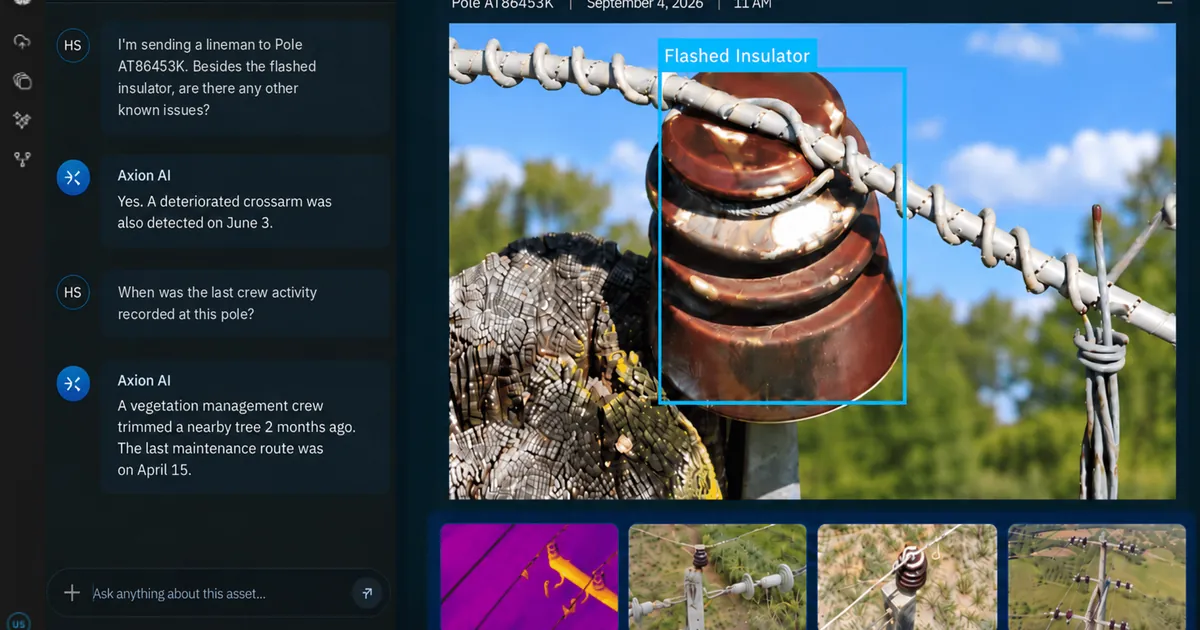
In practice, the platform organizes inspection data by asset and interprets equipment condition in context. It can identify a downed wire by its relationship to surrounding components, or evaluate a thermal anomaly against expected asset behavior and environmental conditions. Each finding is backed by inspection history and expert validation. Operators can also ask questions about their assets and inspection findings in plain language, and Axion draws on the data within the platform to return answers and recommendations — no piecing together separate reports.
New leadership, and a contract to go with it#
To lead the software-first expansion, Percepto has assembled a leadership team headed by CEO Julien Bellanger, joined by Chief Revenue Officer Kurt Nantkes and Chief Marketing Officer Amir Khoshniyati. Together, the company says, they bring decades of experience spanning robotics, sensors, IoT, Physical AI, and cybersecurity.
"The infrastructure powering our economy should benefit from the same advances in AI that are transforming the digital world," said Bellanger. "Our vision is to provide operators with a trusted understanding of what is happening across their infrastructure, with the foresight to protect the people and operations that depend on it. Axion is the first step in this next chapter, opening our technology to more operators and putting their existing inspection investments to work toward that goal. From day one, a team can bring the inspection data it already has and see which assets need attention first."
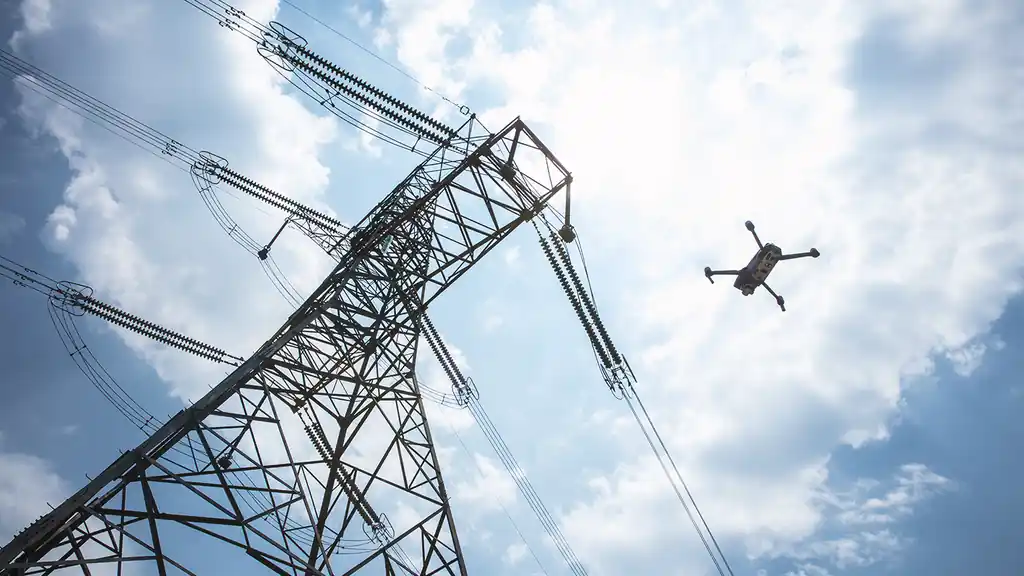
Alongside the launch, Percepto disclosed a multi-year contract from a leading U.S. energy company to support its transmission line inspection program, extending a long-standing partnership. Under the agreement, Percepto will provide aerial data collection and AI-powered inspection analytics across the customer's transmission network, helping teams identify issues earlier, prioritize maintenance, and strengthen grid reliability. The company did not name the customer.
Percepto, founded in 2014, says its operations are backed by a nationwide FAA beyond visual line of sight (BVLOS) waiver, and that it is consolidating its engineering, manufacturing, and assembly in the United States alongside its existing U.S. remote operations. Axion is available today — and the test now is whether operators with sunk costs in other drone fleets adopt a platform that finally meets them where they are.
Frequently asked questions
What is Percepto Axion?
Axion is a hardware-agnostic Physical AI platform, sold as software-as-a-service, that gives operators of power grids, oil and gas facilities, and industrial sites a continuously updated understanding of their infrastructure so they can act before problems escalate.
Do operators have to use Percepto's own drones to use Axion?
No. Axion ingests data from supported third-party drone platforms, fixed and mobile sensors, and existing inspection archives, so operators are not tied to a single hardware provider — and they can add Percepto's Ranger drones and Harbor stations where they need more frequent coverage.
What is Axion's AI actually trained on?
More than 160 specialized AI models trained on more than 100,000 hours of real-world autonomous inspection data gathered over more than a decade, combined with asset context, historical trends, and expert-backed workflows.