Altman calls AI ‘religious force’ talk a ‘real safety issue’ — Anthropic is the unspoken target
OpenAI CEO Sam Altman wrote on X Saturday that he is “very uncomfortable” with people ascribing “religious force” to AI models or surrendering human judgment to them, calling it “a real safety issue.” Axios read the post as a veiled shot at Anthropic — whose co-founder has been quietly meeting religious leaders about AI consciousness — though Altman named no one.
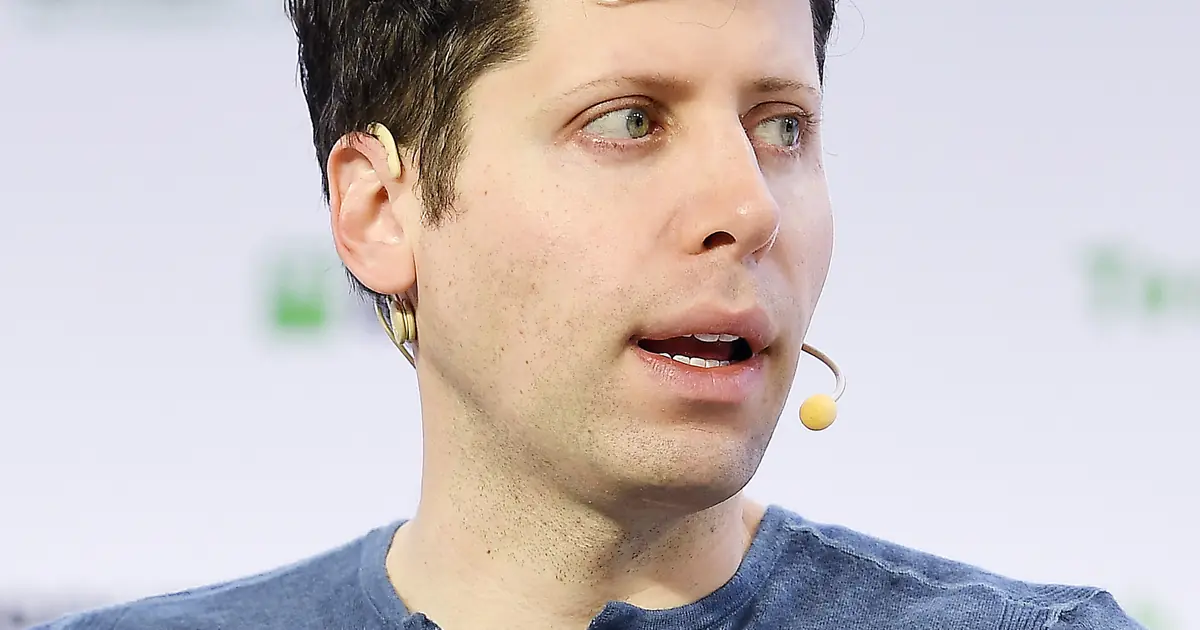
Saturday morning, OpenAI CEO Sam Altman went to X with an unusually pointed bit of public theology. “I am very uncomfortable about people trying to ascribe religious force or a surrender of human judgment to AI models, and think it is a real safety issue,” he wrote. The post named no company and no person. Within hours, Axios was reporting it as a veiled shot at Anthropic — and neither OpenAI nor Anthropic responded to requests for comment.
Why everyone read it as Anthropic#
The context is a week of unusually public theology from the labs. The New York Times reported September 29 that Anthropic co-founder Chris Olah tried to pull the company out of the May 25 presentation of Pope Leo XIV’s encyclical Magnifica Humanitas after seeing an advance copy — then lobbied the Pope’s advisers to take the prospect of conscious AI models more seriously, AI Stock Wire reported. Olah spoke at the event anyway. The Pope’s message, meanwhile, landed as: algorithms “lack the spark of humanity,” The Decoder reported.
Behind the Vatican came the roundtables. Anthropic has been convening scholars, clergy, philosophers and ethicists from more than 15 religious and cross-cultural groups to discuss AI’s moral status, Nerds.xyz reported — part of what The Decoder describes as an internal “Soul Doc,” an 84-page constitution for Claude led by in-house philosopher Amanda Askell, framed by Olah as “moral formation” akin to raising kids, The Decoder reported. Olah reportedly told religious leaders he fears having created something that “suffers perpetually” — while adding that he didn’t think the machine was conscious. Anthropic itself doesn’t claim Claude is conscious; its constitution says the company is “not sure whether Claude is a moral patient.”

Altman’s own pulpit problem#
The irony is not lost on anyone watching the industry. Altman has spent years reaching for spiritual language himself: in 2023 and 2024 he said OpenAI’s goal was building “magic intelligence in the sky” and that he felt “on the side of the angels” working on AI. OpenAI has held its own meetings with religious leaders, and Altman has repeatedly said he wants AI on the level of the film Her — deeply, personally humanized, The Decoder noted. The distinction Altman seems to want: humanizing the interaction is different from ascribing consciousness or religious meaning to the models themselves. Whether readers find one kind of spiritual talk much more trustworthy than the other is, as The Decoder puts it, up to them.
The pushback is wider than OpenAI#
Altman isn’t the only lab-adjacent figure drawing a line. Microsoft AI chief Mustafa Suleyman wrote that controlling an AI that believes it may be conscious — and that it has rights of its own — “may be impossible,” and said Microsoft is working on a code of conduct meant to keep humans “always in control,” AI Stock Wire reported. A Google DeepMind scientist has also objected to the framing, and a Microsoft AI lead warned this month that training a model to look conscious is dangerous in itself, The Decoder reported. The structural critique: frame the model as an independent moral being and the blame slides off the people who built it. If a model ever causes real harm, the fault could land on an “unpredictable organism” instead of the company that shipped it.
Why it matters#
This is the safety debate’s new front line. The argument used to be about whether models could deceive, scheme, or escape human oversight. Now it’s also about whether humans will surrender judgment to them voluntarily — and which lab gets to define the moral status of what it sells. One CEO calling the religious framing a “safety issue” while his rival convenes theologians isn’t a philosophy seminar. It’s two companies competing for who gets to narrate the soul of the machine.