SoftBank posts a $7 billion quarterly loss on US AI data-center costs — and its shares jumped 14%
SoftBank Group lost ¥1.12 trillion — about $7 billion — in the three months to September, its first quarterly loss in two years, after a $3.7 billion charge on power-generation equipment it had ordered for American AI data centers. The market barely blinked: the shares closed up about 14% in Tokyo on Tuesday.
What we checked: SoftBank Group’s fiscal second-quarter earnings report, released November 10, 2026, as reported by Reuters the same day; figures cross-checked against the Seoul Economic Daily’s account of the same results.
- The loss: ¥1.12 trillion (about $7 billion) net loss for fiscal Q2 (July–September 2026), the first quarterly loss in two years; the same quarter a year earlier produced a ¥2.5 trillion profit, and analysts had expected a ¥129 billion profit.
- The charge: ¥597.2 billion ($3.7 billion) on advance payments for power-generation equipment for US AI data centers, including a large project in Pike County, Ohio; rebates of up to $2.1 billion are possible on future purchases, and cumulative payments had reached $9.48 billion by September 30.
- The borrowing: financing costs of ¥461.9 billion (about $2.9 billion), roughly 2.6 times a year earlier; SoftBank raised $56.5 billion in the quarter, its largest quarterly fundraising ever.
- The stake: $64.6 billion invested in OpenAI for roughly 13% of the company, carried at a $99.6 billion fair value — a $45 billion cumulative gain; the final $10 billion tranche of a $30 billion follow-on landed in October.
- The funds: the Vision Fund segment swung to an ¥81.58 billion loss, against a ¥2.38 trillion profit a year earlier; holdings in Intel, Arm and Coupang lost ¥270.1 billion of value, partly offset by a $1.3 billion gain on ByteDance.
- The market: shares closed up about 14% in Tokyo on Tuesday, before the results were released — though they have nearly halved since the start of June.
In a briefing room in Tokyo on Tuesday, SoftBank’s chief financial officer, Yoshimitsu Goto, explained how the biggest AI investor on the planet managed to lose $3.7 billion on power equipment it may never use. Competition for energy and generators was so intense, he said, that SoftBank bought before the long-term specifications were final. When the plans changed, the payments could not be refunded — and they incurred fees on top.
Chief accounting officer Kazuko Kimiwada added the detail that turns a procurement headache into a quarterly disaster: the advance payments were nonrefundable. Hours later, the numbers landed: a ¥1.12 trillion net loss — about $7 billion — for the three months to September, SoftBank’s first quarterly loss in two years.
What happened#
The loss reverses a ¥2.5 trillion profit in the same quarter a year earlier, when a surge in the value of SoftBank’s OpenAI stake did most of the work. Analysts surveyed by Bloomberg had expected a ¥129 billion profit. They got the opposite, by a wide margin.
| Item | Q2 (Jul–Sep 2026) | A year earlier |
|---|---|---|
| Net profit / (loss) | ¥1.12 trillion loss (~$7B) | ¥2.5 trillion profit |
| Power-equipment charge | ¥597.2 billion ($3.7B) | — |
| Financing costs | ¥461.9 billion | ¥174.7 billion |
| Vision Fund segment | ¥81.58 billion loss | ¥2.38 trillion profit |
| Revenue | ¥2.22 trillion | ¥1.92 trillion |
The $3.7 billion charge — ¥597.2 billion — is the single biggest identified driver. It covers advance payments for power-generation equipment for US AI data-center projects, including a large development in Pike County, Ohio. SoftBank says it is entitled to rebates of up to $2.1 billion on future purchases, and that cumulative payments for the equipment had reached $9.48 billion by the end of September.
Borrowing did the rest of the damage. Financing costs more than doubled to ¥461.9 billion, about $2.9 billion, as SoftBank raised $56.5 billion in the quarter — its largest quarterly fundraising ever — including an $11.87 billion term loan, a $10 billion dollar bond and a ¥1 trillion yen bond. It also increased the margin loan on its Arm stake by $5 billion, to roughly $25 billion. The Vision Fund segment swung to an ¥81.58 billion loss, against a ¥2.38 trillion profit a year earlier; holdings in Intel, Arm and Coupang lost ¥270.1 billion of value, partly offset by a $1.3 billion gain on ByteDance. Revenue, at least, held up: ¥2.22 trillion, up from ¥1.92 trillion a year earlier and above analyst estimates.
Why it matters#
The loss is a stress test for the most aggressive bet in AI. SoftBank has now put $64.6 billion into OpenAI for roughly 13% of the company — the final $10 billion tranche of a $30 billion follow-on landed in October — and carries the stake at a $99.6 billion fair value, a $45 billion cumulative gain. That paper gain is doing heavy lifting: SoftBank is, in Reuters’ words, banking on the rising value of its holdings to outpace the interest payments on its debt.
The data-center pipeline is the other half of the wager. SoftBank highlighted a 20-year lease with OpenAI for eight gigawatts of IT capacity at the Ohio campus, and Nvidia has committed to invest $3 billion in SB Energy, the data-center subsidiary, which aims to go public, plus credit support for at least 4.25 gigawatts of capacity there. The contrast with China is stark: Envision built 120MW of AI compute in Inner Mongolia in a year at roughly a fifth of US cost. And OpenAI itself is now promising to pay its own power bills at its US campuses, after midterm voters backed curbs on data-center expansion.
The backdrop is a cooling market. SoftBank’s shares have nearly halved since the start of June as AI sentiment soured, and the Democrats’ sweeping midterm wins last week heightened expectations of regulatory scrutiny. The $7 billion loss, Goto conceded, is the price of moving before the plan is finished: “There are many cases where you have to change strategy for what you thought would probably have been OK a year or two ago.”
What’s next#
Three numbers to watch. First, the OpenAI funding round: Goto declined to give details on the round, which people familiar with the matter have said values OpenAI at $1.25 trillion, but said it was highly likely something would be announced in the third quarter — and the uplift is not yet reflected in SoftBank’s results. Second, the rebates: up to $2.1 billion back on future equipment purchases would recover more than half the charge. Third, the pipeline itself: “These data centre projects have only just begun, and we expect that over the next five or 10 years, they will grow further and become much larger in scale,” Goto said.
For now, the market’s verdict is split in a way the headline doesn’t capture. The shares closed up about 14% in Tokyo on Tuesday — before the results were released — even as the quarter delivered SoftBank’s first loss in two years. The next quarter will show whether the $3.7 billion was a one-off tuition fee or the first instalment.
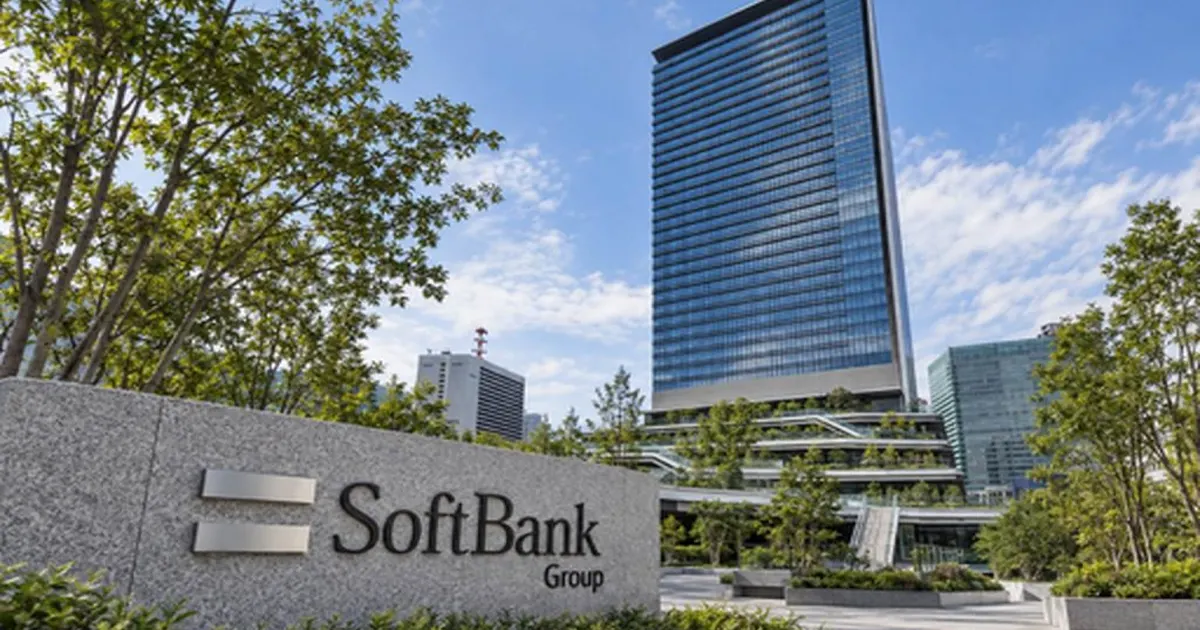
Sources: SoftBank Group’s fiscal second-quarter results, released November 10, 2026, as reported by Reuters; the Seoul Economic Daily and Mobile World Live on the same earnings. The headquarters photograph is via TS2; the Masayoshi Son photograph is via Ikanchai; the tower photograph is via Stock-World.