South Korea's exports nearly doubled in October as AI chip demand surged: $115.28 billion, $56.44 billion of it semiconductors
South Korea's exports nearly doubled in October, rising 93.7% from a year earlier to $115.28 billion, government data released on November 1 showed — the fastest annual growth since January 1974, driven by semiconductors for the AI build-out. Chips alone accounted for $56.44 billion, just under half of everything the country sold abroad.
- Who and when: South Korea's Ministry of Trade, Industry and Resources released the October trade figures on November 1, 2026; Reuters and Yonhap reported them the same day.
- Total exports: $115.28 billion in October, up 93.7% from a year earlier — the fastest annual growth since January 1974 and the second-highest monthly total, below September's roughly $121.1 billion.
- Semiconductors: $56.44 billion, up 259.4% year on year — just under half of total exports and the second straight month above $50 billion, though below September's $60.3 billion.
- Servers and power gear: computer exports rose 496.6% to $5.85 billion on server demand for AI services, and electrical equipment rose 74.0% to a monthly record of $1.99 billion on AI data-centre demand.
- Destinations and milestone: exports to China rose 133.6% to $26.98 billion and to the United States 185.8% to $24.9 billion; January–October exports totalled $930 billion, $70 billion short of $1 trillion, which the trade minister said is becoming certain to be reached within November.
- Calendar caveat: part of the jump reflects more working days, as the Chuseok holiday fell in October last year and September this year; working-day-adjusted average daily exports rose 76% to $5.24 billion.
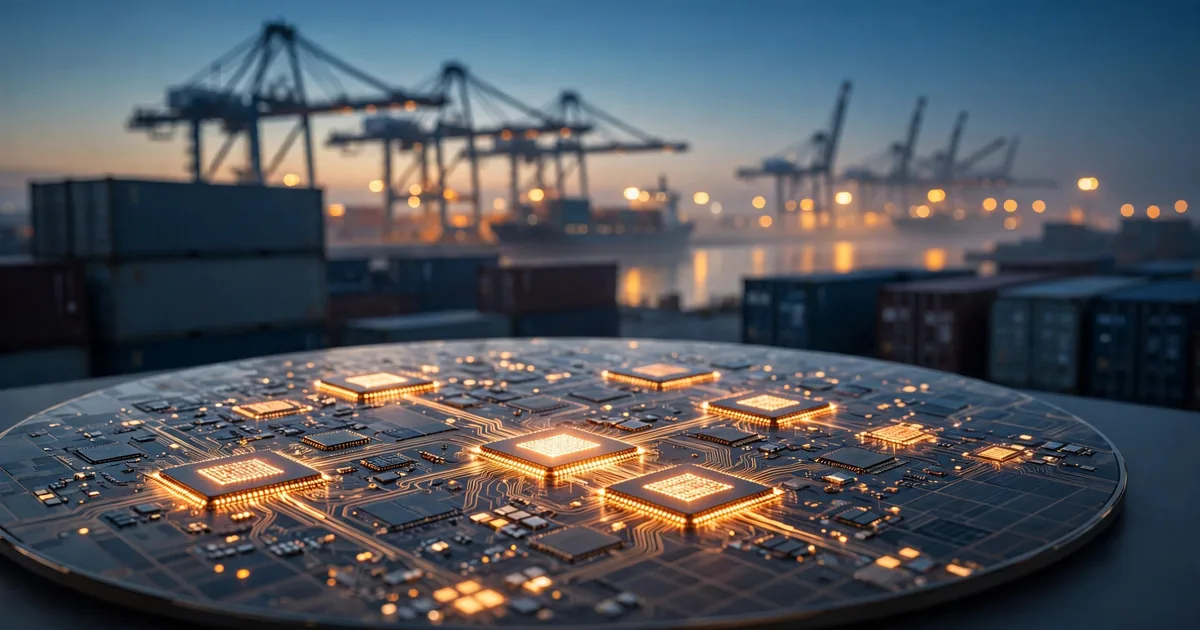
South Korea’s exports nearly doubled in October, rising 93.7% from a year earlier to $115.28 billion, government data released on November 1 showed, as reported by Reuters. It was the sharpest annual jump in more than 50 years — the strongest since January 1974 — and came in slightly above the 93.2% median rise forecast in a Reuters poll of economists. The surge exceeded September’s 83.7% annual gain, and it was powered, above all, by the chips and servers behind the global AI build-out.
The ministry’s own explanation for the chip numbers is investment, not a one-off order. Semiconductor prices and shipment volumes both stayed high, the trade ministry said, on continued facility investment by global big tech firms competing for AI industry leadership. The result leaves South Korea, home to memory makers Samsung Electronics and SK Hynix, as the clearest single-country read on how much money the AI infrastructure race is moving — and how concentrated that spending still is.
Chips did the heavy lifting#
Overseas sales of semiconductors jumped 259.4% in October to $56.44 billion, the ministry said. At $56.44 billion out of $115.28 billion, chips made up just under half of everything South Korea exported in the month. It was the second consecutive month above $50 billion, although below September’s $60.3 billion. Reuters also noted that South Korea’s economy grew faster than expected in the third quarter on strong semiconductor exports and investment, with Samsung Electronics and SK Hynix posting surging profits.
The demand reached beyond chips themselves. Computer exports spiked 496.6% to $5.85 billion on increasing server demand for AI services, including the solid-state drives that store their data, according to the ministry’s release as reported in Korean coverage. Electrical equipment — transformers, wires and cables for AI data centres — rose 74.0% to $1.99 billion, a monthly record. Memory prices tell part of the same story: the fixed contract price for DDR5 16Gb memory rose from $40 in June to $50 in October, a 25% increase, as reported from the ministry’s figures.
Where the goods went#
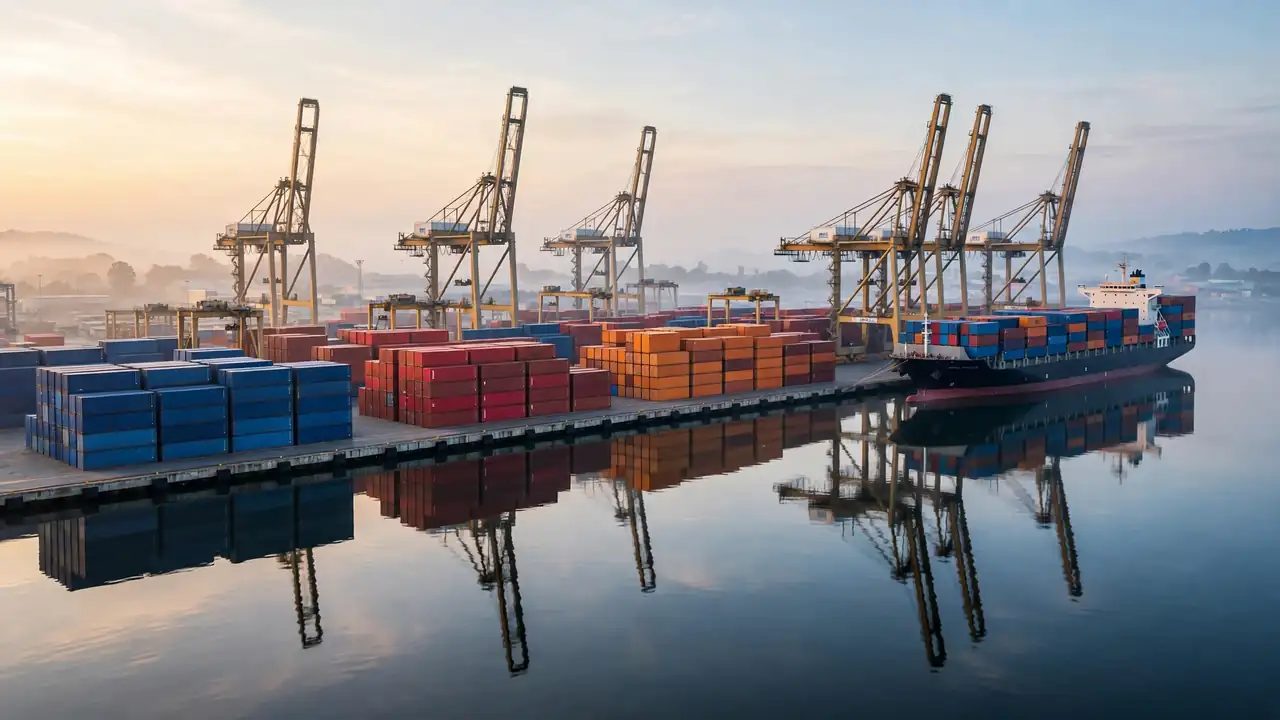
Exports increased in seven of South Korea’s nine major markets, and the strongest gains came from the same products everywhere: semiconductors and other equipment linked to computing investment. Shipments to China rose 133.6% to $26.98 billion, remaining above $20 billion for a fifth consecutive month. Those to the United States grew 185.8% to $24.9 billion, supported by demand for semiconductors, computers and electrical equipment used in AI infrastructure, alongside automobiles and steel. Exports to Southeast Asia rose 128.0% to $21.33 billion and to Europe 56.4% to $8.1 billion. Together, China and the United States bought $51.88 billion of South Korean goods, about 45% of the month’s total.
The expansion was wider than chips. Exports rose in 18 of South Korea’s 20 leading product categories, with ships and household goods the exceptions. Automobile exports increased 18.1% to $6.55 billion, the highest total for any October, helped by demand for petrol hybrid models. Cosmetics exports climbed 57.5% to $1.44 billion and bio-health exports 30.2% to $1.53 billion, both October records.
Read the headline with the calendar#
The 93.7% figure needs its caveat. Part of the jump reflects more working days than a year earlier, because the timing of the Chuseok holidays differed: the harvest holiday fell in October last year but in September this year. On a working-day-adjusted basis, average daily exports rose 76% to $5.24 billion — still extraordinary growth, and above $5 billion for a second consecutive month, but materially less than the headline rate. October was also not the largest month in dollar terms: at $115.28 billion it was the second-highest monthly total, below September’s roughly $121.1 billion.
Prices matter as much as volumes in a dollar total. Petroleum product exports rose 80% to $6.92 billion even as their volumes fell 7.5%, because prices rose; chip exporters, by contrast, saw both prices and volumes stay high. On the other side of the ledger, imports rose 36.0% to $72.78 billion, the biggest annual increase since January 2022, on higher crude oil prices and demand for semiconductor manufacturing equipment and automobiles. The monthly trade surplus was $42.50 billion, narrower than September’s record $49.97 billion.
The $1 trillion milestone is now weeks away#
For January through October, South Korea’s exports totalled $930 billion, up 60.6% from a year earlier and above $900 billion for the period for the first time. That leaves $70 billion to reach $1 trillion for the year — about 61% of October’s export total. “With exports continuing solid growth of more than $110 billion in October, it is becoming certain that annual exports of $1 trillion will be reached within November,” said Kim Jung-kwan, the minister of trade, industry and resources. Reaching it would make South Korea the fourth country in the world to pass the milestone, after the United States, China and Germany, according to Reuters.
Kim paired the outlook with a warning. “The global trade environment remains uncertain, with many small and medium-sized enterprises facing difficulties amid rising protectionism in major economies, shifts in global supply chains and geopolitical tensions in the Middle East,” he said, as reported from the ministry’s statement. The government said it would strengthen trade cooperation with major export partners and work to remove export barriers. The national total, in other words, is surging on AI demand — but the gains are concentrated in chips, servers and power gear, and the smaller firms outside that cycle are not all sharing in them.
Sources: Reuters, November 1, 2026; Yonhap’s report via Korea JoongAng Daily, November 1, 2026; Seoul Economic Daily, November 1, 2026 — all reporting the Ministry of Trade, Industry and Resources release of November 1, 2026, checked November 1, 2026.
Frequently asked questions
How much did South Korea export in October, and how fast did exports grow?
South Korea exported $115.28 billion of goods in October, up 93.7% from a year earlier — the fastest annual growth since January 1974, and the second-highest monthly total after September's roughly $121.1 billion.
How much of the total was semiconductors?
Semiconductor exports were $56.44 billion, up 259.4% year on year — just under half of total exports. Computer exports rose 496.6% to $5.85 billion on server demand for AI services, and electrical equipment for AI data centres rose 74.0% to a record $1.99 billion.
When will South Korea's annual exports reach $1 trillion?
Exports for January through October totalled $930 billion, leaving $70 billion to reach $1 trillion. Trade minister Kim Jung-kwan said it is becoming certain the milestone will be reached within November.