Unconventional AI buys NeuReality: Naveen Rao's $4.5B chip bet accelerates from research to products
Unconventional AI is buying Israeli inference-chip startup NeuReality in a cash-and-stock deal, its first acquisition — swapping a research timeline for a production team after AI tools compressed its chip roadmap. Terms were not disclosed.
- The deal: definitive agreement announced October 26, 2026; both boards approved; expected to close in the fourth quarter of 2026; price undisclosed.
- The buyer: Unconventional AI, Mountain View, California — $4.5 billion valuation, $475 million seed round in December 2025, led by Naveen Rao.
- The target: NeuReality, founded 2019 in Israel — AI inference silicon and systems, roughly $105 million raised, several advanced chips developed.
- The reason: Rao planned three years of research and five years to a product; AI-assisted design delivered a first test chip early, so the company is buying product-delivery experience.
- The open question: the 1,000-fold energy-efficiency target behind the company’s dynamical-systems approach is a claim, not a shipped result.
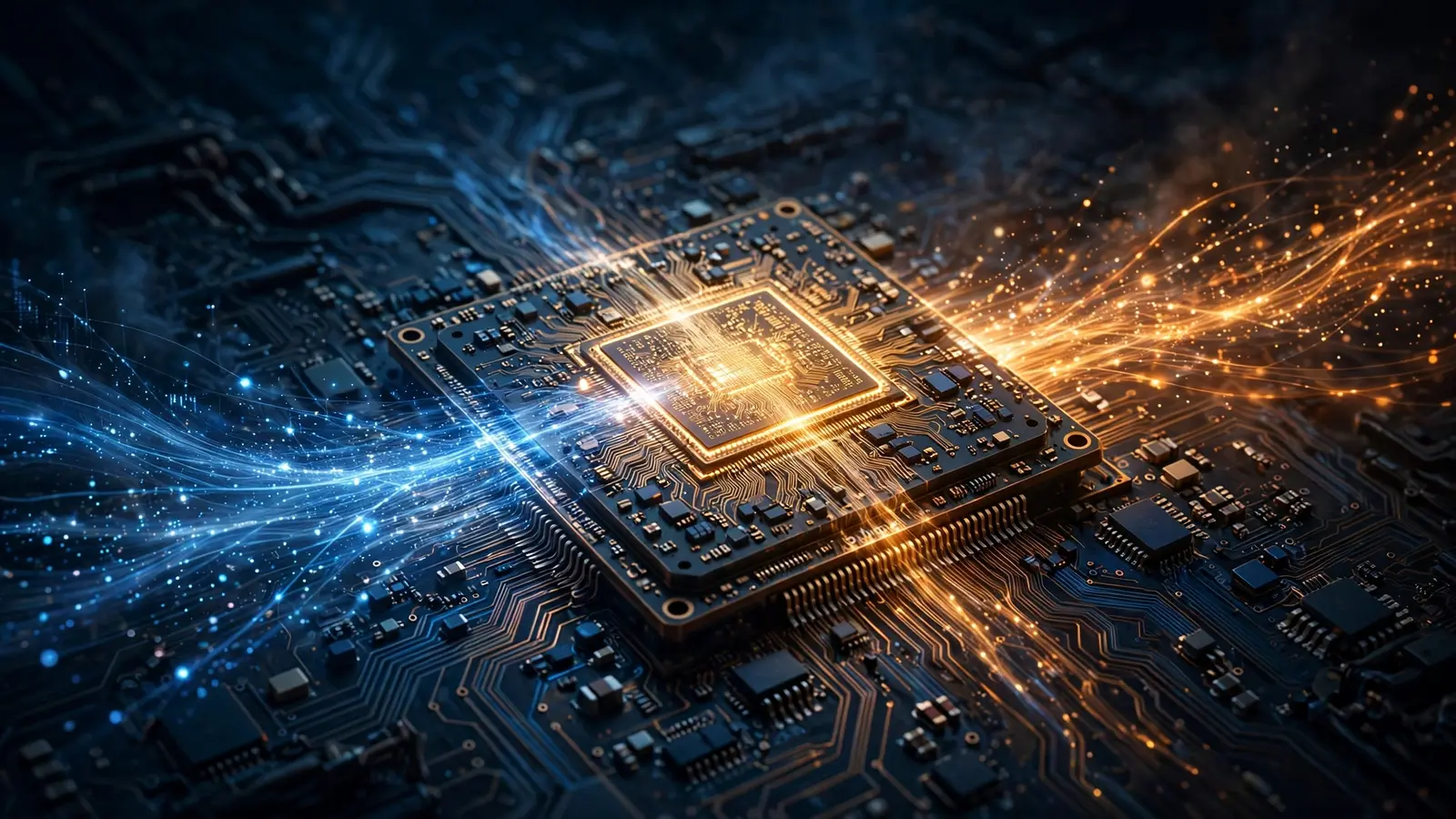
Less than a year after it emerged from stealth carrying a $4.5 billion valuation, Unconventional AI is already shopping instead of only building. The Mountain View chip startup said on Monday that it has agreed to acquire NeuReality, an Israeli company that builds hardware and systems for running trained AI models, in a cash-and-stock deal. The companies did not disclose the price.
What makes the deal interesting is not the price tag, reportedly in the $150–200 million range, but the reason for it. Unconventional’s founder says AI tools have compressed his chip roadmap so much that the bottleneck is no longer designing silicon. It is shipping it. NeuReality brings a team that has already done that.
# The deal in brief
The agreement, announced on October 26, 2026, is definitive rather than preliminary: both companies’ boards have approved it, and the deal is expected to close in the fourth quarter of 2026. The headline terms break down as follows:
- Price: undisclosed by the companies. Globes reported market estimates of $150–200 million in cash and shares, and Israel Hayom put the figure at about $200 million.
- NeuReality’s funding: roughly $105 million raised since its founding in 2019, so a deal in the reported range would return more than its investors put in.
- People: founder Moshe Tanach and NeuReality’s founding team will join Unconventional, and its engineering presence in Israel is expected to stay in place.
- Backers: NeuReality’s investors include Arm and Samsung Ventures, which would gain exposure to Unconventional’s future through the stock portion of the deal.
# Why Rao is buying a team, not just technology
When Unconventional raised its $475 million war chest in December 2025, founder Naveen Rao expected three years of research and development and five years to a finished product. AI-assisted design work changed that arithmetic: the company has already built its first test chip and is nearing completion of its second. “We built up the research bones and now we’ve got to build up the production bones,” Rao told Reuters.
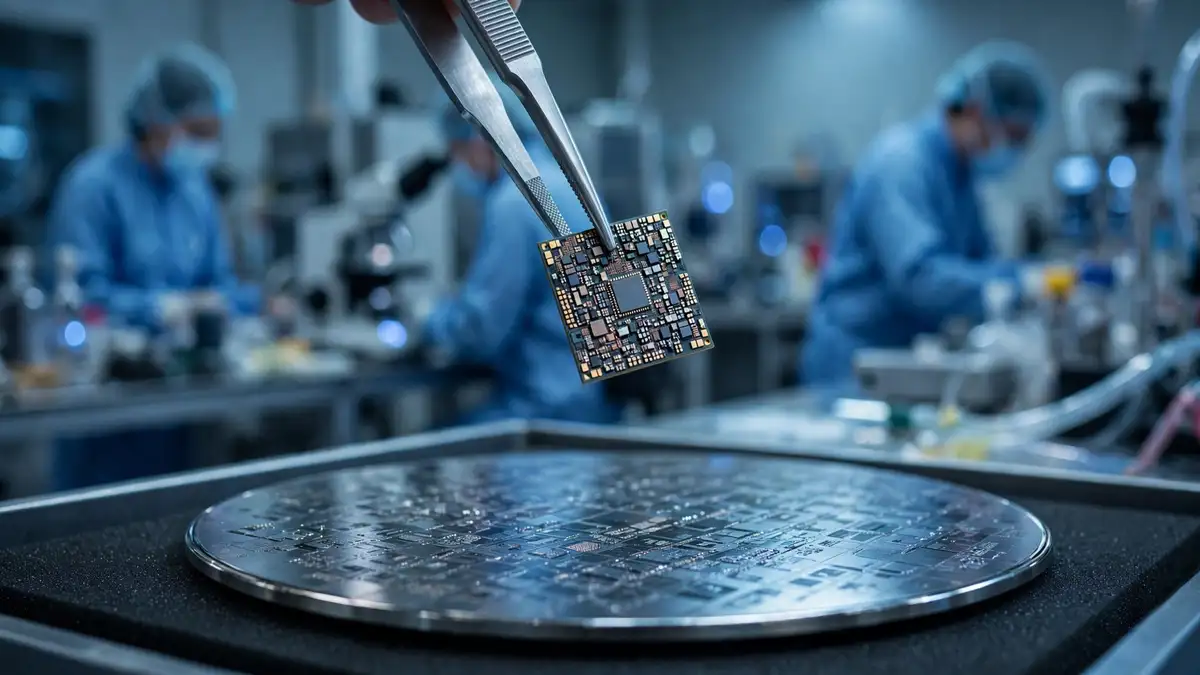
NeuReality fits that gap. Founded in 2019 by Tanach, formerly of Marvell Technology and Intel, along with Tzvika Shmueli and Yossi Kasus, the company has developed several advanced AI chips and focuses on the unglamorous core of inference hardware: moving data between components and orchestrating whole systems. Those are exactly the problems that decide whether a chip is fast in practice rather than only on a specification sheet.
# A founder who has sold this story before
Rao is not a first-time founder making a speculative bet. He previously founded Nervana Systems, which Intel acquired for more than $400 million, and MosaicML, which Databricks bought for $1.3 billion in 2023; he then led AI at Databricks. Unconventional’s December 2025 seed round was co-led by Andreessen Horowitz and Lightspeed, and its backers also include Sequoia and Amazon founder Jeff Bezos.
The pattern is worth noting: Rao’s companies have historically been the ones getting acquired. This deal reverses the direction — the first acquisition since Unconventional launched — and it suggests Rao believes his own company’s timeline, not a buyer’s, is now the thing to accelerate.
# The bet itself is still unproven
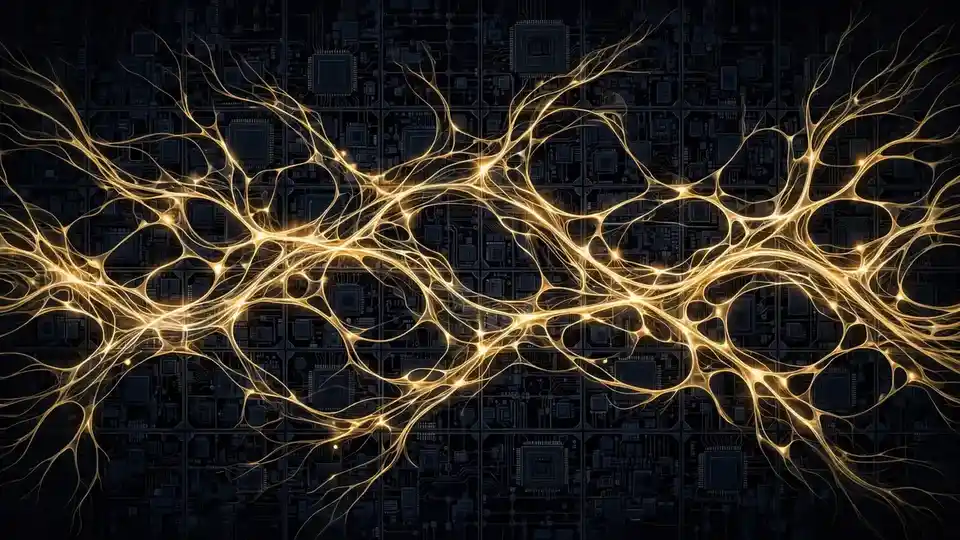
For all the momentum, what Unconventional is actually building remains a research claim rather than a product. Its approach, which Rao calls dynamical systems, takes inspiration from biological systems: simple computing elements interact under simple rules and evolve over time toward a result, instead of following programmed step-by-step logic the way conventional chips do. The company describes the architecture as a “4-dimensional compute substrate” and is chasing a 1,000-fold improvement in AI compute efficiency over conventional designs.
That target has not been demonstrated at scale, and investors should read the acquisition in that light: NeuReality de-risks execution, but it does not validate the underlying efficiency claim. Some context from Israel’s chip sector cuts both ways — recent exits such as Pliops and Hailo reportedly sold for less than the capital invested in them, while NeuReality’s reported outcome would clear its funding total. The difference is the team and the timing, not a proven product.
# What to watch
Four things will show whether this acquisition was well timed. First, whether the deal closes on schedule in the fourth quarter of 2026. Second, whether the second test chip finishes on the accelerated timeline Rao describes. Third, whether NeuReality’s Israel-based engineering team stays intact after the integration — the deal’s value walks out the door if it does not. And fourth, whether Unconventional puts a public number behind its 1,000-fold efficiency claim, in the form of a benchmark rather than a metaphor.
If the accelerated timeline holds, Unconventional could move from research project to product company faster than almost anyone planned — including Rao himself. That is the real story of this deal: a founder who budgeted five years to a product, found himself holding a nearly finished second chip, and decided the scarcest resource was no longer ideas, but people who have shipped before.
# Sources
Frequently asked questions
How much is Unconventional AI paying for NeuReality?
The companies did not disclose terms. Market estimates reported by Globes put the deal at $150–200 million in cash and shares, and Israel Hayom put it at about $200 million, above the roughly $105 million NeuReality raised since 2019.
Why is Unconventional AI buying NeuReality?
Founder Naveen Rao says AI tools compressed his chip timeline: a first test chip is already built and a second is nearing completion, so the company now needs engineers experienced in delivering finished products. NeuReality has developed several advanced AI chips and works on data movement and system orchestration for inference.
What is Unconventional AI trying to build?
AI chips it says could be 1,000 times more energy efficient than conventional designs, using a biologically inspired dynamical-systems approach in which simple computing elements interact under simple rules. That target is unproven and no product has shipped at scale.