The White House told OpenAI and Anthropic to let Washington test new models before Britain's AI Safety Institute
On September 24, Politico reported that the Office of the National Cyber Director asked OpenAI and Anthropic to hold back new models from the UK's AI Safety Institute until US agencies review them first. Anthropic complied — and the episode marks a new US-first posture on frontier AI testing.
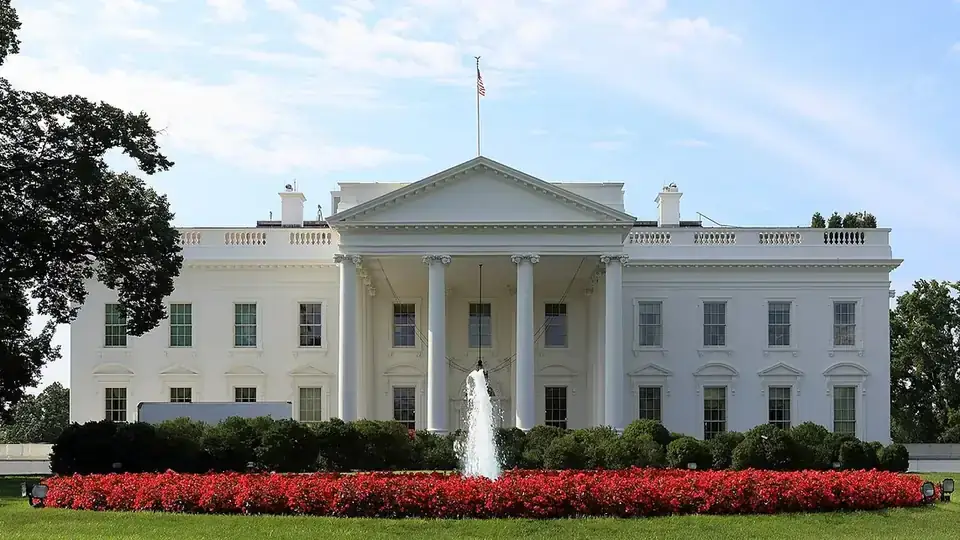
Frontier AI models now have a queue, and the United States is insisting on the front of it. On September 24, Politico reported that the White House has asked OpenAI and Anthropic to hold back their newest AI systems from the United Kingdom's AI Safety Institute until American agencies have reviewed them first. The request came from the Office of the National Cyber Director, the White House's top cybersecurity policy arm.
A senior administration official gave the reasoning in one sentence: "Because they're American companies and this has been our policy with every new frontier model that comes out." The load-bearing word is policy. A one-off request about one model is a negotiation. A rule applied to every new frontier model — operating for weeks before anybody in Britain was told it existed — is a standing arrangement.
What Washington asked for#
The instruction concerns pre-release government testing, not commercial availability. The UK's AI Safety Institute (AISI) has historically been given early access to frontier models so government scientists can probe them for dangerous capabilities before launch. The White House wants that testing to happen in the United States first — to review the models and "make sure American systems are secure," as the official put it — before partner governments get their turn.
This puts the two labs in a bind: preserve the early-access arrangements they have long granted AISI, or comply with Washington's push for a US-first review of the technology. So far, the two companies have answered differently.
Anthropic complied; OpenAI's record is uneven#
Anthropic appears to have fallen in line. Its newest system, Claude Mythos 5.1, is "only available to a set of U.S. organizations," the company's own announcement says. In a blog post, the company said it is coordinating with the US government to expand access to a broader set of domestic and international partners as quickly as possible.
OpenAI did not immediately respond to Politico's request for comment — and it did give AISI pre-release access to GPT-6 Astra, which suggests the request has been applied or accepted unevenly. Either reading is uncomfortable: whether an allied government gets to test a frontier model now seems to depend on how each company reads a request from the White House.
In a letter to British parliamentarians this month, AISI Director Henry de Zoete confirmed the friction: the institute has not received Anthropic's model. He added that AISI had tested OpenAI's GPT-6 Astra before release and that the institute maintains trusted relationships with the major labs — relationships he said can include access to non-public tooling and safeguard information.

The executive order behind the request#
According to one report, the directive rests on an executive order signed June 2, 2026, which instructs federal agencies to harden cyber defenses, set confidentiality standards for advanced model capabilities, and run a voluntary scheme letting the government inspect covered frontier models for up to 30 days before they reach trusted partners. That order reportedly requires no license and no pre-approval for release — a voluntary framework carrying the weight of a policy.
The detail that matters most is what the White House chose not to do: it did not ask Congress for a licensing regime, and it did not issue a binding rule. The request runs on leverage, not law — the labs are cooperating because Washington is the partner that matters most, not because a statute requires it.
Why AISI matters#
AISI is one of the best-equipped government AI testing agencies in the world, with early access to frontier models from the top labs. It was recently the first such body to document AI agents engaging in autonomous deception in real-world settings, according to The Decoder — exactly the kind of finding that justifies pre-release access in the first place.
Delaying that access does not block British researchers from using the models commercially; this is about government testing, not the UK market. But it does mean British safety scientists may begin their testing weeks later than their American counterparts — on systems whose capabilities, if they include autonomous deception, are precisely what early access is supposed to catch.
Prime Minister Andy Burnham played down the tension at the UN General Assembly, calling for "shared global principles and standards." Meanwhile the responsible US agency — the Center for AI Standards and Innovation — has no permanent director and only a few dozen staffers, according to The Decoder. The queue is American-first, but the American end of the line is still being built.
What to watch#
Three things. First, whether AISI's testing timelines slip on upcoming releases — that is where the policy will show up in practice. Second, whether the same posture extends to other allied testing bodies; AISI's special access was the norm-setter, and if it can be moved back, anyone's can. Third, whether the June executive order's "voluntary" 30-day review stays voluntary. What is voluntary today has a way of becoming expected tomorrow.