Amodei's 'AI will solve biology' clip goes viral — and the drug industry pushes back hard
A 77-second clip of Anthropic's CEO arguing that AI will crack biology “little by little, then all at once” hit the top of r/accelerate on Friday. It landed in the middle of a much bigger fight: his IPO-week claim that cancer, Alzheimer's and heart disease will be “relics of the past” within a decade — and a wave of doctors, drug developers and Eli Lilly's CEO saying the timeline is impossible.
- The video: 1:17, Reddit-hosted, posted by u/Lord_44th__Raikage to r/accelerate on Friday, November 13, 2026 at 12:58 p.m. EST; 692 upvotes and 213 comments by the early hours of Saturday.
- The claim in the clip: the pattern that played out in math and coding — experts dismiss AI, then it suddenly works — is now starting in biology; the blockers (clinical trials, manufacturing, FDA approval) will be addressed “within a few years”.
- The bolder claim: in a video tied to Anthropic's IPO launch, Amodei said cancer, Alzheimer's, heart disease and mental illness will be “relics of the past in, I think, less than a decade” — a clip that passed 2.45 million views on X.
- The pushback: Eli Lilly CEO Dave Ricks, cardiologist Eric Topol, virologist Angela Rasmussen and a string of drug developers say the timeline ignores how trials actually work — a drug entering trials today reaches patients in the 2030s.
- The open question: the Reddit clip names no interview or date for the original footage, and the post title overstates what Amodei actually says in the 77 seconds.
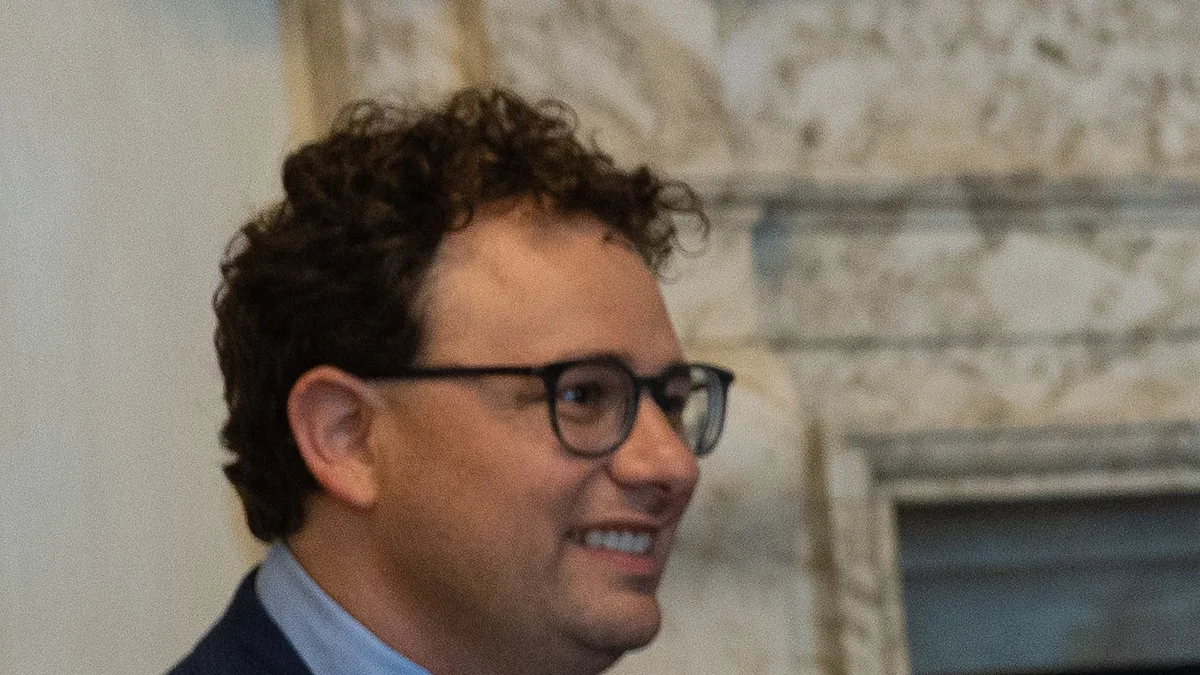
The clip is 77 seconds long, and the title does most of the shouting. “Dario Amodei said something that left the entire pharmaceutical industry speechless,” the r/accelerate post declares, quoting the Anthropic chief executive as saying AI will “solve biological problems within a few years.” Posted on Friday afternoon, it reached the top of the subreddit within hours — nearly 700 upvotes, more than 200 comments — and the argument underneath it is still going.
Watch the clip itself, though, and the man in it is more careful than the headline. Amodei, seated with a microphone, is making an argument about patterns, not a promise about cures. The experts in any field, he says, are skeptical for good reason — their problems look fiendishly difficult, and every past technology has failed at them. Then, because AI improves exponentially, the blockers fall “little by little, and then I think we'll be all at once within a few years.” He adds the caveat twice over: “there's no way to be sure,” and “the skeptics could be right.”
The clip: “little by little, then all at once”#
The argument is one Amodei has made before, and it is the same one he made in his 2024 essay “Machines of Loving Grace”: mathematics and programming looked impossible until they didn't. Mathematicians scoffed at machine proofs; programmers scoffed at machine-written code. In both cases the skeptics were looking at a technology that seemed to do nothing, right up until it did everything. Biology, he says in the clip, is where that pattern is starting now — with robotics alongside it. The blockers he names are the ones every drug developer knows by heart: clinical trials, manufacturing, and the FDA.
What the clip does not show is the other half of its own title. No pharmaceutical executive appears in it, nobody is left speechless on camera, and the post names no interview, podcast or event the footage came from — nor a date for it. The post has no body text at all: just the video and a title that turns a caveated argument into a flat guarantee. That gap between the clip and its caption is where most of the 213 comments live.
The bigger claim behind it#
The clip did not arrive in a vacuum. Three days earlier, on November 10, a video tied to Anthropic's IPO launch began circulating on X, in which Amodei goes much further: cancer, Alzheimer's, heart disease and mental illness, he says, will be “relics of the past in, I think, less than a decade.” The post carrying it passed 2.45 million views. It is the claim the Reddit clip's title is really selling — and the one that set off the week's fiercest argument about an AI executive's promises.
The context is the IPO itself. Anthropic priced its offering at $70–$78 a share this week, targeting a valuation of up to $1.4 trillion — our earlier coverage of the roadshow has the numbers — and the medical pitch is part of the story the company is telling investors about what its models are for. Amodei has been making the biology case for years: in “Machines of Loving Grace” he argued powerful AI could compress 50 to 100 years of biological progress into five to 10, and in a June 2026 essay he proposed streamlining the FDA so a wave of AI-designed drugs would not stall in regulation. The urgency, he has said, is personal — his father died of hepatitis C shortly before direct-acting antivirals arrived.
The pushback: “biology is not math”#
The response from people who actually develop drugs was swift, and it was not polite. Gary Marcus, writing on Substack, called the IPO video's promises the kind of overclaim “that would have made Elizabeth Holmes blush.” The criticism that stung most came from inside the industry: Eli Lilly's chairman and CEO, Dave Ricks, replied that while it “would be amazing,” it is “not likely” — “the map of biology is still largely a blank page and randomized human proof is the long pole in the tent,” he wrote, adding that progress “will likely be steady and incremental.”
The technical objection is about time, and it is hard to argue with. A drug entering human trials today reaches patients in the 2030s: for the most recent 20 drugs approved, the average time from first-in-human trials to FDA approval was 14 years, the median 10. Clinical trials cannot be compressed the way a training run can — the steps, as one physician put it, are ones “you aren't allowed to skip,” from animal studies to manufacturing to regulatory review. Cardiologist Eric Topol called curing all these diseases within a decade “impossible,” while conceding he is optimistic about AI's impact on health. One researcher noted the data exists for less than 1% of biology.
The same argument dominates the Reddit thread. “Math is immediately verifiable. Medicine is not,” reads one of the top replies. Another argues Amodei is “hyping way beyond his understanding” because biology, unlike code, cannot be reduced to a formal system you can run in a loop — to put medicine in a “for-loop,” one commenter writes, you would need to digitally simulate the entire human body. Others point out the data gap: we do not have the models of biology, or the measurements, to compress the field the way math was compressed.
What Amodei says in his own defence#
Amodei has answered the criticism, and his answer is more interesting than the clip. Writing on X, he repeated the prediction — AI could make it possible to “cure most human disease in ~5-10 years” — while conceding it sounds far-fetched even to biologists, and admitting that Anthropic has not yet delivered on its biggest promises in medicine. “Actually curing cancer,” he wrote, “would be more meaningful than a marketing campaign promising that AI could eventually do so.” The company, he said, is rapidly expanding its biology and medicine work and expects “early glimmers” of progress in the coming months.
His supporters on the thread make the same point from the other direction. “AlphaFold made me a believer, so I'll just stfu and watch on this one,” one top comment reads. A commenter who says they work in medicine writes that they “100% agree” with Amodei's take. The believers' case is that the skeptics are making the same mistake the mathematicians made: confusing the difficulty of the problem with the impossibility of solving it.

What to watch#
Two things will settle this faster than any argument. The first is results: Amodei has promised Anthropic will publicize its biology and medicine achievements as they materialize, and the company's $400M wet-lab bet is where those results would come from. The second is the clock: the “less than a decade” claim has a deadline built in, and the trial timelines the critics cite mean the first real test will be whether AI-designed candidates now in early trials move visibly faster than the 14-year average.
Until then, the honest version of the story is the one in the 77 seconds, not the one in the title. Amodei's argument is that exponential curves look flat until they don't — and his own caveat is that, for any given field, the skeptics could be right. The clip's original interview and date remain unidentified, and one commenter claims it has been reposted before — neither point was verified. What is verified is the split: a CEO selling a decade of miracles, an industry answering with a calendar, and a comment section that cannot decide which one is naive.
Sources: the original post by u/Lord_44th__Raikage on r/accelerate; Gary Marcus, “Breaking: Eli Lilly CEO becomes latest to push back on Dario Amodei's ludicrous, Elizabeth Holmes-like medical claims” (Substack); Webull / Benzinga, “Anthropic CEO Says AI Could Cure Most Human Disease in 5-10 Years — but Admits Big Promises Haven't Landed”. Vote and comment counts were read from the Reddit post page in the early hours of November 14, 2026. The clip's original interview and date are not identified in the post.