Australia passes a Digital Duty of Care: AI chatbots now face fines of up to 5% of global revenue
The Federal Communications Commission on Wednesday authorized SpaceX to deploy up to one million satellites as data centers in orbit — the first time the United States has ever approved a constellation built to process data in space rather than beam it down to Earth. The constellation, called Starmind, is designed to run AI workloads in orbit, powered by near-constant sunlight and cooled by radiating heat into space. The approval is real, and so are the strings attached: SpaceX must launch its first satellite by November 2033, have 100,000 in orbit by 2035, and complete the constellation by 2040 — or lose the license.
- Passed both houses: Australia’s Parliament passed the bill on November 25, 2026 — the Senate 36–23, the House 97–43 — after a deal with the Greens.
- The coverage: AI chatbots are explicitly covered, alongside games, apps and social media platforms, with extra protections for under-18s.
- The penalty: breaches can draw fines of up to 5% of a company’s global turnover or AU$109.2 million, whichever is greater — up from a flat AU$109 million in the original bill.
- The new rights: Australians get a private right to sue providers for breaches that cause loss or damage, plus “My Feed, My Way” control over their social media algorithms.
- The timeline: the duties take effect in 12 months. Royal Assent is the next formal step and is not yet on the Parliament record.

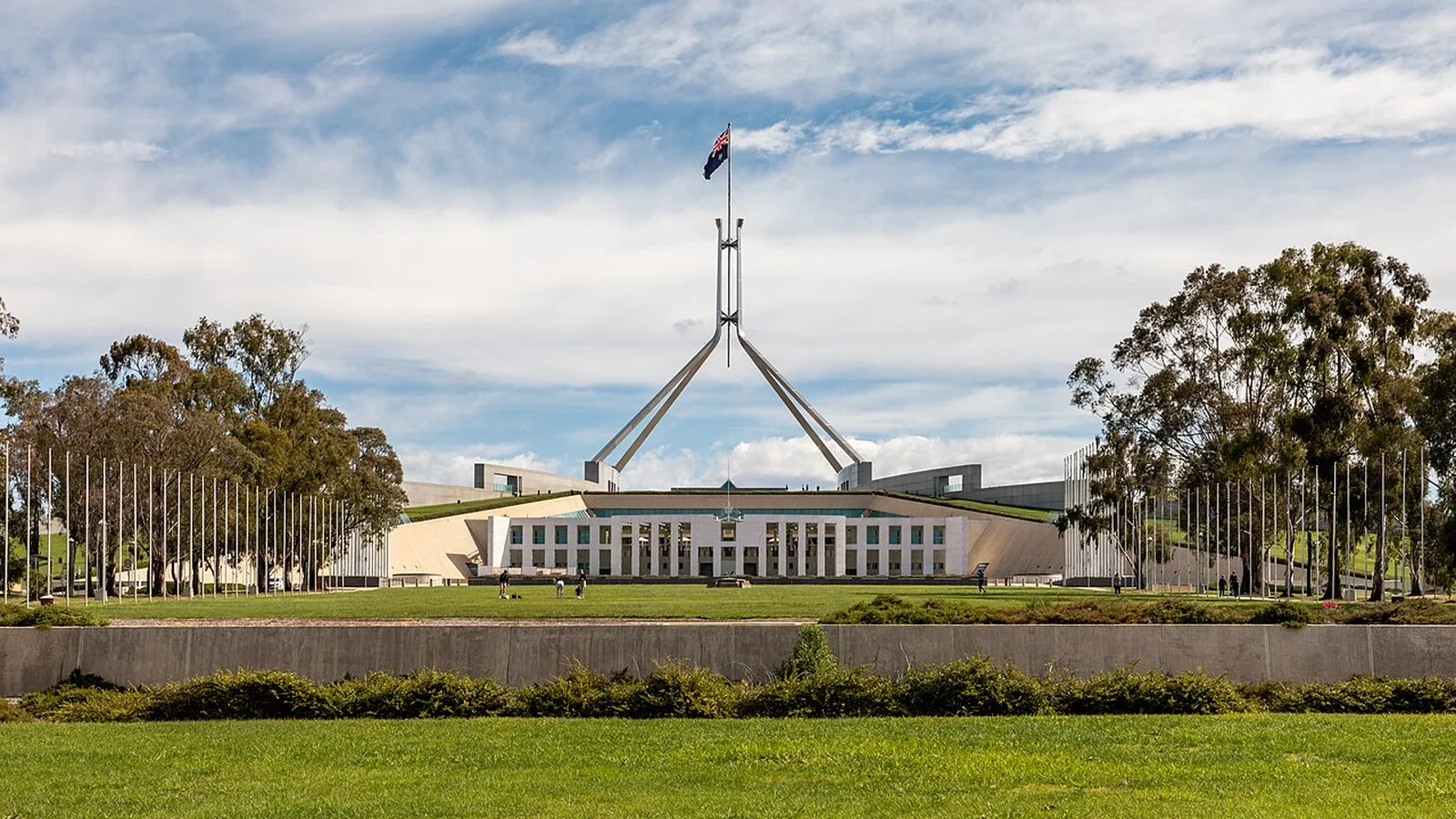
Australia’s Parliament on Wednesday passed a sweeping online-safety law that puts AI chatbots under the same legal duty of care as social media platforms, games and apps — and backs it with fines of up to 5 percent of a company’s global revenue. The Online Safety Amendment (Digital Duty of Care) Bill 2026 cleared both houses on November 25, passing the Senate 36 votes to 23 and the House 97 to 43. It replaces Australia’s industry-code system with a statutory duty: from now on, the safety of an online service is a legal obligation, not a set of voluntary codes. The duties take effect in 12 months; Royal Assent is the next formal step and has not yet been recorded.
What the law requires#
The core of the law is a simple flip in who carries the burden. Until now, Australia relied on industry codes and a set of Basic Online Safety Expectations — standards the platforms largely wrote for themselves. The Digital Duty of Care replaces that framework with a statutory duty: providers of online services must take measures to provide a safe online environment, protecting Australians from seriously harmful material and conduct and making sure their features and tools do not cause harm.
AI chatbots are named explicitly in the government’s list of covered services, alongside games, apps and social media platforms. That matters because it treats a chatbot as a service used by the public, with the same obligations as a feed or a game — not as a piece of software whose harms are someone else’s problem.
The duty is heavier where children are involved. Platforms must protect under-18s from material, conduct and features that are harmful to them, including content that glorifies crime or life-endangering stunts, causes serious mental distress, encourages eating disorders, or promotes hostile attitudes toward women. The package also includes an Australian first the government calls “My Feed, My Way,” giving Australians control over their social media algorithms, and a private right of action: individuals or groups who suffer loss or damage from a breach can take the provider to court themselves, rather than waiting for a regulator to act. The eSafety Commissioner’s powers grow too — the office can now move to remove nudify apps and websites, respond faster to cyber-bullying and abuse, and set up an external dispute-resolution pathway for complaints.
The fines — and how they got that high#
The number that will concentrate minds in Silicon Valley is the penalty: up to 5 percent of a company’s global turnover, or AU$109.2 million, whichever is greater. For a global platform, 5 percent of worldwide turnover runs into the billions — the penalty is designed to scale with the company, not with the Australian market alone.
That figure was not the government’s opening position. The original bill proposed a flat AU$109 million (about US$72 million) maximum. The Greens, whose votes the government needed in a Senate where no party holds a majority, pushed the cap up to 5 percent of global revenue in a deal struck on Tuesday, and the bill passed the Senate the next day. The result puts Australia’s regime alongside the European Union’s Digital Services Act of 2022 and the United Kingdom’s Online Safety Act of 2023 — but with a turnover-based penalty and a private right to sue, it is one of the sharper versions of the model.
The opposition#
The law passed over loud objections. Opposition leader Angus Taylor told Parliament he would repeal it if his conservative Liberal Party wins the election in 2028, calling the legislation “authoritarian” and “a blank check for political censorship.” The United States weighed in as well: Ambassador David Brat said the then-proposed laws would “impose disproportionate compliance burdens on American companies relative to competitors,” and warned that “vaguely defined harms, backed by penalties of up to 5% of global revenue, will push platforms to censor lawful speech.”
The government is unmoved. Prime Minister Anthony Albanese told Parliament the law would stand as “a powerful instrument to protect our children and our society from online harms by placing the onus on the tech platforms to ensure a safer online environment.” Greens negotiator Sarah Hanson-Young, who brokered the Senate deal, put it more bluntly: “Today, the safety and wellbeing of Australians and their children have finally been put ahead of Big Tech’s bottom line” — and, to the platforms: “it’s time to make your platforms safe or we will see you in court.”
What it is not#
Three distinctions keep the story straight. First, this is not an AI Act. Chatbots are covered because they are public-facing services, not because the law regulates models — Australia’s planned AI regulator and frontier-safety laws are a separate, still-unfinished project. Second, it is not an age ban: where Greece has passed an under-15 social media ban and Britain is building an under-16 one, Canberra’s law is a harm-prevention duty. It regulates what services must do, not who may use them.
Third, it is not in force yet. The bill passed both houses on November 25 — introduced on October 15, through the House on October 28, and through the Senate after 42 government and 10 Greens amendments — but the Parliament record does not yet show Royal Assent, and the duties themselves begin 12 months after that. Platforms have a year to redesign; the obligations are not live today.
What to watch#
- Royal Assent and the 12-month clock. The next formal step starts the countdown; watch for the date it lands.
- The detailed rules. The duty’s real bite depends on how eSafety writes the standards underneath it.
- Whether platforms rebuild for Australia first — or everywhere. Chatbots and feeds redesigned for one market often stay redesigned.
- The first private lawsuit. A test case will show whether the court route has teeth or stays theoretical.
- The 2028 election. The repeal pledge makes the law itself a campaign issue.
- Whether other countries copy the duty model. Australia’s online-safety experiments are watched closely abroad.
Sources: Minister for Communications Anika Wells, “Australia’s Digital Duty of Care becomes law”; Associated Press via Fast Company, “Digital Duty of Care Act, an online safety law, passes in Australia”; TSN, “Digital Duty of Care Passes Australia’s Parliament”