FCC authorizes SpaceX's Starmind: up to 1 million satellites for AI data centers in space
The Federal Communications Commission on Wednesday authorized SpaceX to deploy up to one million satellites as data centers in orbit — the first time the United States has ever approved a constellation built to process data in space rather than beam it down to Earth. The constellation, called Starmind, is designed to run AI workloads in orbit, powered by near-constant sunlight and cooled by radiating heat into space. The approval is real, and so are the strings attached: SpaceX must launch its first satellite by November 2033, have 100,000 in orbit by 2035, and complete the constellation by 2040 — or lose the license.
- First of its kind: the FCC granted the first-ever U.S. authorization for a constellation of data centers in space, approving SpaceX’s Starmind for up to 1,000,000 orbital compute modules.
- The hardware: each Starmind AI1 satellite is built around Nvidia’s Vera Rubin NVL72 rack-scale system — 72 Rubin GPUs and 36 Vera CPUs — with about 250 kW of peak compute power. Prototypes are targeted for early 2027.
- The deadlines: first satellite by November 2033, 10% (100,000) by 2035, 50% by 2038, full constellation by 2040 — or the authorization becomes void.
- The pushback: a University College London preprint estimates launch emissions could rise more than 150-fold over 2025 levels, and no public environmental assessment of the proposal exists.
- The scale: roughly 17,000 satellites orbit Earth today. One million would be about sixty times that.
What the FCC actually authorized#
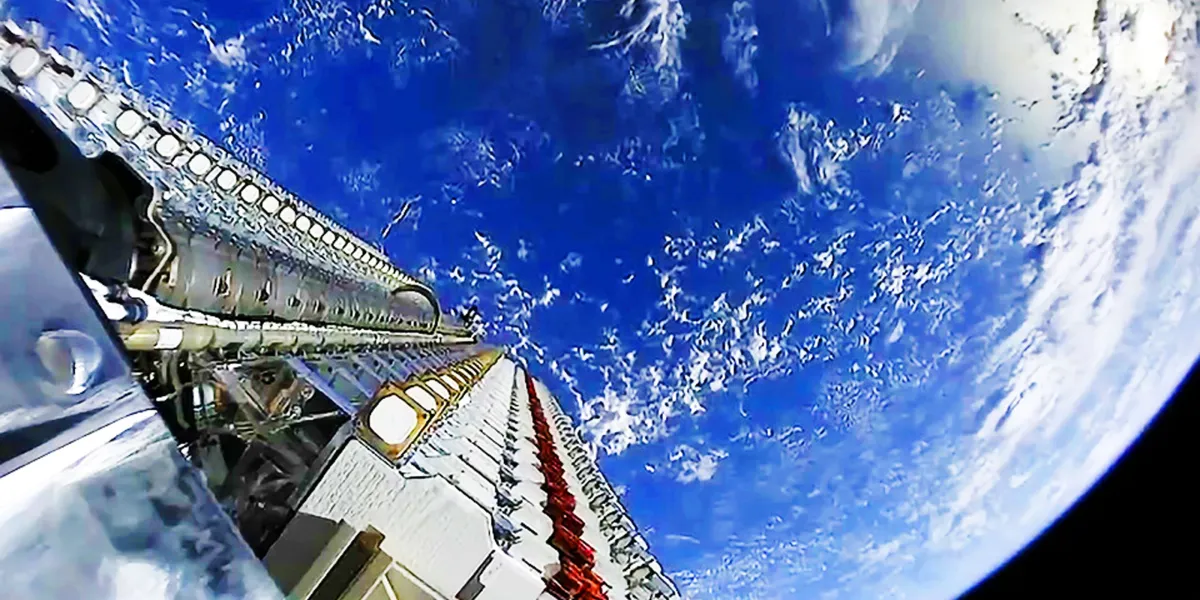
The decision, published Wednesday, is narrow in one sense and enormous in another. It authorizes SpaceX to establish the Starmind constellation of up to one million orbital data centers — satellites that process massive amounts of data in orbit and send the results back to Earth. The Federal Communications Commission describes it as the first authorization in U.S. history for a constellation of data centers in space.
The satellites would fly in shells between 500 and 1,002 kilometres up, at 30-degree and sun-synchronous inclinations. Radio spectrum is limited to backup and emergency telemetry, tracking, and command; the real networking is optical, with laser inter-satellite links supplemented by radio in the 18.8–19.3 GHz downlink and 28.6–29.1 GHz uplink bands. Petitions to deny the application from Kuiper Systems, Viasat, and the American Astronomical Society were rejected, and the FCC says it is still reviewing additional orbital data-center proposals.
Chairman Brendan Carr framed the decision as a race: “This action opens a bold new frontier for the computing infrastructure needed to power America’s leadership and growth.” The release itself goes further, saying the constellation “promises to bring the human race closer to a Kardashev II civilization — one that can harness the full power of the sun.” That is the regulator’s own language — unusually florid for an FCC order.

What Starmind is — and why Nvidia is inside it#
SpaceX filed its application on January 30, 2026. The first spacecraft, Starmind AI1, is essentially a data-center rack redesigned for space: about 30 metres tall with roughly 75-metre solar wings, built around an orbit-optimized version of Nvidia’s Vera Rubin NVL72 rack-scale system — 72 Rubin GPUs and 36 Vera CPUs — with a compute payload rated at about 250 kilowatts at peak and 175 kilowatts on average.
Nvidia is not just a supplier here. On SpaceX’s August 4 earnings call, Elon Musk said the company had decided to build exclusively on Nvidia, calling the Vera Rubin architecture “the best architecture.” Prototypes are targeted for early 2027, with the first full system aimed at the fourth quarter of 2027 and significant scale in 2028. Nothing has flown yet.
The pitch for orbit is straightforward: sunlight is near-constant, heat can be radiated into space instead of removed with water, and a constellation dodges the land, grid-connection, and local-opposition fights that now slow every large data center on Earth. At 175 kilowatts average per satellite, a full million would amount to roughly 175 gigawatts — against about 17,000 satellites of all kinds in orbit today.
The environmental fight#
The pushback arrived before the authorization did, and it is quantitative. A preprint from University College London researchers Eloise Marais and Connor Barker — awaiting peer review — models what a million-satellite build would cost the atmosphere: launch emissions rising more than 150-fold over 2025 levels, nitrogen oxides from reentering spacecraft running 70 to 150 times current baselines, and on the order of 5,000 Starship launches a year — roughly fourteen a day, against about 330 orbital launches worldwide last year.
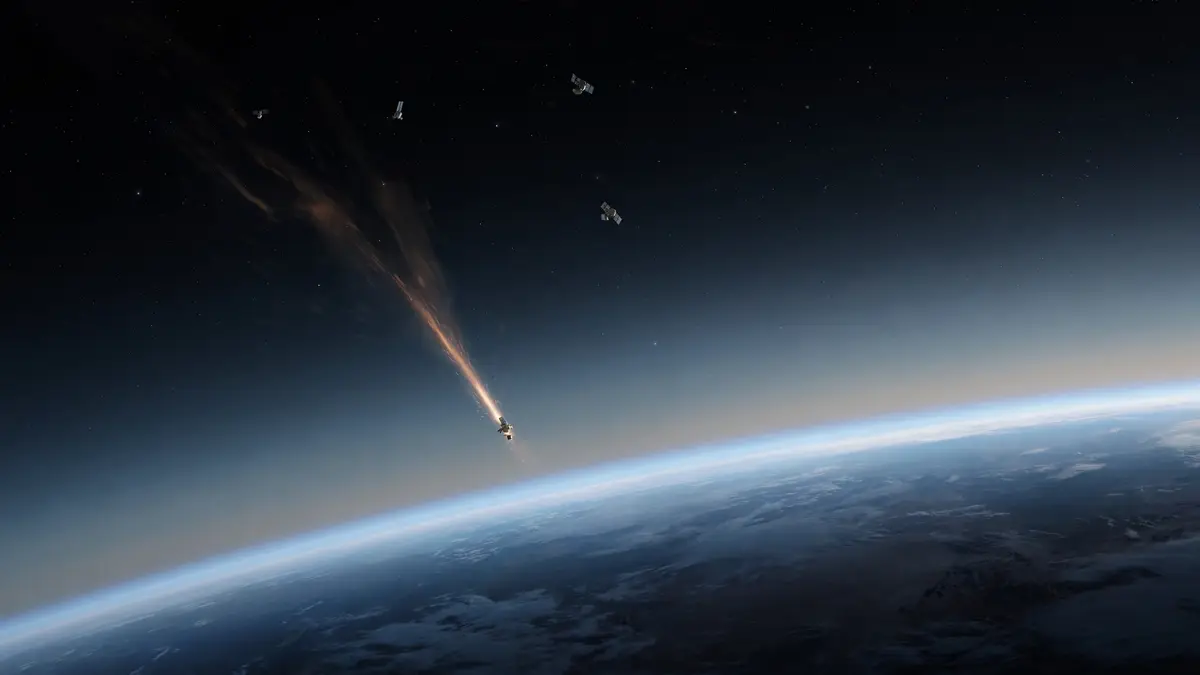
The reentry side is as large as the launch side. Under a five-year replacement cycle, an old satellite would burn up roughly every three minutes, vaporizing around 200,000 metric tons of spacecraft material a year — more than 200 times the reentry mass recorded in 2024. The vaporized aluminum and other metals are the specific worry: researchers warn they could catalyze ozone-depleting reactions in the stratosphere. The Center for Space Environmentalism’s filing adds the mass terms: up to 4,000 kilograms per satellite, four million metric tons for the full constellation.
Two caveats belong in the same paragraph. The UCL figures are modeled estimates, not measurements, and SpaceX has disclosed too little about its plans for a full accounting — which is itself the researchers’ point. And no public environmental assessment exists: the FCC exempted satellite megaconstellation filings from environmental review in September.
What Reddit made of it#
The story reached r/accelerate within hours of the announcement, as an image of the FCC release, and climbed to roughly 93 upvotes and 28 comments by early afternoon — fast for a Wednesday, and still rising. The top comment, with 29 upvotes, was blunt: “Most of the economy will eventually be in space.”
Starmind has been tracked in these communities for months — the January filing, the August Nvidia partnership, the September filings on satellite mass — so the authorization read as the next step in a known program. The only cautionary note in the top comments was about control: whether Musk could switch off access the way Starlink was restricted in Ukraine.
What to watch#
- The AI1 prototype. Early 2027 is the target. If it slips, the 2033 deadline still looks generous — but the bet rides on Starship’s launch cadence.
- Starship’s launch rate. The UCL model needs about 5,000 launches a year. The world managed roughly 330 last year. The gap between those two numbers is the story.
- Environmental review. Will anyone force a full assessment before the first launch? The FCC exempted megaconstellations in September.
- The rival queue. The FCC is still reviewing other orbital data-center proposals. A second authorization would turn a SpaceX bet into an industry.
- The one-million number. Reuters notes it is unclear whether SpaceX would ever actually deploy a million satellites. Treat it as a ceiling the license allows, not a committed plan.
Sources: Light Reading, “FCC greenlights SpaceX plan to deploy up to 1M AI satellites”; Reuters, “US authorizes SpaceX to deploy 1 million satellites for data centers in space”; Scientific American, “How bad would SpaceX’s million AI satellites be for Earth’s atmosphere?”; TalkMarkets, “SpaceX And Nvidia Plan Orbital AI Data Centers, Testing In 2027”; r/accelerate, “FCC approved 1 million satellites SpaceX Starmind constellation”