DHH declares the hand-written code era over — and a viral clip turned it into something he didn't say
A 169-second clip of DHH's Rails World 2026 keynote blew past 1.6 million views — but the line everyone's quoting about "chiseled proofs" is Boaz Barak's paraphrase, not DHH's words. Here's what he actually said, and why the internet heard something else.
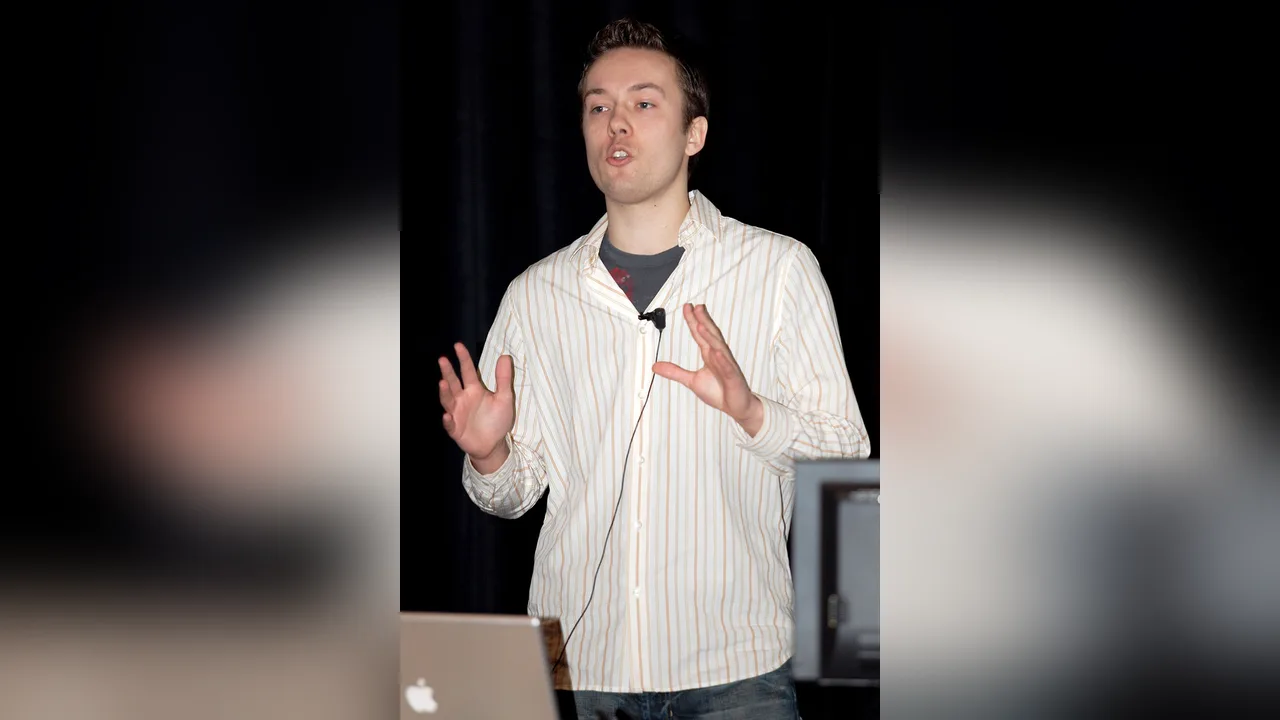
It took one 169-second clip to turn a Rails conference keynote into a weekend-long referendum on the future of programming. The clip — an excerpt of David Heinemeier Hansson's opening keynote at Rails World 2026 in Austin — was posted on X on September 25 and had blown past 1.6 million views a day later. Its title card reads "Retired Progressional Programmer 2001 — 2026," and the internet's takeaway was that one of the most influential programmers of the web era has hung up his keyboard for good.
Then the clip escaped the Rails bubble, and the message started to mutate. When Harvard computer scientist Boaz Barak quote-posted it on September 26, he reframed it for a completely different audience: "Mathematicians should also watch this. I've had a wonderful time chiseling proofs by hand, but folks need to accept that era is over and embrace the new one of exploring math with AI." That post picked up nearly 88,000 views — and with it, the story quietly changed from hand-written code to hand-written proofs.
Here's the thing: DHH never said anything about chiseling proofs. The keynote is about code — specifically, about 37signals going "pencils down" on hand-written code and handing the keyboard to AI agents. The math-proofs framing is Barak's own gloss, offered as his own reaction. But somewhere between the quote-post and the Reddit threads, the paraphrase is starting to read like the original.
What the keynote actually says#
The full keynote is on the official Ruby on Rails YouTube channel, and its chapter titles tell the story plainly. DHH argues the industry has moved from the "10x programmer" to the "1,000x programmer," that 37signals has stopped writing code by hand, and that he is personally "retiring from hand-written code, with joy." The throughline is total optimism — a chapter titled "P(bloom) over P(doom)" leads into "The case for total optimism." In one memorable turn, he argues that English has become the programming language he likes better than Ruby.
None of this is about mathematics. It's a founder announcing that his company now builds software primarily by directing agents, and telling programmers to meet the moment with enthusiasm rather than grief. "Keep the happy memories, eyes on the reality, be excited about the future," the clip's original poster summed it up — a framing that traveled better than the substance.
How the clip broke out of the Rails bubble#
The viral excerpt was posted by X user @scottstts on September 25 with a simple pitch: this is a speech "every SWE needs to hear." By the next morning it had 1.6 million views — the kind of number a framework-conference keynote does not reach on its own merits. The excerpt's framing did the heavy lifting: presented as a retirement announcement from a legendary programmer, it was instantly shareable far beyond the Rails community.
Barak's quote-post was the inflection point. Where the original clip was pitched at software engineers, his version pitched it at mathematicians — and his gloss gave a second, larger audience permission to claim the talk as their own elegy. It's the classic viral mechanism: each audience remakes the message in its own image, and the original context thins a little with every share.

What the internet heard vs. what he said#
To be clear, this isn't a deception story. Barak presented his framing as his own reaction — a mathematician translating a programmer's argument into his field's terms. The drift happened downstream, in the telephone game of quote-posts and reposts, where "Barak says mathematicians should also stop hand-writing" compresses into "DHH says the proof era is over."
The distinction matters for two reasons. First, accuracy: the claim under discussion should be the one actually made — that agentic coding has made hand-written code at a product company like 37signals obsolete — not a borrowed one about mathematical proof. Second, the analogy is doing real work. "Exploring math with AI" is a coherent, debatable thesis about how mathematicians use models; "DHH said so" is an appeal to authority the keynote never earned.

The split verdict#
On Reddit, where the clip was posted to r/accelerate under the title "Everyone should watch this, regardless of their domain," the thread (215 upvotes, 71 comments within five hours) captures the full spread. The top comments include genuine excitement — "legendary coders are OPENLY becoming AI-coders" — matched by genuine skepticism: "hasn't said anything profound in a long time." The critics' sharpest charge is that DHH has "pivoted to professional TED talker," trading shipping for keynote-circuit wisdom.
Underneath the sniping is a real anxiety, especially among younger developers: if the creator of Rails is retiring from writing code, what exactly is a junior software engineer supposed to do? The keynote's answer — be joyful, direct agents, treat English as the new programming language — is either liberating or infuriating depending on where you sit. That's the honest debate the paraphrase game keeps obscuring.
What to watch: whether 37signals actually sustains "pencils down" as an operating principle — shipping major products with agent-written code at production quality — or whether it's keynote rhetoric ahead of engineering reality. The full keynote is worth the hour for DHH's argument in his own words; just don't expect anything about proofs.
Sources
- Rails World 2026 Opening Keynote - DHH — Ruby on Rails (YouTube)
- Viral 169-second excerpt — @scottstts (X, September 25, 2026)
- Boaz Barak's quote-post — @boazbaraktcs (X, September 26, 2026)
- r/accelerate discussion thread — Reddit
- David Heinemeier Hansson portrait — Wikimedia Commons, CC BY 2.0