Kitten-TTS-2 shrinks to 4 MB: a voice model that runs on one phone CPU thread
KittenML’s new Pico, Nano and Mini voices are tiny enough to run faster than real time on a single smartphone CPU thread — and the 56-second video lets each model introduce itself. Reddit’s first testers like the quality, but they found a punctuation bug.
- The post: r/LocalLLaMA, Thursday November 19, 11:44 a.m. EST, by u/ElectricalBar7464 of the KittenML team; a 0:56 Reddit-hosted video, 329 upvotes and 106 comments by Friday morning.
- The models: Pico (~7M parameters, 4 MB per language, 8 languages), Nano (~17M, 8.8 MB per language, 8 languages) and Mini (~80M, 48 MB, 16 languages in one pack). Code and weights are Apache 2.0.
- The catch: no zero-shot voice cloning and no emotion control in the tiny models; both are promised for later. The top comment says the models ignore commas and full stops — a bug the team says it will fix in two days.
- The context: the larger 1.7B-parameter Kitten-TTS-2, with cloning and emotion control, was announced in October; this release is the tiny, run-anywhere branch of the same family.
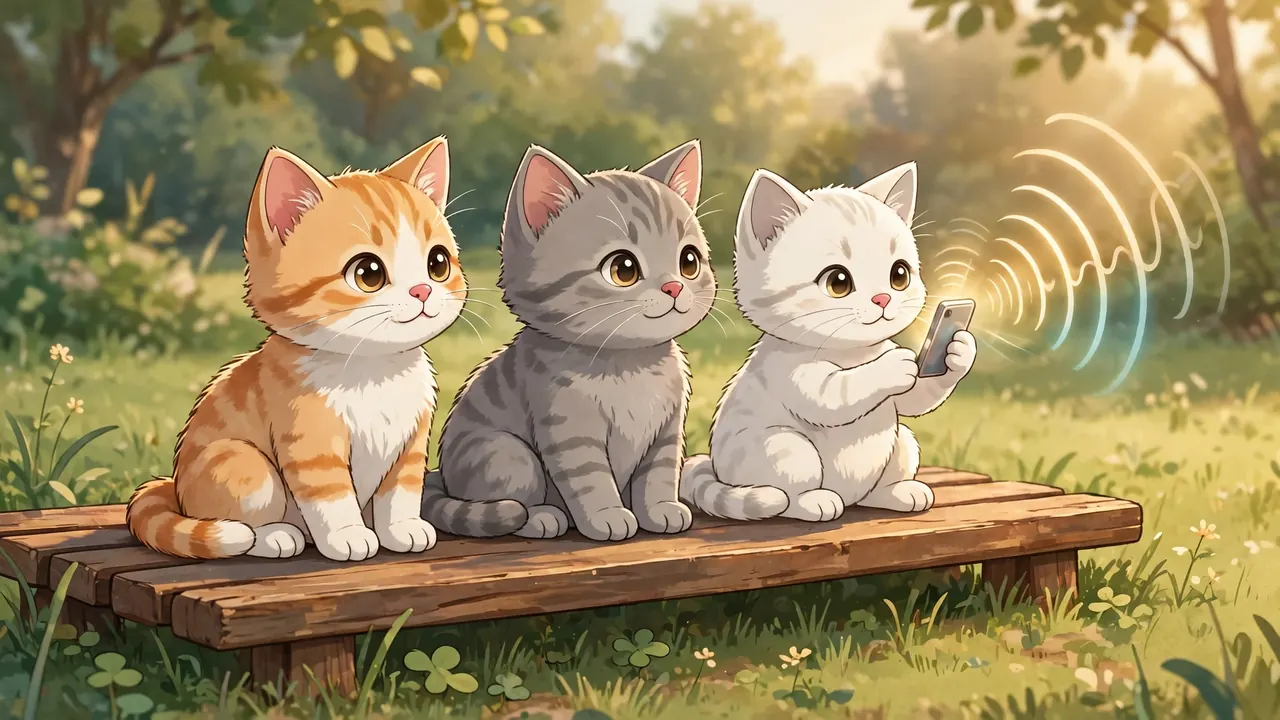
The clip is 56 seconds long, and the voices doing the talking are the product. Three cartoon kittens sit on a bench in a sunny garden, and each one introduces itself in its own synthetic voice: Mini speaks 16 languages, Nano speaks eight, and Pico — the smallest of the three — fits in four megabytes. It is a product demo that doubles as a cartoon, and it landed on r/LocalLLaMA on Thursday morning, where it had gathered 329 upvotes and 106 comments by Friday.
The release comes from KittenML, the small team behind the open-source Kitten-TTS family. The post, from u/ElectricalBar7464, announces the code and weights for three new multilingual models: Pico, Nano and Mini. All three are Apache 2.0 licensed, code and weights alike, and all three are built to run on ordinary hardware — no GPU, no cloud call, no server rack. The smallest one, the team says, generates speech faster than real time on a single smartphone CPU thread.
What the 56 seconds actually show#
The video is an animated promo, not a screen recording. Title cards read “Meet the new kittens” and “KittenTTS is back. Better quality. Multilingual. Even smaller open-source models.” Then each model takes a turn: Mini introduces itself in English and states its size and language count, Nano follows, then Pico. The voices switch languages partway through — Spanish and German lines appear in the second half — so the clip demonstrates the multilingual claim rather than just stating it. It closes with the line “Built with Love, By a tiny team of kittens.”
That framing matters, because the video is the demo. There is no separate recording of the models running on a phone; the speech you hear in the clip is the models. For a text-to-speech release, that is the honest way to show the product — and it is also why the comments immediately started judging the voices rather than the marketing.
Three sizes, one idea: speech that fits anywhere#
The three models are a ladder of trade-offs between size, quality and language coverage:
| Model | Parameters | Size (int4) | Languages |
|---|---|---|---|
| Pico | ~7M | 4 MB per language | 8 |
| Nano | ~17M | 8.8 MB per language | 8 |
| Mini | ~80M | 48 MB, all languages in one pack | 16 |
The sizes are per language for Pico and Nano, which ship separate weights for each language, while Mini packs all 16 languages into a single 48 MB download. The project README adds the detail the announcement leaves out: Pico runs with only 40–50 MB of peak memory. The previous smallest model in the family, the 25 MB Nano from the v0.8 series, is now roughly six times the size of Pico — and the team says Pico sounds better anyway.
The pitch is aimed squarely at the edge: phones, Raspberry Pis, and anything else where a GPU is a luxury. The team says the models run on CPU through ONNX, with PyTorch weights also available, and a WebAssembly port is promised for Monday. That puts Kitten-TTS-2 in the same conversation as Kokoro-82M, the open offline narrator we covered in a hands-on tutorial last month, and BlueTTS v3, whose claim of 50x real-time speech on a plain CPU we examined two days ago. The difference is the floor: nobody else in this size class is shipping a usable voice at 4 MB.
What Reddit’s first testers found#
The thread did what r/LocalLLaMA does best: it tested the thing. The top comment, from a user who tried the models, says the quality is good in English and German — then reports a real bug. In their tests, the models “ran everything together into a single sentence, almost completely (but not quite) ignoring commas and full stops.” The poster replied within hours, calling it a bug and saying it would be fixed in the next two days.
Other early verdicts are mixed in the way honest first impressions usually are. One commenter says the word flow “doesn’t quite beat Kokoro”; another says BlueTTS sounds better in Russian. But there is praise too: one user, frustrated that Kokoro mangles New Zealand town names, says Kitten-TTS-2 “does surprisingly well” on them. And the Apache 2.0 licensing drew open approval — one commenter simply wrote, “Love the Apache licensing.”
Worth noting is how the team itself frames the “SOTA” claim in the post title. Asked in the comments, the poster narrows it: these are, in their words, the best multilingual models under 80 million parameters that are also Apache 2.0. That is a much smaller claim than “best text-to-speech” — and a more defensible one. The team also concedes it has not tested BlueTTS extensively, so the head-to-head comparisons in the thread are still open questions, not settled results.
What’s missing — and what’s promised#
The most-asked question in the thread — “No cloning?” — got the most-upvoted reply in the whole discussion. The tiny models cannot do zero-shot voice cloning, the poster says, because a speaker encoder will not fit in 4–40 MB. Custom voice generation is promised for this weekend instead, and cloning today lives in the separate 1.7B-parameter Kitten-TTS-2 model, which was announced in October with voice cloning and emotion control. There is no emotion control in this tiny series either; that is promised for the next round of mini models.
Two other limits surfaced. Mandarin is not supported yet, and the “cute” voices are English-only for now, though the team says adding voices in other languages is straightforward and has asked users which ones they want. The poster also says the team plans to ship support for about 500 languages over the next two months — an ambitious promise, and one to treat as a roadmap statement rather than a fact until the releases land.
One thread in the comments is unresolved and worth flagging. Two users independently said Mini’s voice sounds “nearly 1:1” like ADA, the AI voice from the game Satisfactory, and asked whether Mini was trained on it. The poster denied it with a two-word reply, “lol nope,” and offered no further explanation. The similarity, if it is real, is the kind of thing listeners notice and datasets rarely document — and it is unproven either way.
Why it matters#
Voice models have been racing in two directions at once: bigger and more expressive on one side, smaller and cheaper to run on the other. The big end gets the headlines — cloning, emotion, 44 kHz audio. The small end gets the users who cannot afford the big end: a developer putting narration into a game, a hobbyist building a voice assistant on a single-board computer, a product team that needs speech without sending every sentence to a server.
That is the bet behind a 4 MB model. At that size, speech generation stops being a service you rent and becomes a file you ship — inside an app, on a phone, on hardware that never touches the internet. The Apache 2.0 licence on both code and weights is what makes that bet usable: it is the difference between a demo you can admire and a component you can put in a commercial product. The thread’s reaction suggests the community understands that distinction. The licensing praise and the cloning question are really the same question: how far can something this small actually go?
What to watch#
Three near-term promises will tell us whether this release holds up. First, the punctuation fix, due within two days of the announcement — a small bug, but prosody is the difference between a voice that reads and a voice that talks. Second, the custom voice generation promised for this weekend, which would close the biggest gap in the tiny models. Third, the WebAssembly port due Monday, which would put the models in the browser with no install at all.
Beyond that, the real test is benchmarking. Nobody in the thread posted numbers against the “SOTA” claim, and the comparisons to Kokoro and BlueTTS are still impressions. If independent testers put Pico, Nano and Mini through the same passages as their rivals, we will know whether the smallest voice in this class is also the best — or just the smallest. And if the 500-language plan starts shipping, the story stops being about size and starts being about reach.
Sources: r/LocalLLaMA (November 19, 2026); KittenML/KittenTTS on GitHub; KittenTTS-2 Tiny demo on Hugging Face; kitten-tts-2-mini weights, nano and pico on Hugging Face.