Google’s Gemini glasses are real: pre-orders open at $395, in stores December 10
Google and Samsung opened pre-orders for Gemini-powered Intelligent Eyewear on November 12 — Warby Parker frames from $395, Gentle Monster from $449 — with a December 10 launch in the US and South Korea, and a privacy pitch aimed at the bystanders as much as the wearers.
- Pre-orders opened November 12, 2026; general sale is December 10 in the US and South Korea, through Warby Parker and Gentle Monster — Google is not selling the glasses directly at launch.
- Warby Parker: three styles (Alden, Reid, Wren), optical or sun, from $395. Gentle Monster: six designs, $449–$489. Samsung puts the combined lineup at 30 designs.
- Samsung-engineered hardware on Android XR: frames of about 41 grams, up to nine hours of battery, a charging case that recharges the frames up to seven times, a 12-megapixel ultra-wide camera, 64GB of storage, four microphones and two speakers.
- Gemini: a “Hey Gemini” wake phrase, real-time translation in more than 70 languages, turn-by-turn Maps directions, calendar checks from event posters, Guided Vision audio descriptions, and Aira’s human visual interpreters.
- Privacy: camera visuals are not saved in Gemini History and are not used to train models or target ads; bystander faces are redacted before Gemini processes them; an indicator light blocks capture if covered; every pair has an off switch.
- Compatibility: Pixel 7 and newer (Android 17, September 2026 update), recent Galaxy models (One UI 9.0+), and iPhone 13 Pro and newer. Guided Vision, Aira and Audible are Android-only at launch.

Google is back in the glasses business — and this time it is leading with fashion, not hardware. On November 12, Google and Samsung opened pre-orders for Intelligent Eyewear, the first glasses built on Google’s Android XR platform with its Gemini assistant inside. Warby Parker frames start at $395; Gentle Monster’s start at $449. Both go on general sale December 10 in the United States and South Korea.
The pitch is deliberately ordinary: glasses you would wear anyway, that happen to answer questions, translate speech and give directions without making you reach for your phone. It is a very different launch from Google Glass, the camera-equipped experiment that became shorthand for wearable overreach more than a decade ago. This time Google is spending as much of the announcement on the people around the wearer as on the wearer — and pricing the entry frame below Meta’s newest Ray-Bans.

Two collections, one platform#
There are two collections and no Google storefront: at launch, Google is not selling the glasses itself. Pre-orders run through Warby Parker and Gentle Monster, online and in their shops, with hands-on demos at select locations of both brands and at Google Stores.
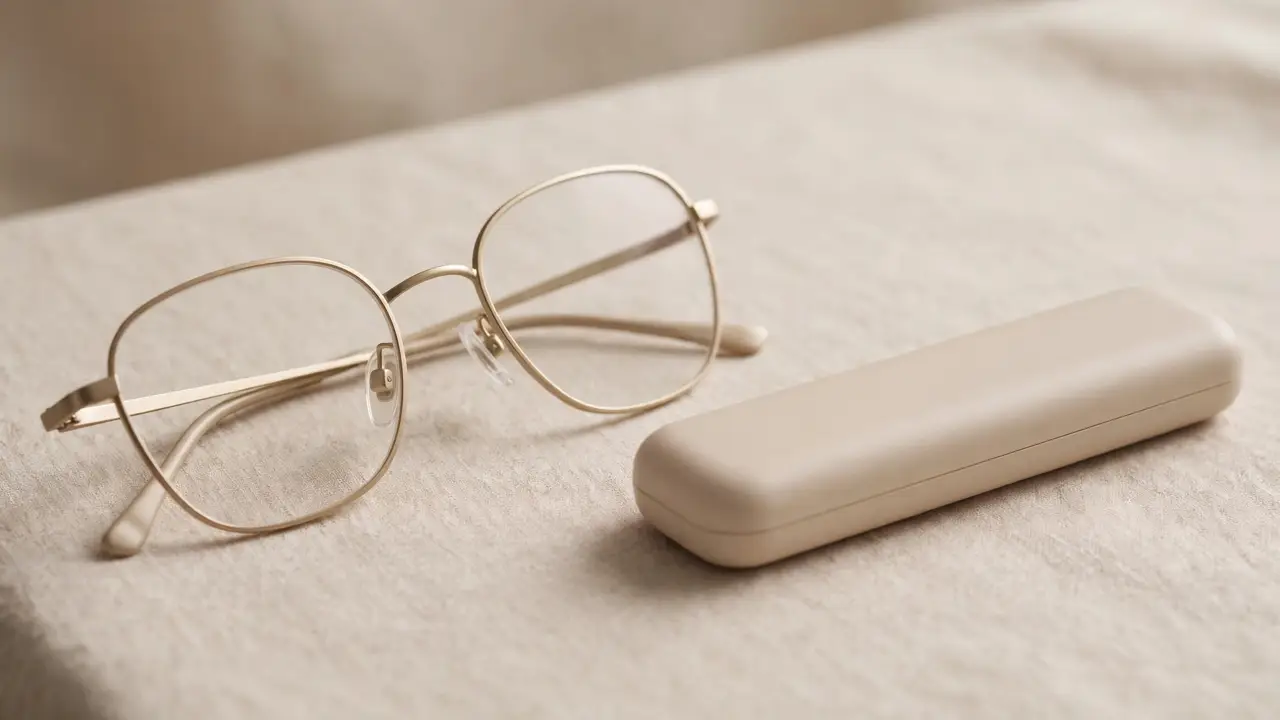
Warby Parker’s line is the quieter of the two: three styles — Alden, Reid and Wren — in optical or sun versions, in Pine, Saddle and Jet Black, from $395, with prescription, width and lens options. Gentle Monster’s six designs are bolder — dark red, pink, gray and yellow among them — from $449 to $489. Samsung puts the combined lineup at 30 designs; the frames weigh about 41 grams, with a battery rated for up to nine hours and a case that recharges them seven times.
Underneath the fashion is Samsung hardware running Android XR: a 12-megapixel ultra-wide camera, four microphones, two speakers and 64GB of storage. One thing the glasses do not have is a display in the lens: no heads-up overlay — Gemini talks back through open-ear speakers, and the camera is the input. A screen would have made the frames thicker, heavier and much more obviously a gadget.
| Collection | Styles | From | Where sold |
|---|---|---|---|
| Warby Parker | 3 — Alden, Reid, Wren | $395 | United States |
| Gentle Monster | 6 designs | $449 | United States, South Korea |
What Gemini does on your face#
Say “Hey Gemini” — the glasses are the first devices built around that wake phrase — and the assistant works off what the camera sees and what Google already knows about your day:
- Look and ask. Ask for the story behind a street-art mural you are passing, or whether you are free on the date on an event poster — Gemini checks your calendar on the spot.
- Translation and directions. Real-time speech translation with automatic language detection across more than 70 languages, and turn-by-turn directions from Google Maps spoken into your ear.
- Guided Vision and Aira. Conversational audio descriptions for blind and low-vision users — reading small print or helping find everyday items — plus Aira, which streams the camera to a trained human visual interpreter.
- The everyday stuff. Adding what you are looking at to a grocery list, checking your next meeting, music, audiobooks, messages and calls hands-free, and photos and video from the 12MP camera.
Compatibility is the fine print: Pixel 7 and newer on the Android 17 September 2026 update, recent Galaxy models on One UI 9.0 or later, and iPhone 13 Pro and newer. Guided Vision, Aira and Audible are Android-only at launch, and the first two may require a subscription.
The privacy pitch is the product#
Google published a separate privacy post on launch day, and it reads like the company learned the Google Glass lesson by heart: help from a camera on your face should not come at anyone else’s expense.
Camera visuals Gemini uses to answer a question are not saved in Gemini History and are not used to train models or target ads. The glasses are designed to redact bystanders’ faces from those visuals before Gemini processes them, and directional microphones are meant to pick up the wearer’s voice, not the people nearby. Data on the glasses is encrypted, and encrypted again in transit.
The most concrete protection is physical: an outward-facing LED lights up whenever a photo or video is saved, and sensors are designed to detect the light being covered or tampered with — and block capture entirely if it is. Every pair has an off switch, so the frames can be worn as ordinary glasses. Users must also agree to responsible-use terms — not recording others without permission, not recording in sensitive places, not covering the light — with the glasses’ functionality at stake if they break them. Google’s app-store rules add a backstop: no using the camera for social live-streaming or real-time facial identification.
Two caveats. First, all of this is Google’s own description; no independent testing exists yet, and the more ambitious piece — Private AI Compute processing on the glasses — is “coming soon” with no date. Second, the launch is narrow: US and South Korean Google accounts only, for users 18 and older, with no dates or prices for anywhere else.
The Meta problem#
The comparison Google cannot avoid is Meta. Meta leads the smart-glasses category it built with Ray-Ban and Oakley, and its newest Ray-Ban Meta Gen 3 starts at $449 — $54 above Warby Parker’s entry price. Google’s answer is not to out-spec Meta but to out-dress it: two fashion houses, thirty designs, and the full weight of Gemini and Google’s apps behind a pair of frames that look like glasses first.
Whether that is enough depends on the part no spec sheet answers: whether people wear them every day once the novelty fades, and whether Gemini on your face beats Gemini on your phone.
What to watch#
December 10 is the first real test: sell-through, and the first independent reviews of battery life, translation quality and the camera. After that: prescription-lens pricing, still unpublished; any wider rollout beyond the US and South Korea; Private AI Compute actually shipping; and whether the privacy promises survive independent testers. The glasses are a bet that the face is the next place an assistant lives. We will know by spring whether anyone wants to live there.
Sources#
- Google (The Keyword) — “See our intelligent eyewear lineup and pre-order your pair” (November 12, 2026)
- Google (The Keyword) — “Privacy protections for intelligent eyewear” (November 12, 2026)
- AndroidGuys — “Google’s Gemini Glasses Start at $395, With Preorders Open Ahead of December Launch” (November 13, 2026)