NVIDIA's 15,000-FPS MotionBricks is open source — and Reddit can't agree on how new that is
A 42-second clip of an AI-driven game character sprinting through a sunlit courtyard has r/accelerate arguing about what “just open-sourced” means. The code is real, public, and Apache-licensed — but the footage is NVIDIA's summer demo, and the thread is split on the timeline.
- The post: u/Lord_44th__Raikage on r/accelerate, October 27, 2026 at 10:48 PM EDT — about 708 upvotes and 68 comments at the time of writing, with a 0:42 video, under the flair “AI Repo.”
- The model: MotionBricks, from NVIDIA Research — one neural model trained on more than 350,000 motion clips, with a claimed 15,000 FPS throughput and 2 ms latency.
- The release: official code at github.com/NVlabs/motionbricks — runtime, pretrained SOMA and Unitree G1 models, interactive demos, and motion-authoring editors. Code under Apache 2.0; weights under NVIDIA's Open Model License.
- The catch: the clip is NVIDIA's SIGGRAPH demo footage, watermarked r/TopologyAI in the repost — commenters recognized it and argued over whether “just open-sourced” is accurate.
- The limits: strictly bipedal humanoids for now, on a simplified skeleton — no fingers or toes in the captured data, per developers already trying it.
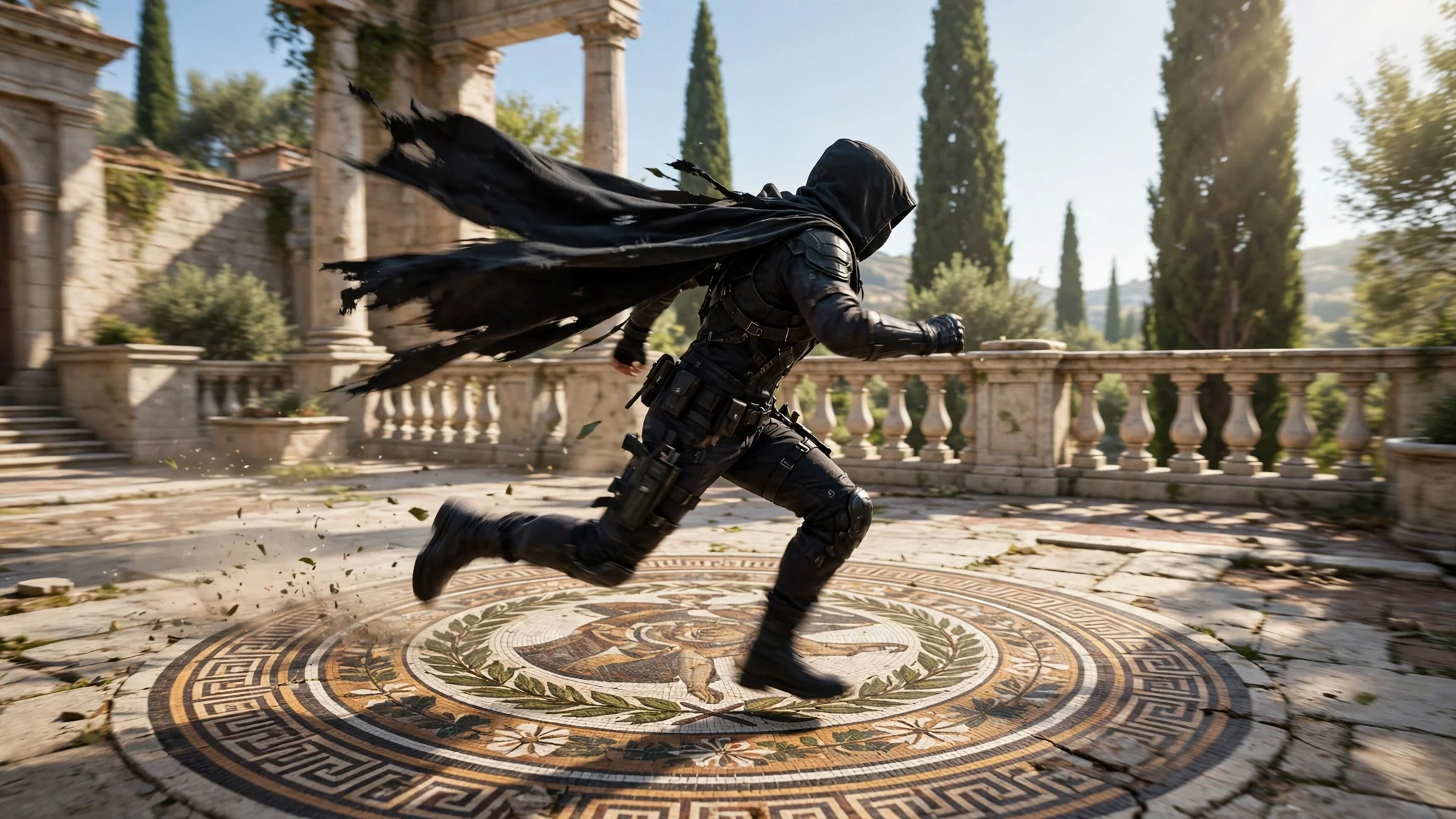
The clip is 42 seconds long and almost entirely wordless, which may be why it traveled so well. A dark-clothed 3D character moves in real time through a sunlit, classical-style game environment — a stone courtyard with a round mosaic medallion set into the paving, a stone balustrade, tall cypress-like trees, an ornate facade. Around the middle of the clip the character walks and runs across the courtyard toward a wide staircase; near the end it approaches a tall wrought-iron gate. There is no narration, no captions, no interface chrome. Just a character, moving, in a world that looks like a game you could play.
It was posted to r/accelerate late on the evening of October 27 by u/Lord_44th__Raikage, under the flair “AI Repo,” with a title that does most of the work: NVIDIA had just open-sourced an AI that generates character movements at insane speeds, called MotionBricks, at 15,000 frames per second with 2 ms of latency. By the time the thread was read for this article it had gathered about 708 upvotes and 68 comments — and the most interesting thing about those comments is that they immediately started fact-checking the headline.
What MotionBricks actually is#
MotionBricks is a real NVIDIA Research project, presented at SIGGRAPH 2026 in a paper published in ACM Transactions on Graphics. The core idea is a single modular latent generative model that covers more than 350,000 motion clips — locomotion, object interaction, stylistic variation — instead of the usual patchwork of hand-authored animation graphs and transition tables. NVIDIA's project page describes “smart primitives” as the interface: reusable building blocks for navigation and interaction that let creators assemble new behaviors without retraining, and the model is presented as applying to new tasks zero-shot, in a plug-and-play manner.
The headline numbers come from NVIDIA itself: 15,000 frames per second of throughput and 2 ms of latency, with a 2:40 uncut Unreal Engine 5 demo on the project page. The same model that drives the animated character on screen also drives a Unitree G1 humanoid robot, which is the part that makes the project more than a games story: one backbone for virtual characters and physical robots.
What you can actually download#
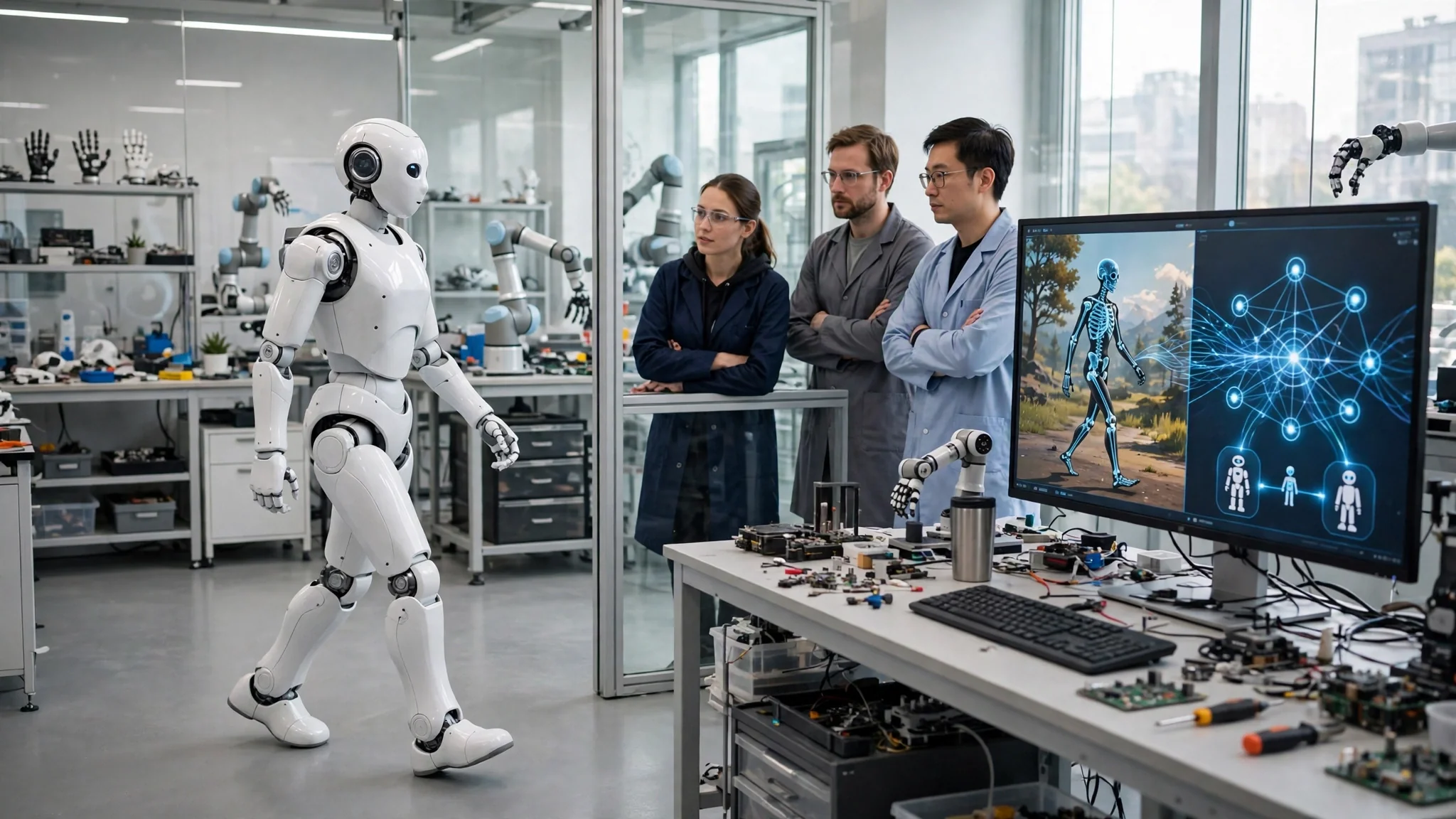
The post's one substantive comment is from the original poster, and it is the link that matters: the official repository at github.com/NVlabs/motionbricks. NVIDIA's project page confirms the release in its own words — the full release is now public, with the model embedded in the company's GR00T Whole-Body Control robotics effort, and the standalone repo shipping the MotionBricks runtime with Warp, Newton, and TensorRT backends, pretrained SOMA and Unitree G1 models, a standalone ONNX exporter, interactive demos, and a Smart Primitive Editor and Scene Editor for authoring reusable interactions without retraining. The code is under Apache 2.0 and the weights under NVIDIA's Open Model License. An earlier preview release remains available inside the GR00T-WholeBodyControl repository, with an interactive G1 demo and a self-contained synthetic training pipeline.
That is a genuinely usable package, and it explains the top comment in the thread, from u/pleasetrimyourpubes with 87 upvotes: “I can't believe I have lived to see this shit. It's like I put off all my game ideas because to realize it would require thousands of animators and modellers. And here we are.” The second-ranked comment asks the obvious follow-up — whether it can do animals — and the fourth is already dreaming about fighting games with realistic damage and physics. The excitement is not about a video. It is about a tool that might delete a whole category of production work.
The argument in the thread#
But the thread is also, usefully, arguing with itself. The sharpest objection targets the word “just.” One commenter wrote: “Please stop saying 'just open sourced' if it has been months. I played with it like 2 month ago and was like meh it's not fully cooked.” The replies split: one says the release in question is a different NVIDIA project from about five days earlier; another says the demo clip dates to June. Both can be true at once, because the rollout was staggered — paper and demo in the summer, a preview inside GR00T, and now the full standalone repo — and “just open-sourced” flattens that history into a single moment. This article puts no date on the repo release: the sources checked do not agree on one. What is verifiable is that the code is public now and the thread is reacting to it now.
The second objection is about the footage itself. The clip in the post carries a r/TopologyAI watermark, and commenters recognized it: “Does anyone have another example? I saw this same video for the third time already.” The third-ranked comment mocked the headline numbers against what the eye sees: “15000 fps, yet the video looks like someone with 600 ms ping. Or playing Baldurs Gate 3 with a 1060.” That is a joke, but it points at a real subtlety: 15,000 FPS is a model-throughput figure on NVIDIA's hardware, not the frame rate of a compressed Reddit video.
The most useful comments come from people who say they have tried it. One writes that it is “strictly for bipedal humanoids” and that adapting it to other forms of movement would be the interesting work. Another adds that it “lacks fingers and toes too” — the model outputs a full skeleton but renders and trains on a simplified one. None of this debunks the core claim. It bounds it, which is what a good thread is supposed to do.
What to watch#
Three things will tell whether this is a moment or a milestone. First, whether the repo gets used for something other than its own demos — the Smart Primitive Editor and the ONNX exporter are the parts that decide if MotionBricks becomes infrastructure or stays a showcase. Second, whether the robotics side keeps pace: the G1 deployment is the claim that separates this from every other animation model, and whole-body control is where it will either prove itself or stall. Third, whether the next wave of clips looks different from this one. If every MotionBricks post for the next month shows the same courtyard, the community will have its answer about how far the release really goes. If new footage starts appearing — new characters, new robots, new interactions built by people outside NVIDIA — then the argument about the date will be forgotten.
Sources: the original post by u/Lord_44th__Raikage on r/accelerate (October 27, 2026); NVIDIA's MotionBricks project page, including its code-release section; and the NVlabs/motionbricks repository. The editorial illustrations are AI-generated.