Claude Opus 5.5 made a one-minute 3D movie by writing Blender code — in 8 hours on an RTX 5090
A Reddit creator handed Claude Opus 5.5 one prompt and a mascot image. What came back was not a generated video but a Blender render built from code — a nine-shot short that took about eight hours on a single RTX 5090, and a thread full of people arguing about what it proves.
- What it is: a 1-minute, 9-shot 3D short about the Dodaios mascot, posted October 27 to r/ClaudeAI by u/InternationalGap3698 — about 495 upvotes and 75 comments at last check.
- How it was made: Claude Code with “ultracode” inside the Dodaios framework wrote Blender Python scripts; Blender’s EEVEE engine rendered 1,440 frames at 1080p and 24 fps. No video generator was involved.
- The cost: about 8 hours on one RTX 5090 for the final render, and roughly 10% of a $200-a-week plan allowance — both figures self-reported by the creator.
- The honest limit: this is a Blender render, not AI video. Commenters’ reproduction attempts fell short, and the creator shared the framework link, not the generated scripts.
The post that lit up r/ClaudeAI on Tuesday morning reads like a magic trick: one prompt, one picture, one minute of polished 3D animation. The reality, laid out by the creator in the replies, is more interesting than the trick — and more expensive. The short was not generated by a video model. It was built the old-fashioned way, by a renderer, with an AI model writing the code that drove it.
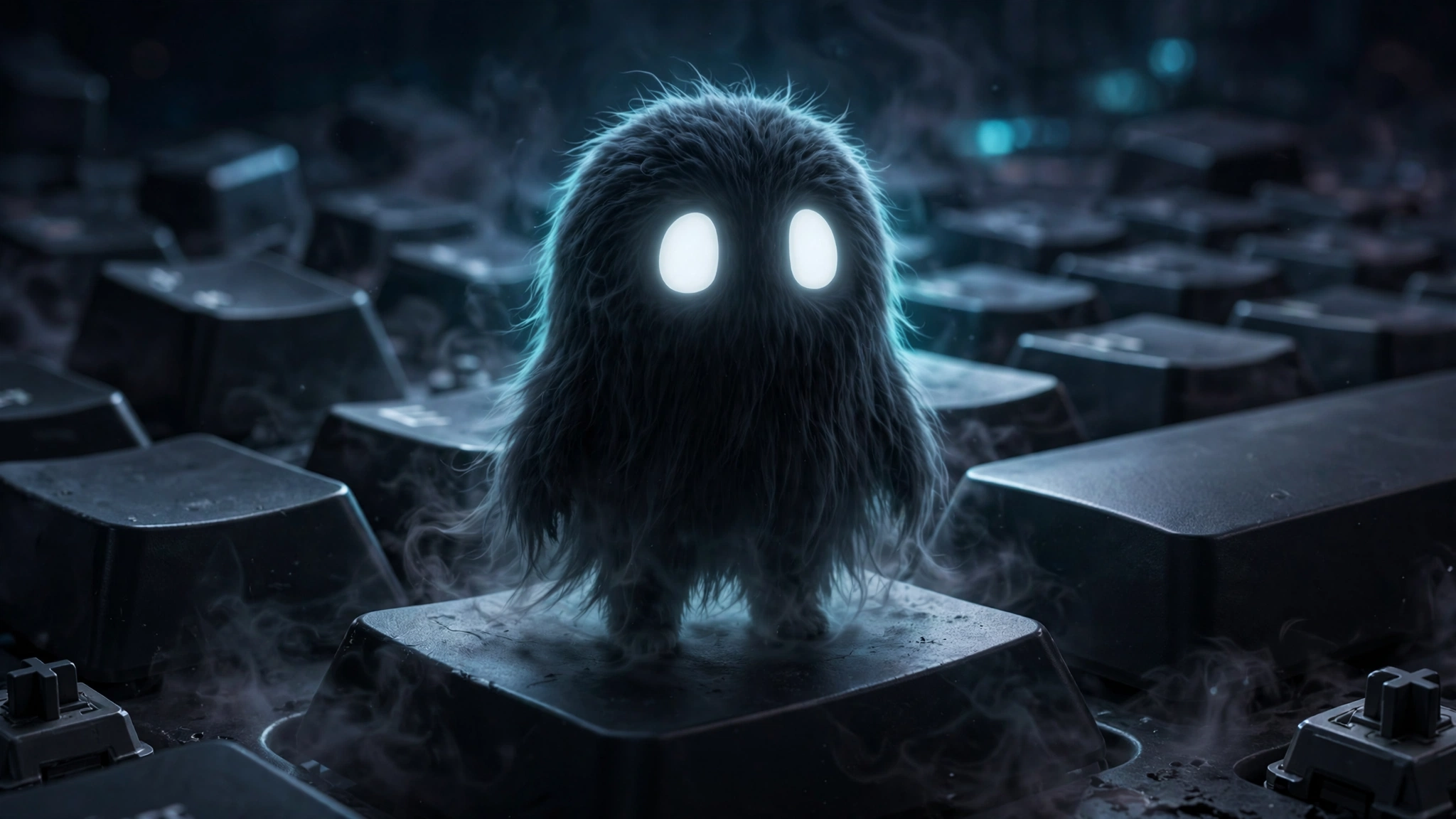
The video follows a dark, ghost-like mascot — the emblem of a project called Dodaios — through a world of oversized keyboard keys. At last check it had gathered about 495 upvotes and 75 comments. The mascot’s still image, the creator later said, was made with GPT Image 2.5; everything that moves was rendered in Blender.
How one prompt became nine shots#
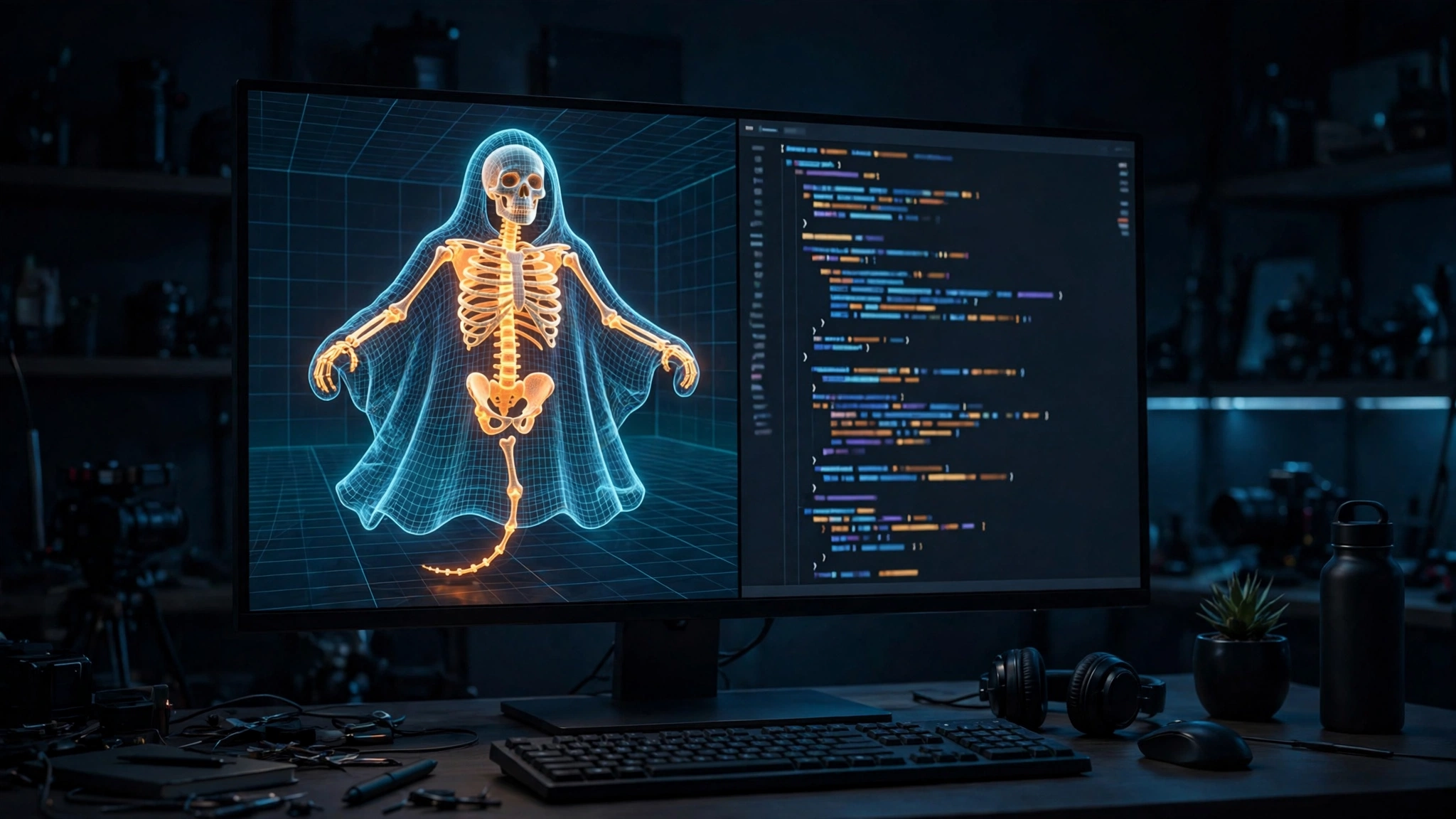
The creator’s account, given in a series of replies, goes like this. Claude Code, running with its “ultracode” command inside the Dodaios framework, first wrote a storyboard of nine shots. It then wrote Blender Python scripts for the mascot, its materials, its rig and its cloth simulation, and built the whole desk world the same way — from code, not from a modelling session. Each shot was rendered as a small preview, inspected by the model, fixed where it looked wrong, and rendered again. The final pass ran headless in Blender’s EEVEE engine at 1080p and 24 frames per second, and ffmpeg stitched the 1,440 frames together with sound the model had sourced from free libraries — Pixabay, Mixkit and Freesound, per the creator. No video generator was involved at any point, and the creator says no templates or skills were used either.
The eight-hour catch#
Here is the part the headline skips. The final render alone took about eight hours on a single RTX 5090, according to the creator — and that is only the rendering, not the agentic build loop that preceded it. The creator also says the job used roughly 10 percent of a $200-a-week plan allowance. Both figures are self-reported: the creator told one commenter he did not know how to check an exact token count. The honest accounting matters because the post’s title invites a simpler reading — that Opus 5.5 now “makes movies” on demand. What it actually did, on this evidence, is act as a tireless junior 3D artist: writing code, looking at previews, and fixing mistakes until the frames were good enough.

What the comments got right#
The thread’s most useful work was definitional. When one commenter dismissed the clip as more AI video, another answered that it is not AI video at all — it is a Blender render, and the distinction is the whole story. The subreddit’s automated summary, generated after 50 comments, landed in the same place: a legitimate but highly complex technical achievement, not a simple prompt-to-video feature, with Claude acting as an expert coder automating a 3D pipeline rather than magically rendering video.
Not everyone could follow the recipe. One commenter reported feeding the same prompt to Opus 5.5 on maximum reasoning and getting something far weaker, and suspected hidden tooling; the creator answered that the only tool named was Blender. Another commenter, who gave Opus 5.5 a fully rigged character of his own and asked for a single pose, described an awkward, unbalanced result that burned through most of a session’s tokens. A third critique was artistic rather than technical: the storytelling is hard to follow in places, and some shots read as beautiful screensaver material rather than a story. None of that debunks the short — the video exists, the pipeline is described in unusual detail, and the creator answered questions within about forty minutes of posting — but it does set the bar for what “reproducible” means here. The same prompt is not the same pipeline. In the thread so far, the only link the creator shared was the Dodaios framework repository, not the generated scripts themselves.
Why it matters#
The reason this clip travels further than a prettier demo is what it suggests about where coding agents are useful. Writing Blender scripts is exactly the kind of long, fiddly, error-prone work that agents are bad at in one shot and good at in a loop — write, render, look, fix, repeat — provided someone is willing to pay for the loop in time and compute. Eight hours on a flagship GPU for sixty seconds of footage is not a production pipeline yet. It is a proof that the loop closes at all, on a task most people assumed needed a human animator. Related experiments on this blog point the same way: a Claude-built mod that turned Valheim into a city builder, and a tiny 4B model learning to write Three.js scenes — both cases where the model writes code and something else does the rendering.
What to watch#
Three things will decide whether this is a curiosity or a craft. First, whether anyone reproduces the result end to end — same framework, same loop, comparable quality — rather than just admiring it. Second, whether the generated scripts or a fuller build log appear, so the pipeline can be inspected rather than taken on trust. Third, whether the loop gets cheaper: shorter renders, smaller models, or better first-pass code would turn an eight-hour experiment into something a creator could actually use. Until then, the fair summary is the thread’s own: not a movie button, but a working demonstration that a coding agent, a renderer, and a lot of patience can make a minute of cinema.
Sources: the original post by u/InternationalGap3698 on r/ClaudeAI; the Dodaios framework repository on GitHub, linked by the creator in the thread. The editorial illustrations are AI-generated.