A 17 MB self-hosted Netflix built with Claude Code passed 1,500 GitHub stars in nine days
Six apps, six logins, six ports, six update cycles — that is the normal price of running a home media server. On Wednesday morning, a developer who goes by CoderLuii posted an update to r/ClaudeAI about the app he built to replace all six of them, and the numbers in the post did the talking: a single download of about 16 megabytes, built with Claude Code, that had collected more than 1,500 GitHub stars and 24,000 Docker pulls in nine days.
- The post: r/ClaudeAI, Wednesday November 18, 6:21 a.m. EST, u/CoderLuii; about 490 upvotes and 110 comments within two hours — the fastest-moving post in the morning's sweep of the AI subreddits.
- The repo: github.com/HolyArrs/HolyArrs, public since November 9; 1,544 stars, 26 releases and 82 forks when checked Wednesday morning; AGPL-3.0.
- The size: about 16.1 MB to download and ~95 MiB of RAM idle on a fresh install, per the project's README; the six apps it replaces total 685.0 MB.
- The numbers: 24,174 Docker pulls (Docker Hub, Wednesday morning); 309 closed issues on GitHub; the developer reports 299 Discord members and 533 people signed up for updates.
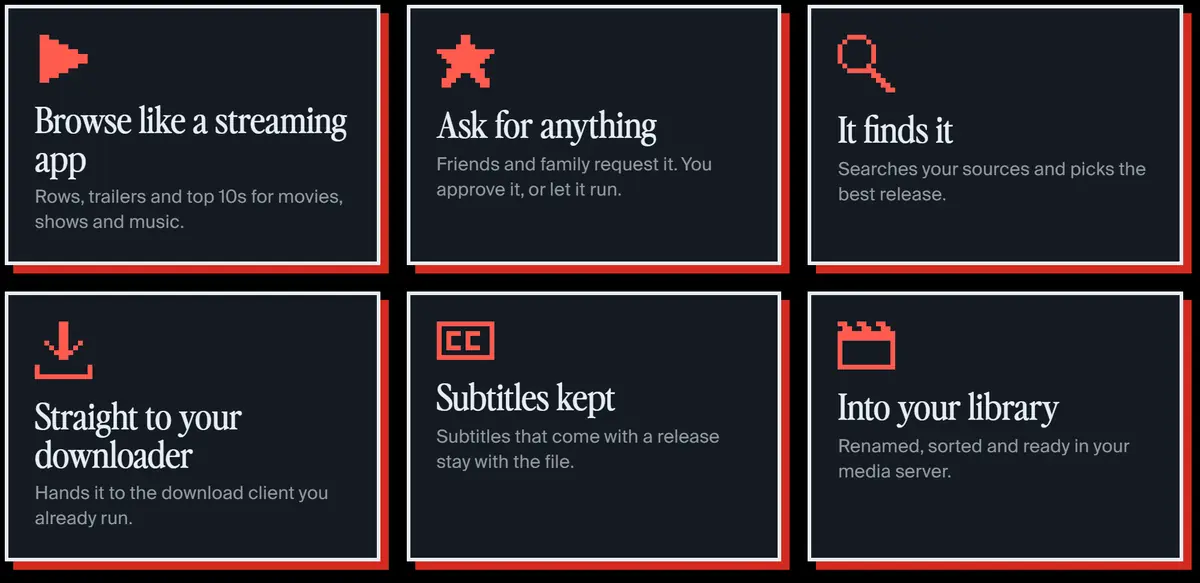
- What it does: one login, one port (6262), requests, pick rules, subtitles, calendar, alerts and an MCP server; imports existing setups from Sonarr, Radarr, Lidarr, Prowlarr, Bazarr, Seerr, Overseerr, qBittorrent and SABnzbd.
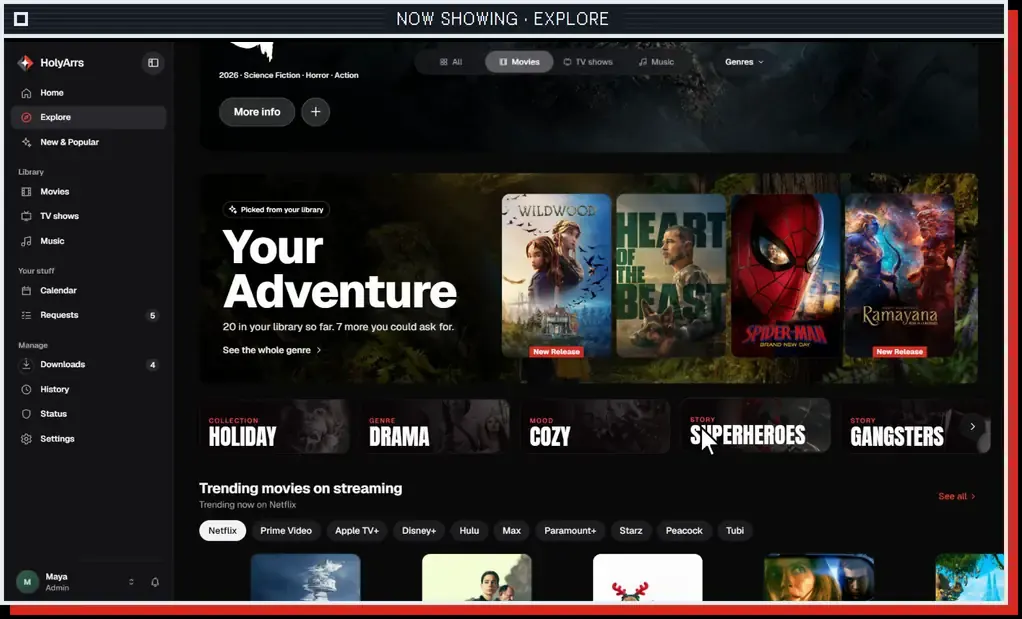
The pitch is simple enough to fit in a sentence: six apps become one. A home media server normally runs Sonarr to find TV, Radarr for movies, Lidarr for music, Bazarr for subtitles, Prowlarr for indexers and Seerr — or Overseerr — for requests. Six logins, six ports, six update cycles, six sets of API keys copied between them. HolyArrs folds all six jobs into a single Go binary that the developer says downloads at about 16 megabytes and idles at roughly 95 MiB of RAM. The project's own comparison puts the six apps it replaces at 685 MB combined — about 43 times the download.
What it actually replaces#
It works with the setup people already have rather than replacing it. HolyArrs hands downloads to qBittorrent, SABnzbd, Transmission or the other clients it supports, and hands finished files to Plex, Jellyfin or Emby for watching. It can import an existing Sonarr, Radarr or Prowlarr configuration instead of asking the user to rebuild it, and it exposes the older apps' APIs so dashboards that expect Seerr or Prowlarr keep working. Requests can come from the app itself or from a Plex friend's watchlist, and the current release adds an MCP server, 4K requests that need the owner's approval, and the ability to run without a metadata server or a TMDB key of your own. The developer says it is available in 44 languages.
Why it caught fire#
The numbers explain the velocity. The repository went public on GitHub on November 9. By Wednesday morning it had 1,544 stars, 26 releases and 309 closed issues — and Docker Hub showed more than 24,000 pulls. The developer's update post, published at 6:21 a.m. EST, credits the pace to long days — he says he worked 16 or more hours a day — and to the users who filed bugs and fixes: 26 releases and 309 closed issues in nine days is a changelog written in public. The project also carries a “#1 on Show HN” badge, and the developer reports 299 people in the Discord and 533 signed up for updates.
It helps that this is not the developer's first viral tool. CoderLuii — the handle behind HolyArrs — previously built HolyClaude, a Dockerized environment for running Claude Code in the browser, which he wrote in August had reached 2,478 GitHub stars. HolyArrs is the same playbook applied to a different itch: take a stack of tools everyone tolerates, rebuild it as one small thing, and let the users do the testing.
What Reddit checked — and what it flagged#
The top comments did the usual Reddit job of stress-testing the headline. The most important correction is one the developer made himself, repeatedly: HolyArrs does not replace Plex or Jellyfin. It replaces the six management apps; the player stays. The 17 MB figure drew a question too — how can a whole media stack fit in less than a music file? — and the answer is in the architecture: a single Go binary with no runtime, operating system or database server inside it, where the *arr apps run on .NET and carry a database, at 400 to 500 MB on disk each. One commenter offered the cheaper alternative of Stremio with torrentio and Real-Debrid, which is a fair comparison for anyone who does not want to self-host at all.
The caveats are real and the developer does not hide them. He calls the app “still in beta with rough edges”, and GitHub backs that up: 91 issues were still open on Wednesday morning against the 309 closed. There is no built-in downloader yet, no phone or TV app, and music browsing in the Explore screen is still being built. And the metadata — posters, trailers, scores — comes from a server the developer runs and pays for himself, which is free for users but is a single point of failure the project would have to survive if he ever stopped. The counterweight is that the app can fall back to your own keys or your own server.

What to watch#
Three things will decide whether HolyArrs is a moment or a fixture. First, whether the release pace survives contact with ordinary life — 26 releases in nine days is a sprint, and sprints end. Second, whether the metadata server and the single-maintainer model hold up as the user base grows past the early adopters who enjoy filing bugs. And third, whether the pattern repeats: an individual developer, an AI coding agent, and a stack of unloved tools rebuilt as one small binary. If HolyArrs keeps its trajectory, the *arr apps will not be the only incumbents watching a 16 MB download.
Sources: r/ClaudeAI (November 18, 2026); GitHub — HolyArrs/HolyArrs (accessed November 18, 2026); Docker Hub — holyarrs/holyarrs (accessed November 18, 2026); CoderLuii on DEV (August 13, 2026).