LG CNS finishes a 30MW AI data centre in Jakarta, fully booked before completion — and a 400MW expansion is next
LG CNS has completed a 30-megawatt hyperscale AI data centre in Jakarta, Indonesia, with customers already secured for its entire capacity before construction finished. The company announced the completion on November 2, 2026, calling it the first time a South Korean company has directly built an overseas client’s AI data centre on site — and it is already designing a follow-on phase that would expand the site to 400 megawatts.
- What and where: a 30-megawatt hyperscale AI data centre in Jakarta, Indonesia, completed by LG CNS and announced on November 2, 2026.
- First of its kind: LG CNS says it is the first case of a South Korean company directly building an overseas client’s AI data centre on site.
- Client: KMG, a joint venture between Indonesia’s Sinar Mas Group and Korea Investment Real Asset Management, which commissioned the project last year.
- Demand: customers equivalent to the facility’s full 30-megawatt capacity were secured before construction finished.
- Power and cooling: a power system supplying more than 300 kilowatts per rack — about 60 times a typical data-centre rack, according to LG CNS — with duplicated backup power, and a hybrid air- and liquid-cooling design.
- What’s next: design work is under way for later phases that would expand total receiving capacity to 400 megawatts, with further AI data-centre business planned across Asia-Pacific.
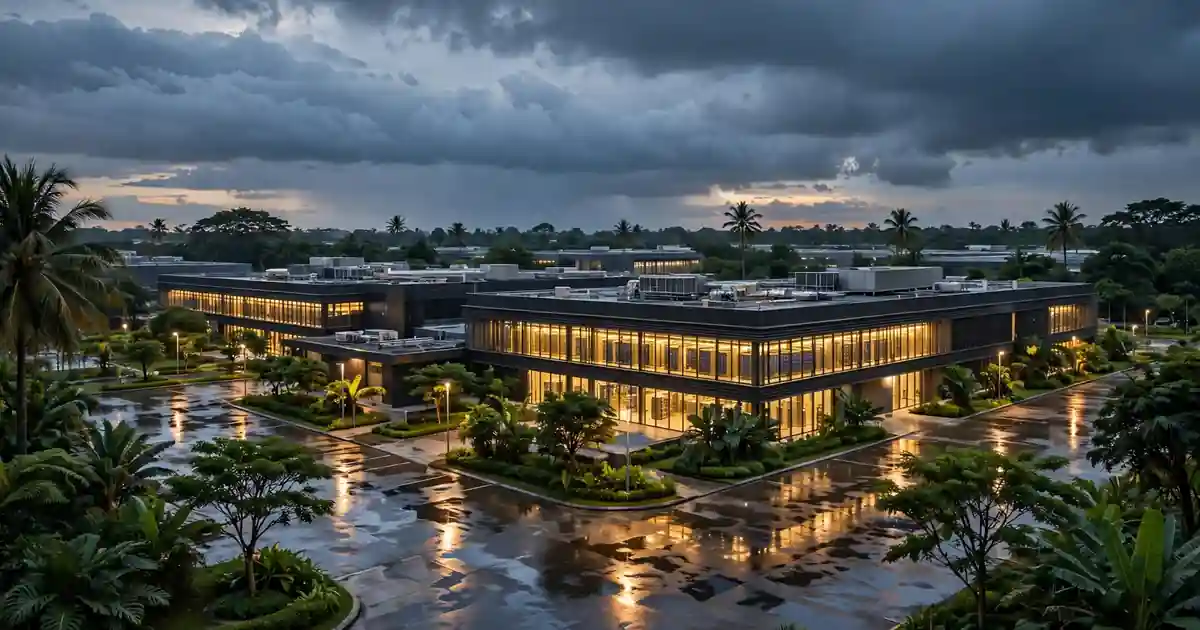
LG CNS announced on November 2 that it has completed a 30-megawatt hyperscale AI data centre in Jakarta, Indonesia, built to support high-performance computing on next-generation graphics processing units. The project was commissioned by KMG, a joint venture between Indonesia’s Sinar Mas Group and Korea Investment Real Asset Management, which ordered the facility last year.
The headline number is not just the 30 megawatts. LG CNS said it had secured customers for the facility’s entire capacity before construction finished — the demand arrived before the building did. The company describes the project as the first instance of a South Korean company directly constructing an AI data centre overseas for a foreign client, a proof point it plans to reuse as it pitches similar work across the region.
Built for next-generation GPUs#
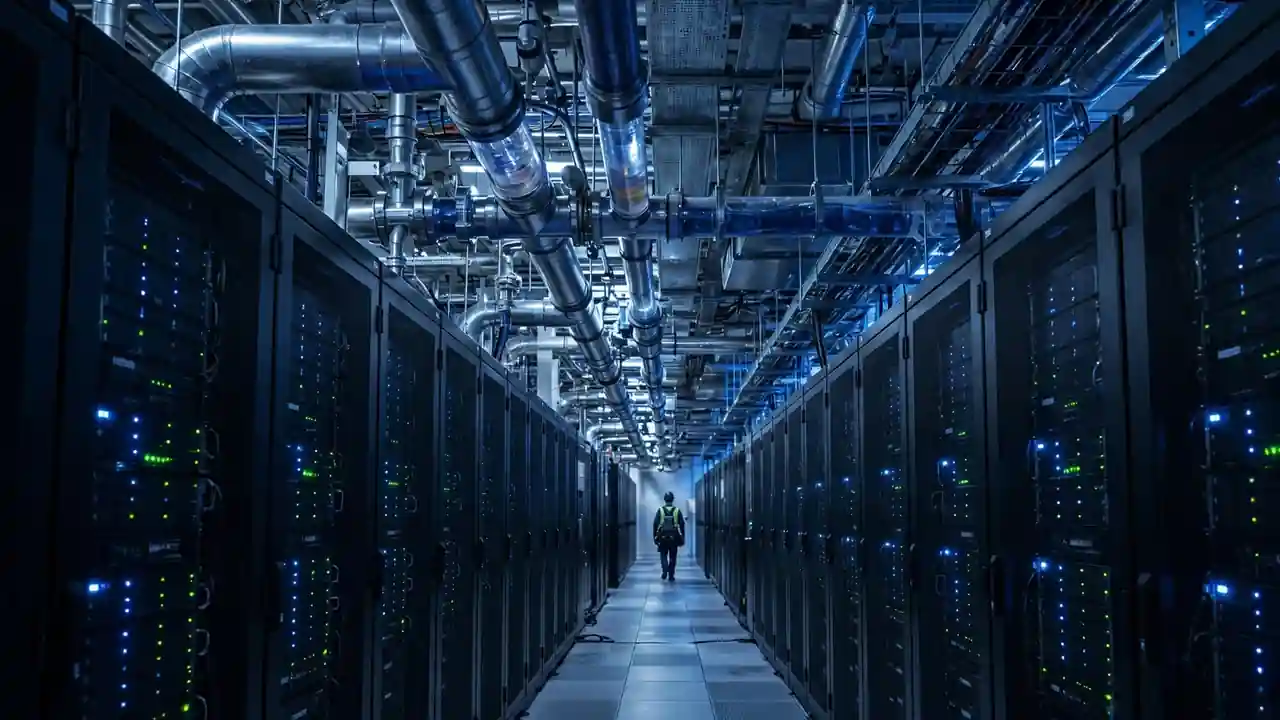
AI servers run hot, and the Jakarta facility is designed around that. LG CNS adopted a hybrid cooling structure combining air cooling and liquid cooling: the first phase uses an air-cooling system, with liquid cooling to be added in later phases. The power system can supply more than 300 kilowatts per rack — about 60 times a typical data-centre rack, according to LG CNS — and the power infrastructure is duplicated so backup power can take over if the main supply is cut.
The build also leans on the wider LG Group. Under what LG CNS calls the “One LG” integrated solution, its own design, build and operate capabilities were combined with LG Electronics’ heating, ventilation and air-conditioning systems and LG Energy Solution’s battery technology, delivering power, cooling and energy infrastructure as one package rather than three separate procurements.
A 400MW sequel, and a regional playbook#
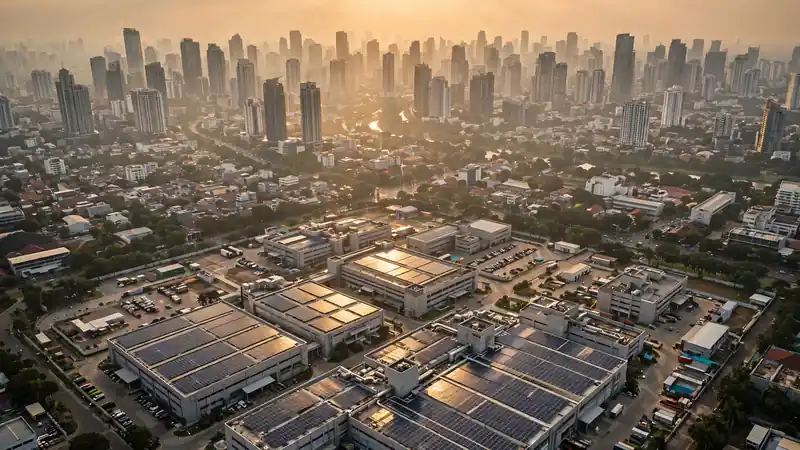
LG CNS is already designing the next construction phase. Once the later phases are completed, the site’s total power receiving capacity is expected to expand to 400 megawatts — more than thirteen times the first phase — which would make it one of Indonesia’s largest AI data centre facilities. No completion date for the expansion has been given, and LG CNS has not named the tenants who booked the first phase.
The company plans to use the Jakarta project as a reference for expanding its AI data-centre business across Asia-Pacific, naming Malaysia, Thailand, Vietnam, the Philippines and Japan as target markets. At home in South Korea, it is expanding beyond colocation and design-build-operate work into prefabricated modular data centres, GPU subscription services and liquid-cooling infrastructure, alongside an AI factory business linked to AI platforms and services.
What this proves#
LG CNS chief executive Hyun Shin-gyun said the Jakarta build proves in the global market the data-centre capabilities the company accumulated in South Korea, and called it a bridgehead for expanding its AI data-centre and AI factory businesses in global markets including Asia-Pacific. The claim is testable in a way many AI infrastructure announcements are not: a second, much larger phase either gets built on this site, or it does not. For now, the concrete facts are the completed 30 megawatts, the full booking before completion, and a 400-megawatt design already under way.
Frequently asked questions
Is the Jakarta data centre open, and who is it for?
LG CNS announced on November 2, 2026 that construction of the 30-megawatt facility is complete. It was commissioned by KMG, a joint venture between Indonesia’s Sinar Mas Group and Korea Investment Real Asset Management, and LG CNS said customers for the full capacity were secured before construction finished. LG CNS has not named the tenants.
Why does the facility need more than 300 kilowatts per rack?
The data centre is designed to support high-performance computing based on next-generation graphics processing units, which produce far more heat than typical servers. LG CNS built a power system supplying more than 300 kilowatts per rack — about 60 times a typical data-centre rack, according to the company — with duplicated power infrastructure for backup, and a hybrid air- and liquid-cooling design.
How big could the Jakarta site become?
LG CNS is designing later construction phases that would expand the site’s total power receiving capacity to 400 megawatts, more than thirteen times the completed 30-megawatt first phase. No completion date for the expansion has been given. The company also plans to expand its AI data-centre business across Asia-Pacific, including Malaysia, Thailand, Vietnam, the Philippines and Japan.