SWI Compute exits stealth with 3.6 GW of power and ~$1B in NVIDIA orders for European AI factories
- Who: SWI Compute, a new AI infrastructure company inside Euronext Amsterdam-listed SWI Group (ticker SWICH), led by CEO Halil Mirakhmedov.
- What: Emerged from stealth to build and operate NVIDIA AI factories, launching first in Europe, after becoming a Preferred NVIDIA Cloud Partner in August 2026.
- When: Announced October 26, 2026, in a PR Newswire release datelined Singapore and Amsterdam.
- Power: 3.6 GW of power capacity secured across Europe and the US, across 24 sites, after six years acquiring grid access; five European campuses in Ireland, the UK, Denmark, Spain and Italy.
- Orders: Approximately $1 billion in NVIDIA systems ordered, with contracts finalized with its first customers; the first customer is described only as a US-based AI inference platform.
- First site and roadmap: A 30 MW UK factory with close to 7,000 Rubin GPUs and 3,500 Vera CPUs in Vera Rubin NVL72 racks, due online by the end of 2027; the UK campus grows to 530 MW, toward 2.3 GW of NVIDIA AI factory capacity by 2029.
SWI Compute emerged from stealth on October 26, 2026, to build and operate NVIDIA AI factories, launching first in Europe. The new company, part of Euronext Amsterdam-listed SWI Group, says it has 3.6 gigawatts of power capacity behind it, about $1 billion in NVIDIA systems on order, and contracts signed with its first customers. The pitch is blunt: in Europe, the binding constraint on AI is no longer the model — it is the megawatt.
Power first, then GPUs
SWI Compute's argument starts with the grid, not the chip. SWI Group says it has spent six years securing power capacity across Europe and the US, and began investing in land, power and shell in 2020. Today it holds 3.6 GW of capacity, with five European campuses in Ireland, the UK, Denmark, Spain and Italy — one of them already leased to a major hyperscaler. The company develops its own sites from grid connection to commissioning, and says the power is contracted and the systems are on order.
That power foundation is what the company became a Preferred NVIDIA Cloud Partner to exploit: it joined the program in August 2026, and says that within two months it had placed approximately $1 billion in NVIDIA systems orders and executed its initial client contracts. Chief executive Halil Mirakhmedov put it plainly: “Energy availability represents the primary bottleneck facing European AI infrastructure.”
The Cambridge starting point
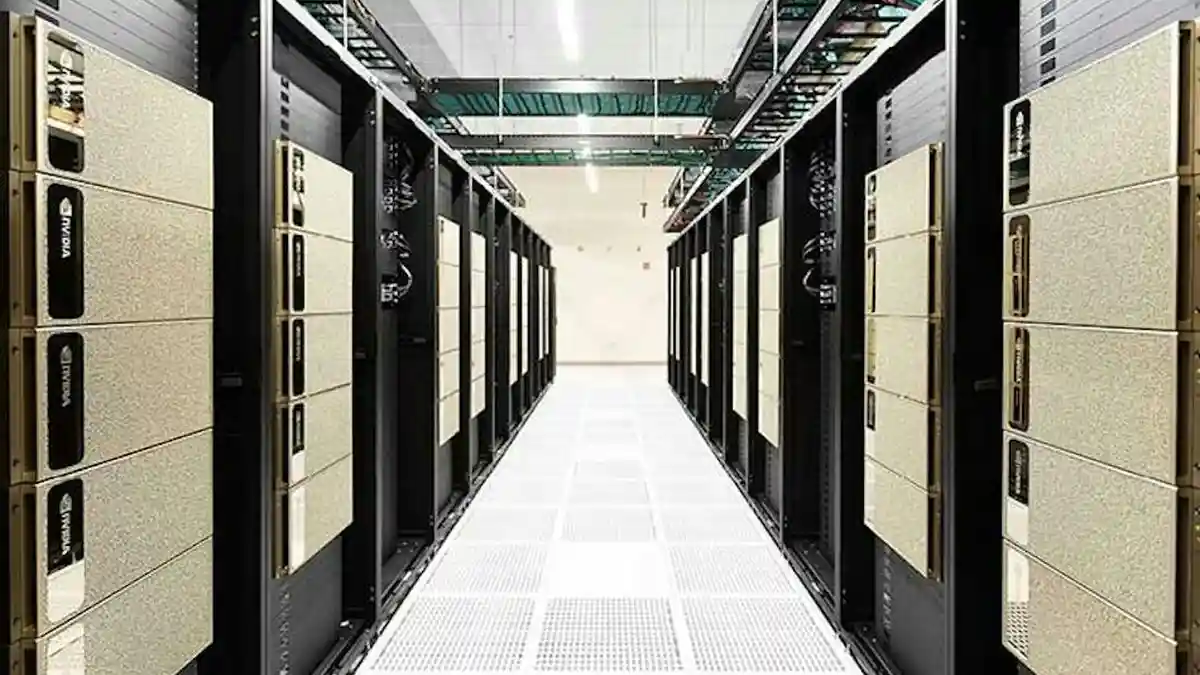
The first large-scale factory is in the UK, at a site Unite.ai identifies as Cambridge. It starts at 30 MW, with close to 7,000 Rubin GPUs and 3,500 Vera CPUs in NVIDIA Vera Rubin NVL72 racks, and is expected to come online by the end of 2027. The racks are connected by NVIDIA Quantum-X800 InfiniBand and NVIDIA Spectrum-X Ethernet networking.
That 30 MW is only the first phase. The UK campus is planned to grow to 530 MW, and the company says it is the first step toward 2.3 GW of NVIDIA AI factory capacity by 2029. Starting in the fourth quarter of 2027, its next generation of AI campuses across Europe is scheduled to come online, with thousands of GPUs planned for deployment. The first deployment runs NVIDIA Blackwell Ultra systems, with Vera CPU racks to follow, and Delta Computers serves as systems integrator alongside storage partners, to deliver more than 8,000 GPUs.
What DSX changes
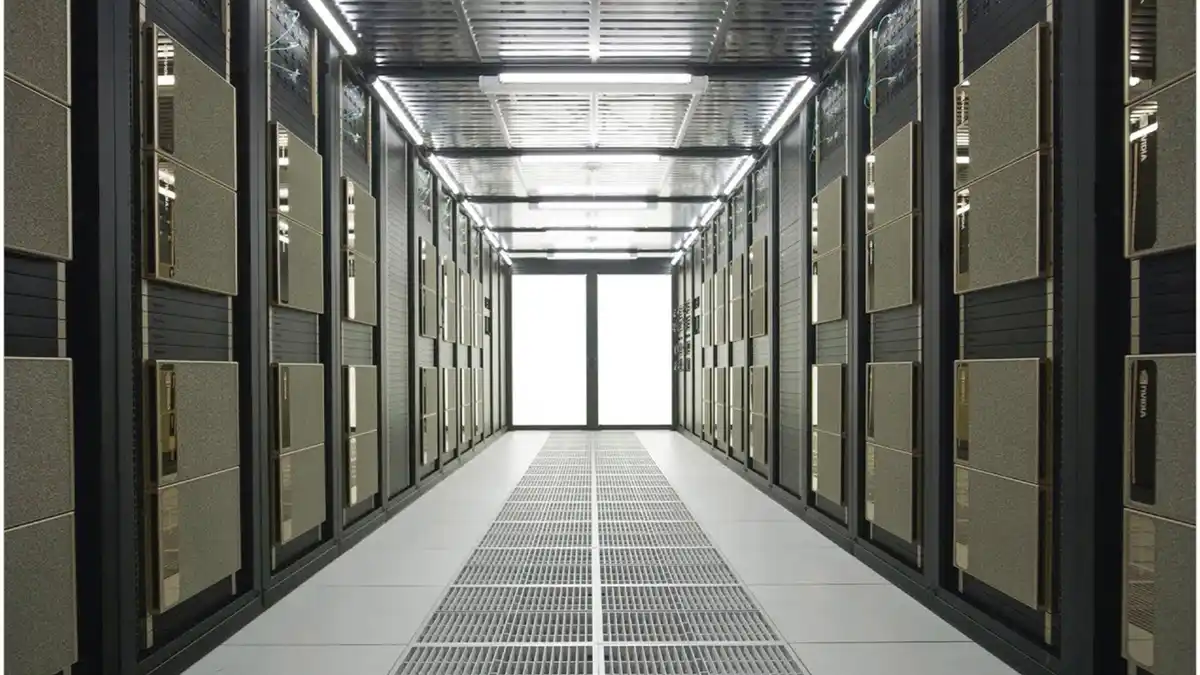
Every SWI Compute site is built to NVIDIA reference architectures, but the company says its next generation will go further: it will design, build and operate its AI factories with the full-stack NVIDIA DSX AI Factory Platform, which codesigns compute, networking, power and cooling as one integrated system. Every new site from 2027, starting with the UK campus, will follow the NVIDIA Vera Rubin DSX AI Factory reference design.
The headline claim for DSX is that, on Vera Rubin NVL72, it can enable up to 40% more GPU capacity within the same power budget. That is a vendor-platform claim, not an independently tested result — but if it holds anywhere near that figure, it matters more than any single order, because power, not silicon, is the rationed input. SWI Compute frames an AI factory's earnings the same way: tokens produced per megawatt, years of productive life, and range of workloads, from pretraining to agentic inference, simulation and scientific computing.
Who it is for — and what is still unproven
SWI Compute says it is built for Europe's AI natives, AI labs and enterprises, offering dedicated and on-demand access to NVIDIA AI factories close to their users and data and under European jurisdiction. Its case is that much of Europe's AI building so far has run on capacity outside Europe, and the capacity that exists has been committed first to global hyperscalers and frontier labs able to sign multi-year contracts at scale — leaving AI natives with frontier ambitions and startup balance sheets with the hardest time securing it. Its first customer, a US-based AI inference platform, has contracted capacity, the company says.
What the announcement does not say is equally important. It names no customers, discloses no contract values, and puts the order figure at “approximately” $1 billion. The 40% DSX figure is a platform claim, and the 2.3 GW roadmap is a target, not installed capacity. The things to watch are concrete: whether the Cambridge site comes online on time at the end of 2027, whether the next-generation campuses follow in the fourth quarter of 2027, and whether contracted customers turn into utilized, paying capacity. NVIDIA's vice president of global AI infrastructure growth, Nico Caprez, endorsed the plan, saying: “AI factories are essential infrastructure that turn regional energy into intelligence and economic opportunity.” SWI Group founder and chief executive Max-Hervé George called the new company the final piece of the stack: “SWI Group is now a transatlantic, vertically integrated digital infrastructure company, from the grid connection to the GPU.”
The original announcement is SWI Group's PR Newswire release, covered by Unite.ai.
Frequently asked questions
What is SWI Compute?
SWI Compute is a new AI infrastructure company inside SWI Group that builds and operates NVIDIA AI factories, offering dedicated and on-demand access to Europe's AI natives, AI labs and enterprises, close to their users and data and under European jurisdiction.
When does the first AI factory come online, and how big is it?
The first large-scale factory, in the UK, starts at 30 MW with close to 7,000 Rubin GPUs and 3,500 Vera CPUs in NVIDIA Vera Rubin NVL72 racks, and is expected to come online by the end of 2027.
What is the 2.3 GW roadmap?
The 30 MW UK buildout is the initial phase of a UK campus planned to grow to 530 MW, and the first step toward 2.3 GW of NVIDIA AI factory capacity by 2029, with next-generation campuses across Europe scheduled to come online starting in the fourth quarter of 2027.