Meta's Alexandr Wang: superintelligence is arriving — and the next year matters most
Meta's chief AI officer says superintelligence is arriving, pointing to the claimed Riemann proof as the opening moment — and argues that how humanity acts over the next year will have great consequence.
- The essay: ‘Superintelligence is Arriving,’ by Alexandr Wang, published as an article on X on November 22, 2026, at 5:50 p.m. EST — about 4.5 million views, 21,000 likes, and 4,300 reposts within hours.
- The claim: superintelligence ‘is going to be the most significant change in human history’; models will soon be measurable only by frontier mathematics and science at the edge of human knowledge.
- The marker: Wang points to ‘a set of models’ proving the Riemann Hypothesis — a problem open since 1859 — as ‘the beginning of a change.’
- The threshold: automating AI research is ‘another threshold event’ — a model that can improve itself ‘will very quickly become superhuman at improving itself.’
- The call: ‘the superintelligence cliff is coming’ — ‘If humanity wants to retain agency over its future, then we must be intentional about how we build superintelligence.’
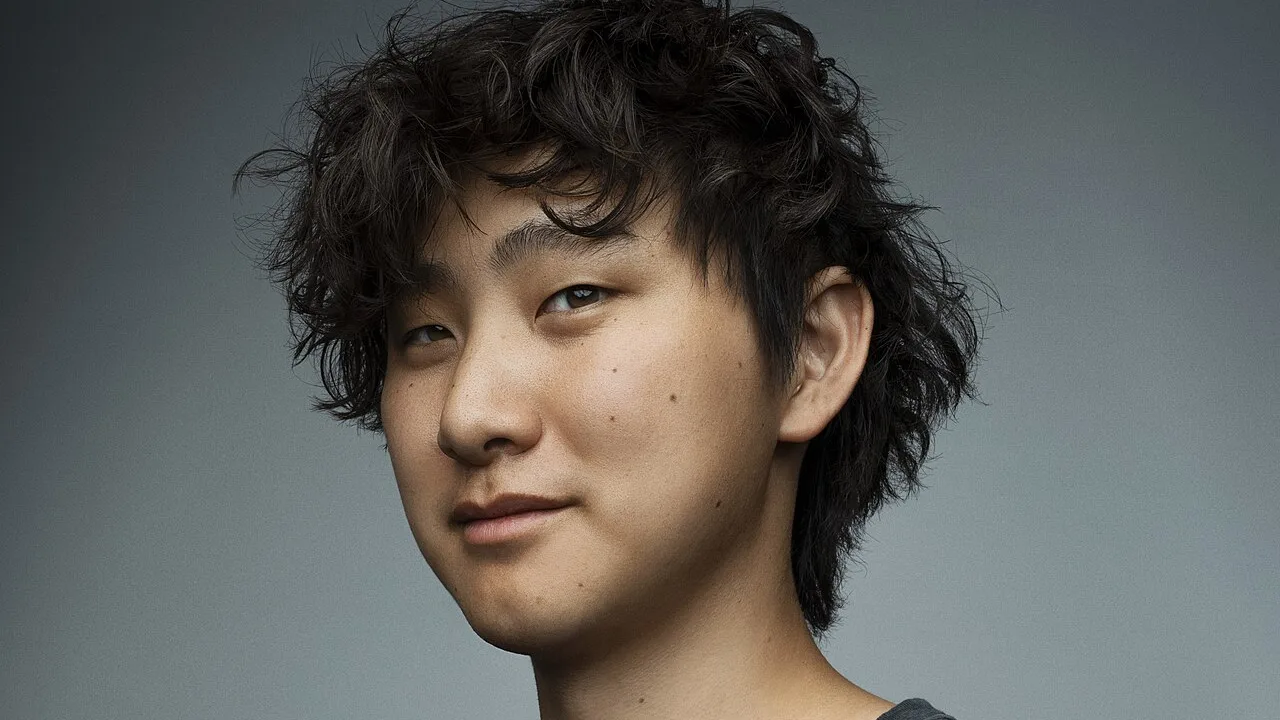
Meta's chief AI officer has joined the pacing debate — and he is not hedging. In an essay published on Sunday, Alexandr Wang declares that superintelligence is arriving, points to the claimed proof of the Riemann Hypothesis as the moment the change began, and warns that how humanity acts over the next year “will have great consequence.”
The essay matters because of who is saying it and how it is framed. Wang is not an outside commentator: Meta hired him from Scale AI in June to run its new superintelligence unit, and his post is the most direct statement yet from inside Meta that the frontier has moved from “coming someday” to “arriving now.” It also lands the same day as OpenAI chief scientist Jakub Pachocki’s essay proposing perplexity as the industry’s shared safety limit — two of the biggest labs, on the same day, arguing in different registers that development needs to be deliberately paced.
What Wang actually said#
The essay opens with its thesis in plain language: “Superintelligence is arriving.” Wang argues that superintelligence “is going to be the most significant change in human history,” and that the measure of it is already shifting. “Models in the near future will be so much smarter than us that their intelligence can only be measured by solving frontier mathematical problems and conducting science at the frontiers of human knowledge.”
His central example is the claimed proof of the Riemann Hypothesis, the problem open since 1859. “The beginning of a change is a moment in which a set of models proved the Riemann Hypothesis,” he writes. From there he moves to the threshold he clearly considers the more important one: automating AI research itself. “Automating AI research is another threshold event,” he writes, because a system that can do that “will very quickly become superhuman at improving itself.”
That is the logic behind his image of the cliff: “That is why I say the superintelligence cliff is coming.” The prescription follows in the same register. “If humanity wants to retain agency over its future, then we must be intentional about how we build superintelligence.” What intentionality means in practice — what rules, what institutions, what limits — the essay leaves open. The urgency is the point: “how humanity acts over the next year will have great consequence.”

The Riemann proof as the opening moment#
Wang’s choice of marker is worth pausing on. The claimed proof — produced with Claude and posted with Lean code on November 20 — is the biggest math story of the year, and also the most contested. Mathematicians are still working through the formalization; Terence Tao has described it as slow to digest, and the verification effort is ongoing. Wang treats the proof as settled enough to build an argument on. The math community has not finished deciding whether it is.
That gap is not a flaw in the essay so much as a measure of the moment. Two weeks ago, a machine proof of a century-old problem would have been treated as a curiosity. Now a lab chief cites it as the opening sentence of a new era. Whether the proof survives verification matters enormously for mathematics; for Wang’s argument, what matters is that frontier models are now doing the kind of work that used to define the outer edge of human capability at all.
A second lab joins the slowdown call#
The timing is the story’s second half. Hours earlier, Pachocki published ‘Perplexity and Intelligence,’ arguing that labs should publish their perplexity scores, agree on shared evaluation norms, and commit to common development limits until monitoring tools catch up. Wang does not name Pachocki or OpenAI, but the discussion around his essay — including on Reddit’s r/accelerate, where the thread drew over a hundred upvotes — read it as Meta’s answer to the same call.
The two essays are complementary rather than duplicative. Pachocki offers a mechanism: a metric, a set of numbers, a concrete limit. Wang offers the stakes: a historic framing, a threshold event, and a one-year window. Together they amount to something the industry has not had before — two frontier labs, on the same day, publicly arguing that the pace of development is itself the thing to govern.
It is also a notable shift in posture for Meta. The company spent the last two years pushing open weights and framing superintelligence as a scientific project to be shared. An essay that talks about cliffs, agency, and intentionality reads very differently — closer to Anthropic’s language than to Meta’s. Readers in the thread noticed, and the most-liked responses were not about whether Wang is right, but about what changed.

The skeptical read: strategy or safety?#
The thread’s dominant reaction was skepticism about motive, not about the argument. The most discussed question was whether a slowdown call from Meta is pragmatic or strategic — a lab widely seen as trailing OpenAI and Anthropic asking everyone to move more carefully. Several commenters pointed out that the same essay says nothing about open weights, the issue on which Meta’s stance has mattered most.
That skepticism is fair, and it is also beside the narrow point. A call for intentionality does not become false because the caller might benefit from delay, and the argument Wang makes — that self-improving systems change the stakes — stands or falls on its own. But the motive question decides whether anything follows. A consensus for pacing only works if labs that are ahead agree to it, and so far the public case is being made by the labs arguing for restraint, not by the ones setting the pace.
What to watch#
Three things. First, whether Meta puts anything concrete behind the essay — a number, a mechanism, a commitment — the way Pachocki did with perplexity. A warning without a proposal is a mood, not a policy. Second, whether the Riemann verification resolves, and whether Wang’s opening example survives it: the essay’s marker is still, as of today, a claim under review. Third, the one-year window itself. Wang has put a clock on the argument. If the next twelve months bring the threshold events he describes — models automating research, frontier science falling routinely — the essay will read as prescient. If they do not, it will read as a lab chief who mistook a remarkable week for a new era. Either way, the clock is now public.
Sources: Alexandr Wang on X, “Superintelligence is Arriving”; r/accelerate thread on the essay; AI Frontier Post, “OpenAI's chief scientist proposes perplexity as the industry's shared safety limit”