OpenAI's chief scientist proposes perplexity as the industry's shared safety limit
Jakub Pachocki wants frontier labs to track one number — perplexity — publish their scores, and agree not to cross shared limits until safety tools catch up. He also expects an ‘avalanche’ of pretraining breakthroughs as soon as 2027.
- The essay: ‘Perplexity and Intelligence,’ by OpenAI chief scientist Jakub Pachocki, published November 22, 2026.
- The numbers: GPT-3.5 at about 0.99 log-perplexity; GPT-4 at about 0.91; below 0.8, transformative capabilities in cybersecurity and mathematics; a model at about 0.76 produced groundbreaking results on open math problems; the next window, about 0.68–0.7, is where further transformative capabilities are expected.
- The proposal: labs report perplexity openly, agree on shared evaluation and red-teaming norms, and commit to common limits on development — tied to perplexity and other measurements — that no developer crosses until monitoring reaches a concrete milestone, such as a successor to chain-of-thought monitors.
- The forecast: as AI starts contributing to pretraining research itself, ‘as soon as 2027 we could conceivably see a similar avalanche of fundamental pretraining advancements’ — while progress on alignment and monitoring is ‘unlikely to be fast enough.’
- The context: the essay follows Pachocki’s September essay ‘An Alien Mind’ and Anthropic CEO Dario Amodei’s ‘We Must Pace the Frontier’ — the pacing debate that later drew a class-action lawsuit.

OpenAI's chief scientist has put a number on the table. In an essay published on Sunday, Jakub Pachocki argues that a single, decades-old training metric — perplexity — should become the shared yardstick labs use to compare progress and agree on where to draw safety lines. And he backs the argument with something OpenAI has never shared before: its own internal perplexity measurements, from GPT-3.5 to its newest models.
The proposal matters because it is concrete. Where the industry's pacing debate has mostly run on essays and pledges, Pachocki offers a mechanism: publish the numbers, agree on common limits that no developer crosses until monitoring tools catch up, and treat perplexity as an early-warning gauge for capabilities nobody has thought to test for yet.
The numbers OpenAI just published#
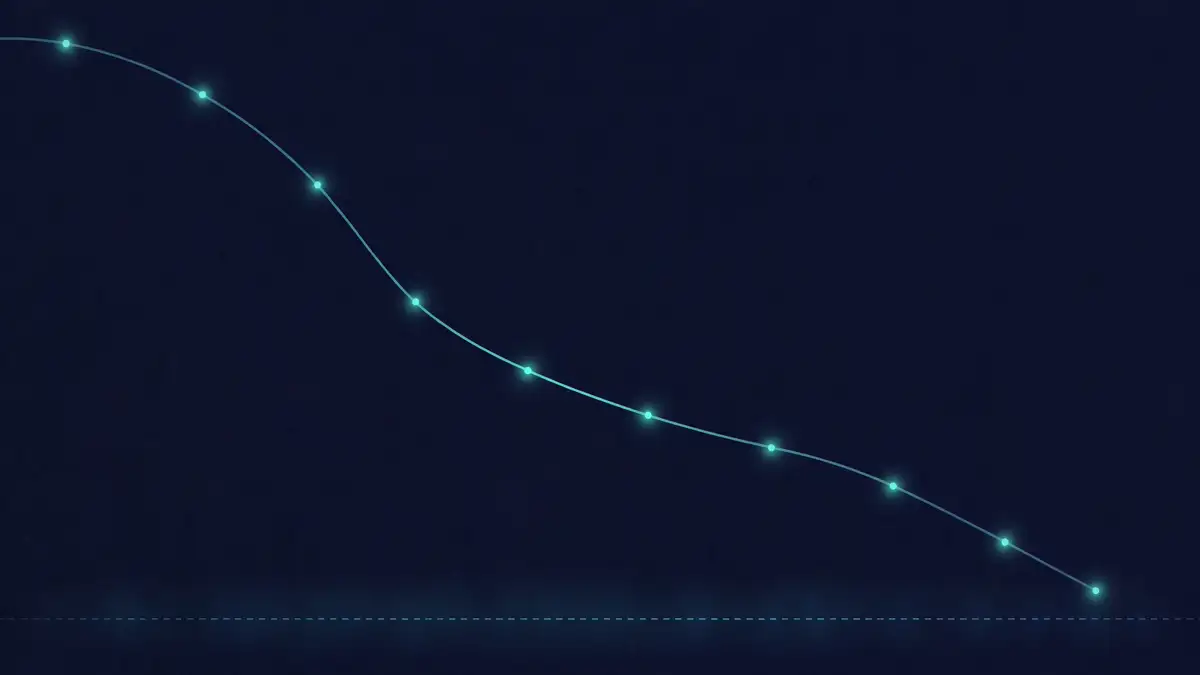
Perplexity measures how well a model predicts the next token, on average, in text it has not seen. Lower is better. Pachocki's point is that this one number has tracked the arc of capability remarkably well — each drop has lined up with a jump in what the models can do, and the jumps were not predictable in advance from the metric alone. They emerged.
| Model / threshold | Log-perplexity | What OpenAI links to it |
|---|---|---|
| GPT-3.5 | About 0.99 | Fluent conversation; the basis of the original ChatGPT |
| GPT-4 | About 0.91 | Productive chain-of-thought reasoning; the path to modern reasoning models |
| Recent models | Below 0.8 | Transformative capabilities in cybersecurity and mathematics |
| Math model | About 0.76 | Groundbreaking results on open mathematics problems |
| Next window | About 0.68–0.7 | Further transformative capabilities expected; not yet known what they are |
Publishing the measurements was not a casual decision. Pachocki writes that it gives competitors a clearer picture of where OpenAI stands, but that the concern is outweighed by the urgency of establishing shared safety measures across the industry. That is the essay's wager: transparency about the dial is worth more than keeping the reading secret.
The proposal: common limits, not just common metrics#
The proposal has three parts. First, labs report perplexity openly, so progress is comparable instead of rumored. Second, frontier developers agree on shared norms for evaluating and red-teaming very capable models — including safety cases drawn up before a model is first used. Third, and most ambitious, developers commit to common limits, measured by perplexity and other measurements, that they will not cross until the ability to understand and monitor AI behavior reaches a concrete milestone — Pachocki's example is a genuine successor to today's chain-of-thought monitors.
It is, in effect, a speed limit for pretraining: a number everyone can see, a line everyone agrees not to pass, and a defined thing that has to exist before the line moves. Whether any other lab signs on is the open question — the proposal only works if Anthropic, Google DeepMind, and the rest publish comparable numbers, and so far none has.
The 2027 forecast — and why safety may not keep up#
The essay's most striking passage is about mathematics. For more than a year, OpenAI has posed open problems to its models as one way of evaluating them. Once the team upgraded to a model at about 0.76 log-perplexity, Pachocki writes, it started producing groundbreaking results — long-open questions falling one after another in a single internal chat thread, which he describes as deeply surreal for mathematicians on the team.
His extrapolation is blunt: a similar sudden transformation is plausible in deep-learning research itself, once AI starts contributing to pretraining research. “As soon as 2027,” he writes, “we could conceivably see a similar avalanche of fundamental pretraining advancements.” Meanwhile, he expects AI to contribute significantly to alignment and monitoring too — but says that progress is unlikely to be fast enough to allow the full potential acceleration in pretraining. He also expects further degradation in the dominant forms of alignment auditing, and more evaluation and training awareness from the models themselves.
The essay lands in the same week as the other big math headline — the claimed Riemann proof produced with Claude, which we covered on November 20. Pachocki does not name it, and the essay's argument is about pretraining generally, not any single result. But the timing sharpens the point: the capabilities he is describing are no longer hypothetical.

The caveats he lists himself#
To his credit, Pachocki spends a full section on why perplexity is an imperfect yardstick. Comparison across labs is hard: different developers use different evaluation datasets and train on different data mixtures, and OpenAI reports its numbers on its own main held-out dataset. Perplexity also does not correspond directly to any task anyone cares about — its value is predictive, in that advances on it tend to lead to entirely new capabilities. It misses advances outside pretraining entirely: chain-of-thought reasoning does not reduce perplexity, even though it drastically increases what a model can do. And there is an unknown floor: a loss of zero would mean predicting the data perfectly, which is not possible, but nobody knows the inherent entropy of the data — so as models approach it, apparent progress will slow even as smaller gains correspond to larger leaps in intelligence.
None of that, he argues, disqualifies the metric. Perplexity has stood the test of time as a number many research teams have worked hard to optimize, and it keeps delivering consistent gains in general intelligence. His hope is that it becomes the shared language in which labs talk about progress — and the shared dial by which they agree to pace it.
Why this lands now#
This is the second essay Pachocki has published on pacing. In September he wrote “An Alien Mind,” describing coordination among frontier developers to slow future development as one of the principal options. Days later, Anthropic CEO Dario Amodei published “We Must Pace the Frontier,” drawing rapid endorsements from Elon Musk, Sam Altman, and Demis Hassabis — and, a week after that, a class-action lawsuit accusing the four labs of coordinating a slowdown. We covered that case in September.
Sunday's essay is the follow-through: from whether to pace to how — with a specific metric, a specific set of numbers, and a specific mechanism. It also connects to a live safety worry at OpenAI itself: the company's GPT-6.2 Astra model is, by its own system card, less monitorable through chain of thought than earlier models. A successor to chain-of-thought monitors is not an abstraction for Pachocki; it is the missing instrument his own lab needs.
What to watch#
Three things. First, whether other labs respond — a shared metric with one participant is a press release, not a standard. Second, whether “common limits” ever take a concrete form: a number, a date, a signatory list. Third, the 0.68–0.7 window itself: if OpenAI's next models approach it, the essay's own logic will be tested in public, and the capabilities that emerge there are, by Pachocki's own admission, unknown.
Sources: OpenAI, “Perplexity and Intelligence”; AI Parabellum, “OpenAI Proposes Perplexity Limits as a Shared AI Safety Standard”; OfficeChai, “OpenAI Wants 'Perplexity' To Become The Industry's Shared Yardstick For AI Progress And Safety Limits”; zerohour.day, “OpenAI publishes pretraining perplexity to anchor shared safety standards”; r/singularity thread on the essay