Meta shrinks Muse into a keychain: meet the Tamagotchi-like Muse Charm
At Connect 2026, Mark Zuckerberg closed his keynote with a palm-sized gadget that carries Meta's Muse agent on a keychain — but Meta still won't say what it costs, and the hardware isn't finished.
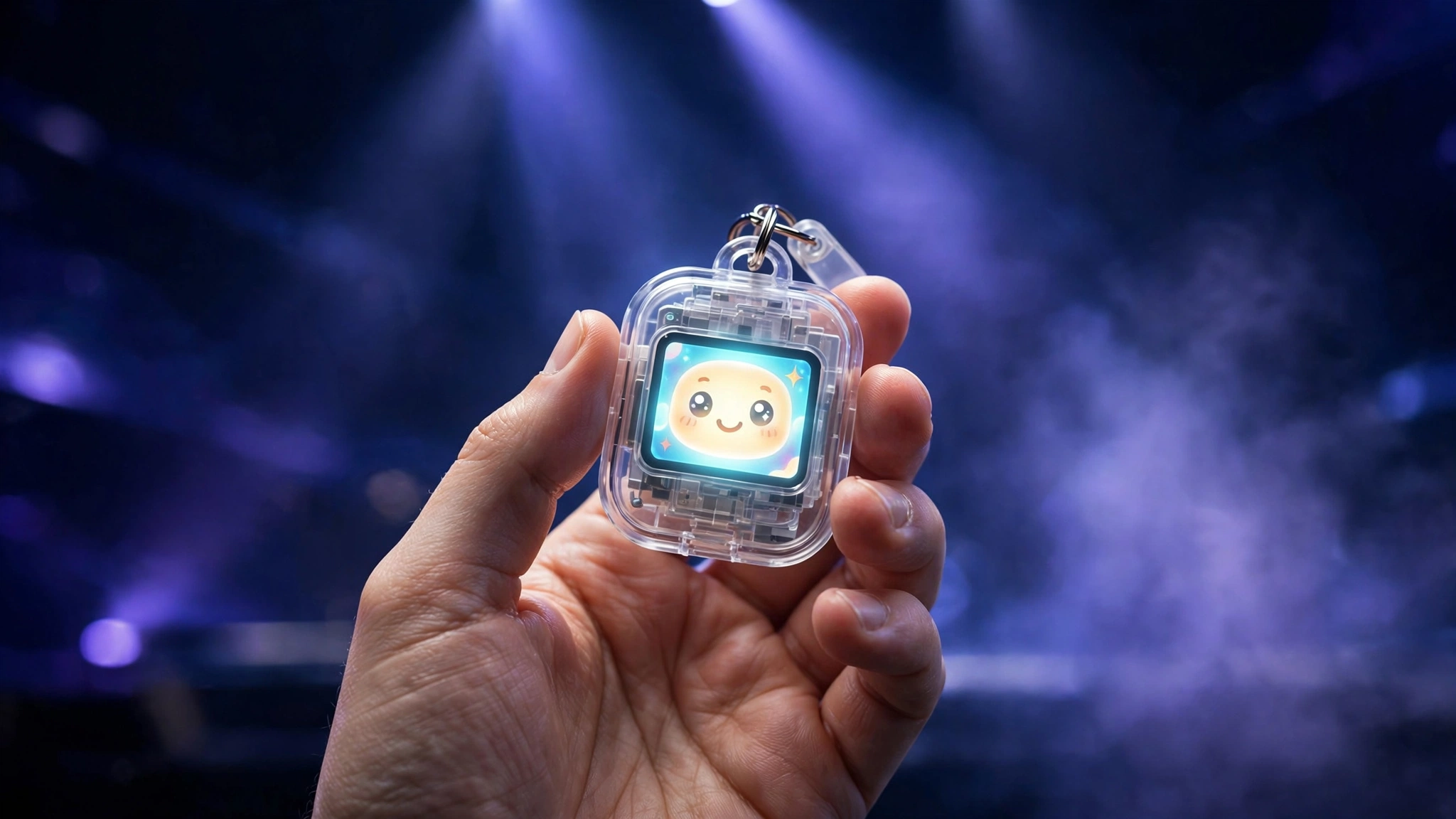
Mark Zuckerberg saved the strangest thing for last. Closing his Meta Connect 2026 keynote in Menlo Park on September 23, he pulled off a classic "one more thing" moment — and out came a gadget that fits in a fist: the Muse Charm, a keychain-sized device built to carry Meta's Muse agent everywhere a phone can't easily go.
The pitch, in Zuckerberg's words: "We packed the whole Muse experience, including the whole real-time voice and avatar stack, into something that fits on a keychain and is always available to talk to." It's Meta's boldest answer yet to a question nobody has fully answered — what an AI assistant looks like once it stops living inside a phone. But there are two things Meta conspicuously left out of the reveal: the price, and finished hardware. Only a few units have been built so far.
The device#
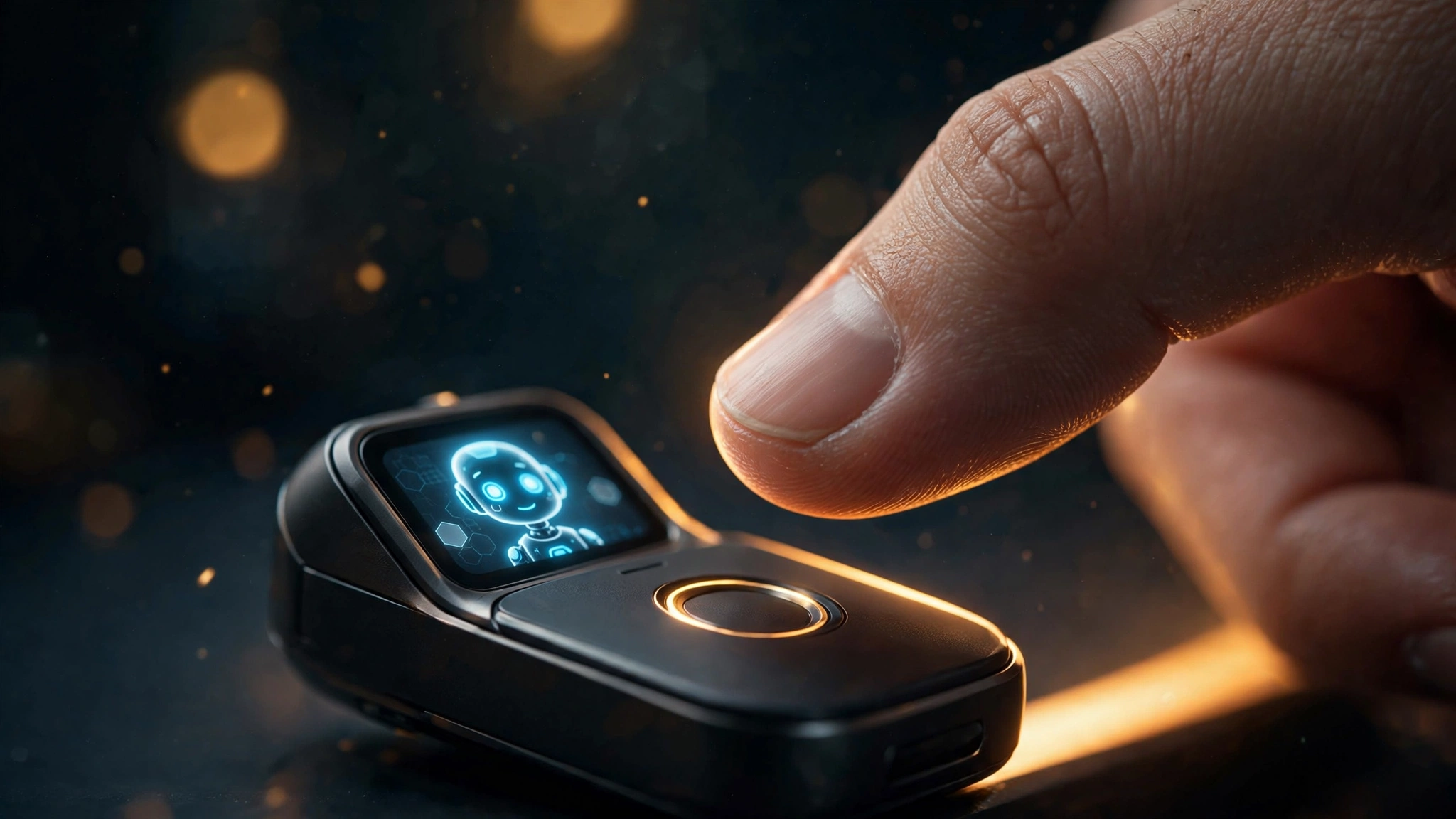
The Charm is built around a roughly 2-inch OLED touchscreen — about the size of an Apple AirPods case — showing Jolly, a cartoon avatar meant to be the visible face of Muse. Owners can customize Jolly's appearance, wardrobe, and voice. A fingerprint sensor in the corner wakes it instantly: tap, and you start talking to Muse without unlocking a phone or opening an app.
Underneath, the hardware reads like a stripped-down smartphone. There's a built-in 5G modem, so the Charm works on its own with no phone pairing at all. It carries front and rear cameras, speakers, microphones, music and video playback, and USB-C charging — the cameras doubling as Muse's eyes, giving the agent visual context for its answers. Photos and videos can be viewed right on the device, though it can't make phone or video calls.
It runs a new operating system built specifically for the hardware, comes in a translucent shell that leaves its circuitry visible through the back and sides, and can be worn on a wrist strap, dropped in a pocket, or clipped to a bag with a lanyard. Two Charms placed near one another can even recognize and interact with each other — a small social detail that says a lot about the device's ambitions.
Why a keychain?#
The Charm comes out of Meta's newer design studio, run by Alan Dye — the former Apple interface design chief Meta hired away last year — working alongside the company's Superintelligence Labs group. That pairing is the strategy in miniature: Apple-caliber industrial design wrapped around Meta's frontier AI effort.
Context matters here. Muse itself only launched on September 8, running each user's tasks in a dedicated cloud environment called Muse Secure VM that can reach calendars, payment methods, and connected apps on the user's behalf. The assistant has already topped App Store charts in some markets, including Canada. The Charm is Meta's bet that the agent's natural habitat isn't a screen you pull from your pocket — it's a presence that's simply always there.
CTO Andrew Bosworth wasn't shy about the device's experimental status: "It's cool, it's fun, it's neat, it's weird, it's different. There's nothing like it," he said in an interview, calling the Charm "an exploration, the classic v0" — a product deliberately launched before it's fully formed, to see how people actually use it. The Charm shared its keynote with new lighter-weight VR goggles and camera-free audio-only smart glasses, plus new retail partnerships with chains like Walmart, Best Buy, and Gap that will connect Muse to shopping.

The skeptics' case#
The reactions split fast. TechRadar dubbed it an "AI Tamagotchi"; others described it more bluntly as a 24/7 microphone and location relay with a cartoon face on top — and raised the obvious privacy questions about a device that's always listening in your pocket. Those concerns have extra weight right now: Reuters reported that Meta is testing human operators behind some Muse interactions, a detail the company hasn't fully explained.
Then there's the track record of standalone AI gadgets. Rabbit's R1 launched in 2024 to reviews ranging from unimpressed to scathing — and still moved around 100,000 units on novelty alone. Whether the Charm becomes a second data point for that same trade, hype outrunning usefulness, is the bet Zuckerberg just placed with a device that doesn't even have a price tag.
And Meta is fighting a live battle over what Muse is actually allowed to do. Amazon moved to block Muse from completing purchases on its site just before Connect — a standoff we covered earlier this week — which shows how much an AI agent's usefulness depends on cooperation from platforms that have no reason to grant it. A keychain companion that can talk but can't buy is a harder sell.
What to watch#
Meta is targeting a December 2026 ship date, in time for the holidays — but Zuckerberg's own team admitted onstage they're still finalizing how the components fit inside the case, an unusual confession mid-launch that tells you how compressed this timeline is. The questions that decide whether the Charm is a real product or a v0 curiosity: the price, the battery life, which markets get it, and what Muse can actually do through it on day one.
The deeper question is the one Bosworth was gesturing at. Phones won the last computing era by becoming the thing everyone carries. Meta is betting the next era belongs to the thing nobody has to think about at all — something smaller than a phone, dumber-looking than a phone, hanging off your keyring. Weird is the point. The question is whether weird is enough.